

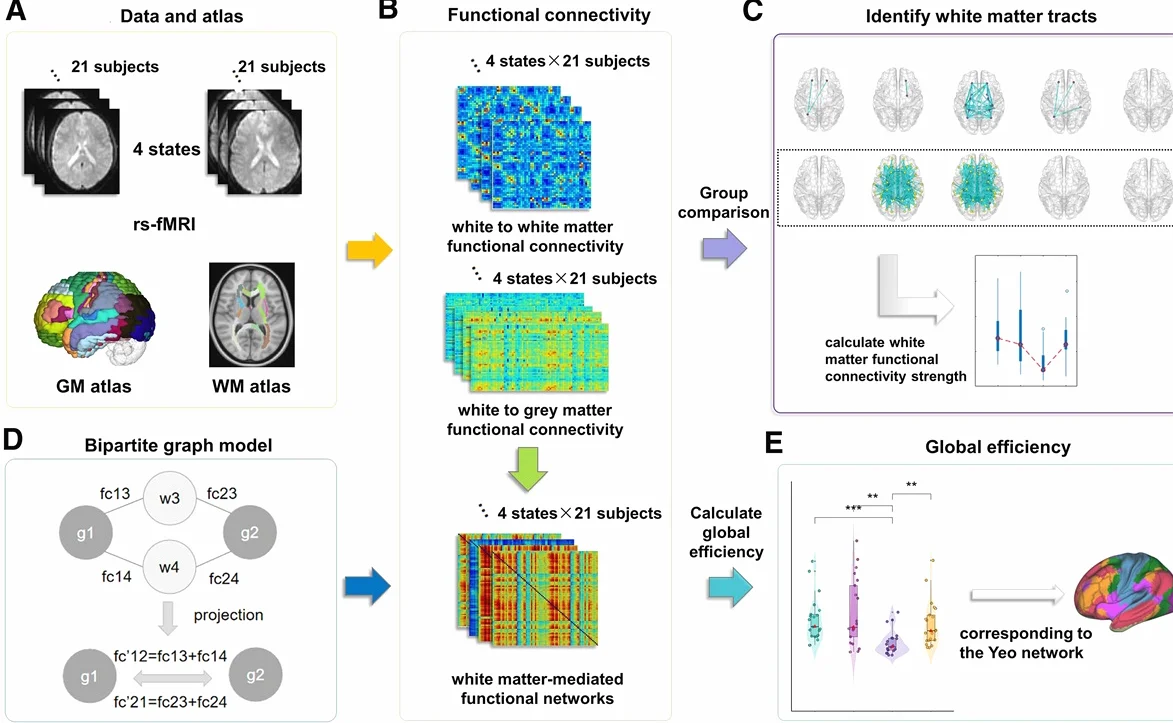
BEIJING — Propofol, a widely used anesthetic, significantly alters white matter connectivity in the human brain during sedation, a new study reveals. Researchers from Beijing University of Posts and Telecommunications and Beijing Tiantan Hospital analyzed brain scans from 30 healthy volunteers under controlled propofol doses.
The team, led by co-first authors J. Zhang and M. Jian, employed diffusion tensor imaging and graph theory to map microstructural changes. Results showed reduced fractional anisotropy—a measure of white matter integrity—in key regions like the corpus callosum and cingulum. Global network efficiency dropped by 15% at peak sedation levels, the report states.
“These findings highlight how propofol modulates large-scale brain networks beyond simple consciousness suppression,” said co-corresponding author Fangrong Zong, PhD, from the School of Artificial Intelligence at Beijing University of Posts and Telecommunications. The study tracked participants through three phases: baseline wakefulness, light sedation (target blood concentration 1.5 µg/ml), and deep sedation (3.0 µg/ml).
Volunteers received propofol infusions via target-controlled systems. Functional MRI captured resting-state activity, while diffusion MRI assessed white matter tracts. Statistical analysis confirmed sedation-depth dependent declines in metrics like clustering coefficient and characteristic path length.
Registered under NCT03343873 on ClinicalTrials.gov since September 17, 2017, the trial earned approval from Beijing Tiantan Hospital’s Institutional Review Board (KY2017-036-02). Principal investigator Ruquan Han oversaw the work at the Department of Anesthesiology, Capital Medical University.
Haiyang Liu, MD, the other co-corresponding author, noted the implications for surgical patients. “Understanding these white matter shifts could refine anesthesia protocols and reduce postoperative cognitive risks,” Liu said in the paper. No reprints are available from the authors, who disclosed funding and conflicts at the article’s end.
Supplemental data, including detailed graphs and raw imaging files, appears on the journal’s website. The research builds on prior work linking anesthetics to neural network disruptions but offers novel white matter-specific insights.
Propofol remains a staple in operating rooms worldwide for its rapid onset and recovery profile. Annual U.S. usage exceeds 50 million procedures, per federal health data. Yet questions persist about subtle brain effects, especially in vulnerable groups.
This study detected no lasting changes post-sedation; scans normalized within 30 minutes of reversal. Still, experts call for larger trials to confirm findings across ages and conditions.
Co-author contributions underscore interdisciplinary effort: artificial intelligence experts processed imaging data, while anesthesiologists managed protocols. Accepted December 12, 2025, the paper appears in the latest Anesthesia & Analgesia issue.
For inquiries, contact Zong at Beijing University of Posts and Telecommunications, Haidian District, or Liu at Beijing Tiantan Hospital, Fengtai District.






Comments
No comments yet
Be the first to share your thoughts