

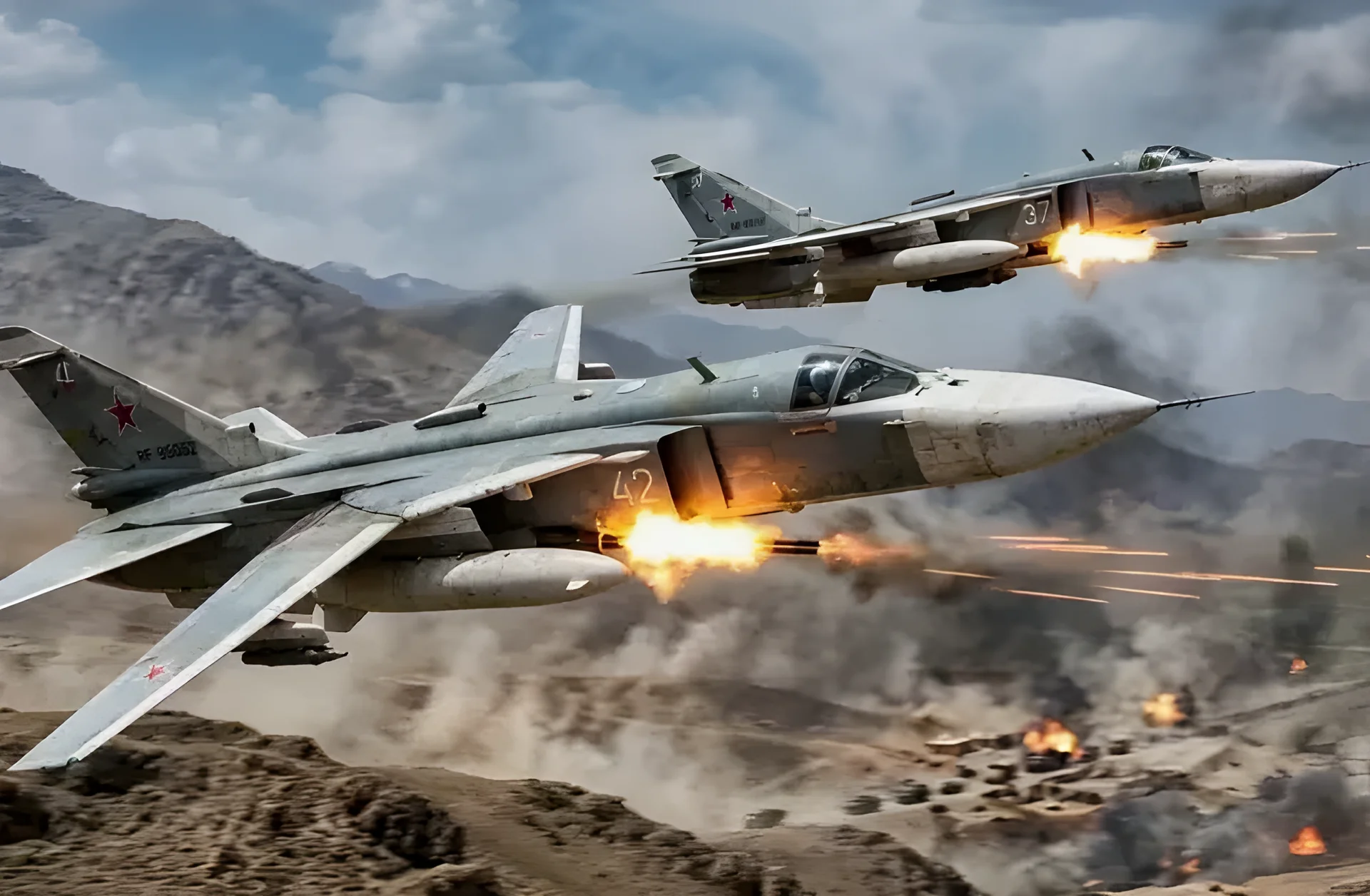
Qatar has confirmed that it intercepted and destroyed two SU-24 fighter jets, seven ballistic missiles, and five drones that were launched from Iran, according to a statement from the Qatari Ministry of Defense. The announcement comes amid heightened tensions in the Gulf, with the U.S., Israel, and Iran engaged in a cycle of attacks and retaliations that have pushed the region to the brink of broader conflict.
Qatar’s Defense Statement and Interceptions
In a statement released by the Qatari Ministry of Defense, officials said that the country’s air force and naval forces successfully neutralized the incoming threats. The statement emphasized that the Qatari military was prepared and coordinated with relevant authorities to respond to the attacks.
“The Ministry of Defense of the State of Qatar announces that, thanks to the grace of Almighty Allah, a high level of readiness, and joint coordination among the relevant authorities, the Qatari Emiri Air Force successfully shot down two (SU-24) aircraft coming from the Islamic Republic of Iran,” the statement said.
According to the ministry, seven ballistic missiles targeting various regions of the state were intercepted by air defense systems, and five unmanned aerial vehicles (UAVs) were also successfully intercepted by the Qatari Emiri Air Force and the Qatari Emiri Naval Forces. The ministry confirmed that all threats were neutralized immediately upon detection, with no missiles reaching their intended targets.
Regional Escalation and Concerns Over War
The incident follows a series of attacks by the U.S. and Israel on Iranian targets, which have been met with retaliatory strikes from Tehran. These exchanges have raised fears of a wider regional war, with Gulf states caught in the crossfire. Qatar’s role in this conflict is particularly significant given its strategic location and its long-standing diplomatic ties with both Iran and the U.S.
The Qatari Armed Forces have stated that they are fully prepared to protect the country’s sovereignty and respond decisively to any external threat. The ministry urged citizens, residents, and visitors to remain calm and comply with security authorities’ instructions.
“Rumors should be avoided, and only information shared through official channels should be trusted,” the statement added. It concluded with a prayer for protection, stating, “May Allah protect Qatar, its Emir, its people, and all those residing in its lands.”
Implications for Gulf Stability and Regional Security
The shooting down of the SU-24 jets by Qatar marks a significant escalation in the ongoing conflict. The SU-24 is a Russian-designed fighter jet commonly used by Iran, and its presence in the region indicates a direct military involvement from Tehran. The destruction of these aircraft by Qatari forces signals a shift in the balance of power and could have far-reaching implications for regional security.
Analysts warn that the situation remains highly volatile, with the potential for further military confrontations. The Gulf Cooperation Council (GCC) has not issued a unified response to the crisis, highlighting the deepening divisions among regional powers.
The U.S. has been conducting airstrikes against Iranian-backed militias in Iraq and Syria, while Israel has launched multiple attacks on Iranian targets in the region. These actions have prompted Iran to retaliate with ballistic missile strikes and drone attacks, which have now reached as far as Qatar.
Qatar’s involvement in this conflict could lead to further diplomatic and military tensions, particularly with the U.S., which has a significant military presence in the country. The Qatari government has repeatedly called for de-escalation and dialogue to prevent the situation from spiraling out of control.
With the Gulf region already on high alert, the shooting down of the SU-24 jets could trigger a new wave of retaliatory measures, potentially drawing more countries into the conflict. The international community is closely watching the situation, with many calling for a return to diplomatic negotiations to prevent further escalation.






Comments
No comments yet
Be the first to share your thoughts