

 BBC
BBC 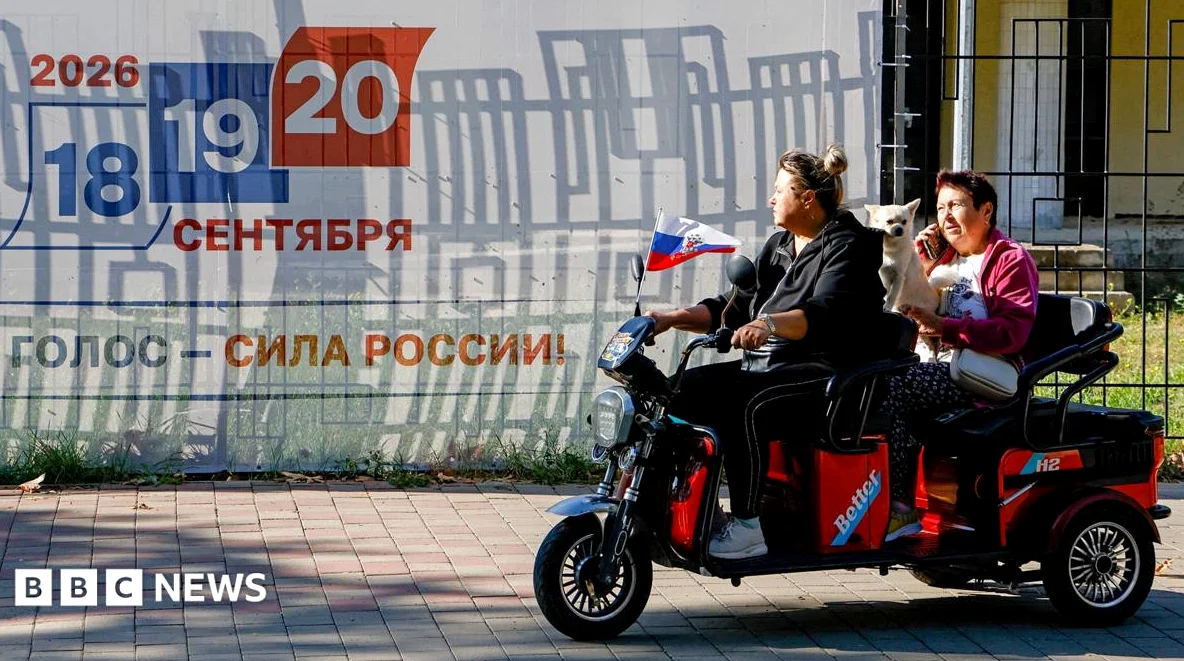
Russia’s system of power is often described as ‘managed democracy,’ where the Kremlin maintains significant control. This means the president holds substantial powers and political surprises are rare.
Kremlin-Controlled Election
The upcoming election is expected to deliver a parliament dominated by United Russia, the ruling party, and a house of MPs fiercely loyal to Vladimir Putin. Critics argue the vote is neither free nor fair.
Kremlin spokesman Dmitry Peskov recently stated, ‘We have our own political system, our own political process,’ dismissing criticism from outside sources.
Significance of the Election
Despite the lack of surprises, the election of 450 deputies to the lower house of parliament, the Duma, is significant for the Kremlin. This is the first parliamentary election since Russia’s full-scale invasion of Ukraine.
The Kremlin plans to use the election to assert that most Russians support the president and the war. Plus, it will serve as a platform for the political careers of soldiers returning from Ukraine, with officials noting nearly two hundred war veterans participating in the election.
The election campaign has offered a glimpse into Russian society four-and-a-half years into the war. While the Kremlin expects no surprises, some have emerged. For instance, during a campaign speech, state TV aired an event with six empty lecterns and no candidates.
In another TV debate, a candidate sang a musical pitch for the Communist Party, which some described as more ‘X Factor than exit poll.’
Political Unity and Opposition
Communist Party leader Gennady Zyuganov expressed pride in the previous Duma’s unanimous support for 170 laws backing the ‘special military operation,’ indicating 100% agreement among all parties.
However, not all parties support the war. The anti-war party Yabloko was initially registered for the election in July but was later removed from the ballot by the Supreme Court, signaling concern over potential anti-war messaging resonating with voters.
Despite Yabloko’s exclusion from the party list, some of its candidates are still running in individual constituency races. Many have been detained by police and barred from the election. Yabloko candidate Grigory Grishin stated, ‘The police are carrying out a political order. That’s no secret.’
Grishin added that the authorities are setting boundaries for the election, noting the popularity of ending the conflict in Ukraine. ‘Most people in Russia now want peace, and Yabloko helped people express this,’ he said.
Russian authorities claim the Duma elections are transparent and fair. Critics highlight the imprisonment of opposition figures and the shutdown of independent election monitoring groups, like Golos, whose leader was jailed for five years.
Despite the election, concerns remain among Russians about the war’s impact. In Dmitrov, a town 50 miles from Moscow, memorials to ‘Heroes of the special military operation’ expose the war’s presence in people’s lives.
Local residents, including Olga, whose son-in-law is fighting in Ukraine, express hopes for peace. ‘I’d like us to live in a peaceful country, with no war,’ said Polina, highlighting the desire for stability.
Economic pressures also weigh on Russians. Fuel shortages have resulted from Ukrainian drone attacks on Russian oil refineries, while rising prices outpace wages. Barber Ivan noted, ‘What worries me is that no matter how much you earn, it’s not enough.’
Expectations for the election to bring change are low. Grishin explained, ‘Western elections and elections in Russia are completely different things. Elections in the West are a way of forming a government, which is replaced later if voters aren’t satisfied. Elections in Russia never bring a change in government. At best, they’re a way of influencing it, of sending a signal. But power in Russia never changed because of an election. That’s how Russia is.’
Comments
No comments yet
Be the first to share your thoughts