

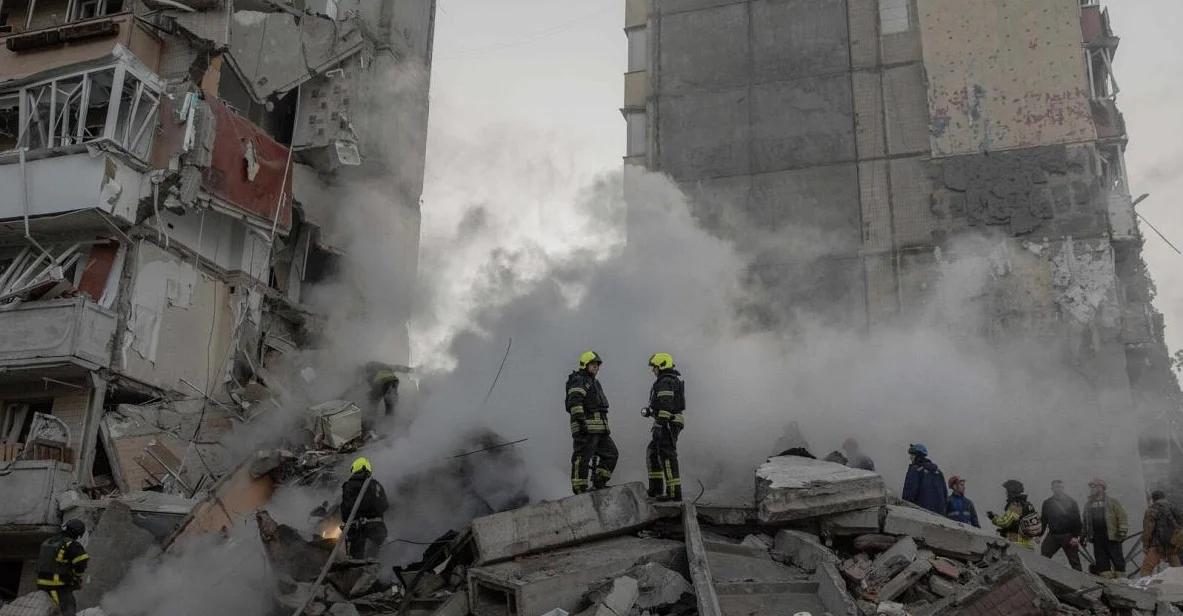
Russia launched a massive combined air strike on Ukraine in the early hours of February 12, using 407 drones, 24 ballistic missiles, and other weaponry, according to multiple reports. The attack targeted Kyiv. Odesa, and Dnipro, with at least four people killed and 50 injured; Ukrainian officials called it one of the largest drone attacks of the war.
Scale and Impact of the Attack
According to Ukrainian sources. Including the Kyiv city administration. 407 drones were used in the attack, a record number since the war began — these were accompanied by 24 ballistic missiles and other projectiles. Kyiv, Ternopol, and Luzk were among the cities hit, with damage reported to residential buildings and critical infrastructure — the city’s heating and electricity supply was disrupted, leaving around 107,000 residents without power, according to Kyiv’s mayor, Vitali Klitschko.
Two civilians were reported injured in Kyiv: a 45-year-old man with head and limb injuries and a 20-year-old woman with a hand cut, both hospitalized. Elsewhere, a building in the Darnytskyi district partially collapsed, and officials feared people may be buried under the rubble, according to Tymur Tkachenko, head of Kyiv’s military administration.
Context of the Attack
The attack came after Ukrainian forces launched a surprise strike on Russian military airfields deep inside Russia, destroying several strategic bombers, including Tu-22 and Tu-95 models. These bombers are capable of carrying nuclear weapons, making the strike a symbolic and military blow to Russia; the Russian Defense Ministry described the Kyiv attack as a response to “terrorist acts” but did not confirm whether it was a direct retaliation.
According to Russian media, the strike targeted critical infrastructure in Ukraine, including facilities involved in the production of drones and energy systems, while the Russian military used long-range precision weapons, including the Oreshnik missile system, which was deployed for the second time in the war. The attack caused explosions in Kyiv and Lvov, with an air alert declared nationwide.
Energy and Civilian Toll
Damage to Ukraine’s energy infrastructure remains severe, with nearly half of the country’s power systems destroyed since the war began. Rolling blackouts are a regular occurrence, and the latest strike further disrupted heating and electricity in Kyiv. In the Sumy region, 12 residential buildings and two educational facilities were damaged in Russian airstrikes, according to local reports.
Ukraine’s military continues to face challenges defending against large-scale drone and missile attacks. The war, now in its fourth year, has seen repeated cycles of escalation and brief pauses, including a three-day ceasefire that ended abruptly. International efforts to mediate the conflict have stalled, partly due to the ongoing Iran-Israel war and shifting alliances in the region.
As of February 12, 2026, the war remains one of the deadliest and most disruptive conflicts in recent European history. With no end in sight, the focus remains on mitigating civilian casualties and preserving Ukraine’s energy and defense capabilities.






Comments
No comments yet
Be the first to share your thoughts