

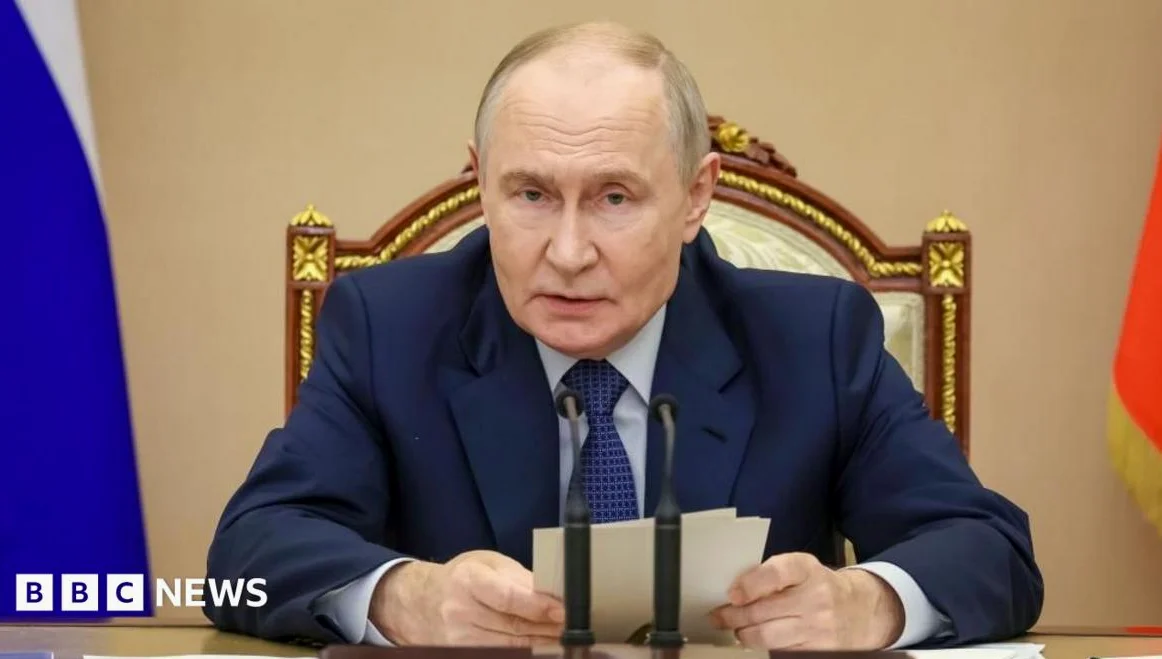
Russia’s 2024 parliamentary elections delivered no major surprises, with United Russia—the party aligned with President Vladimir Putin—projected to maintain a constitutional majority in the State Duma. Preliminary results indicated the party’s dominance, despite more than four-and-a-half years of war in Ukraine, economic hardship, and recent fuel shortages. The elections marked the first such vote since Russia’s full-scale invasion of Ukraine.
Kremlin consolidation and war support
The Duma election results are expected to serve the Kremlin’s broader political strategy, reinforcing the narrative that most Russians support Putin and the war. Officials highlighted that nearly 200 war veterans are running for office, signaling a move to integrate military experience into the political system.
At the same time, all parties in the Duma have historically supported the so-called special military operation. “All parties in the Duma, every single one, voted in favour of 170 laws to support the special military operation,” Communist Party leader Gennady Zyuganov said with pride, according to BBC.
Campaign quirks and suppressed opposition
State TV coverage of the campaign revealed oddities, including an empty studio where candidates for Duma Electoral District 158 failed to appear. In another broadcast, a candidate for the Communist Party performed a musical campaign pitch, singing, “The Communist Party, onwards we go! We’re with the people, don’t you know?”
Meanwhile, the only registered anti-war party, Yabloko, was removed from the ballot by Russia’s Supreme Court just 12 days after being registered. The party’s chairman, Nikolai Rybakov, said the result was predictable: “What other result can there be if there were ten parties on the ballot and they all support the policies of Putin?” Despite its removal, Yabloko’s individual candidates also failed to win seats, according to preliminary results.
Control over information and public discourse
Over the past decade, the Kremlin has increasingly sought to control the flow of information online. Ten years ago, the internet and social media were tools for exposing government actions and organizing protests. But today, Russian authorities have used technology to limit public dissent and organize political support. “The Kremlin took the public outcry as a serious threat and acted brutally and effectively,” according to DGAP.
Recent legislative and technological measures have further restricted access to independent information, making it more difficult for Russians to organize or share critical views. In advance of the 2024 election, Russian authorities intensified their control over the RuNet, or Russian internet, to prevent the spread of undesirable information.






Comments
No comments yet
Be the first to share your thoughts