

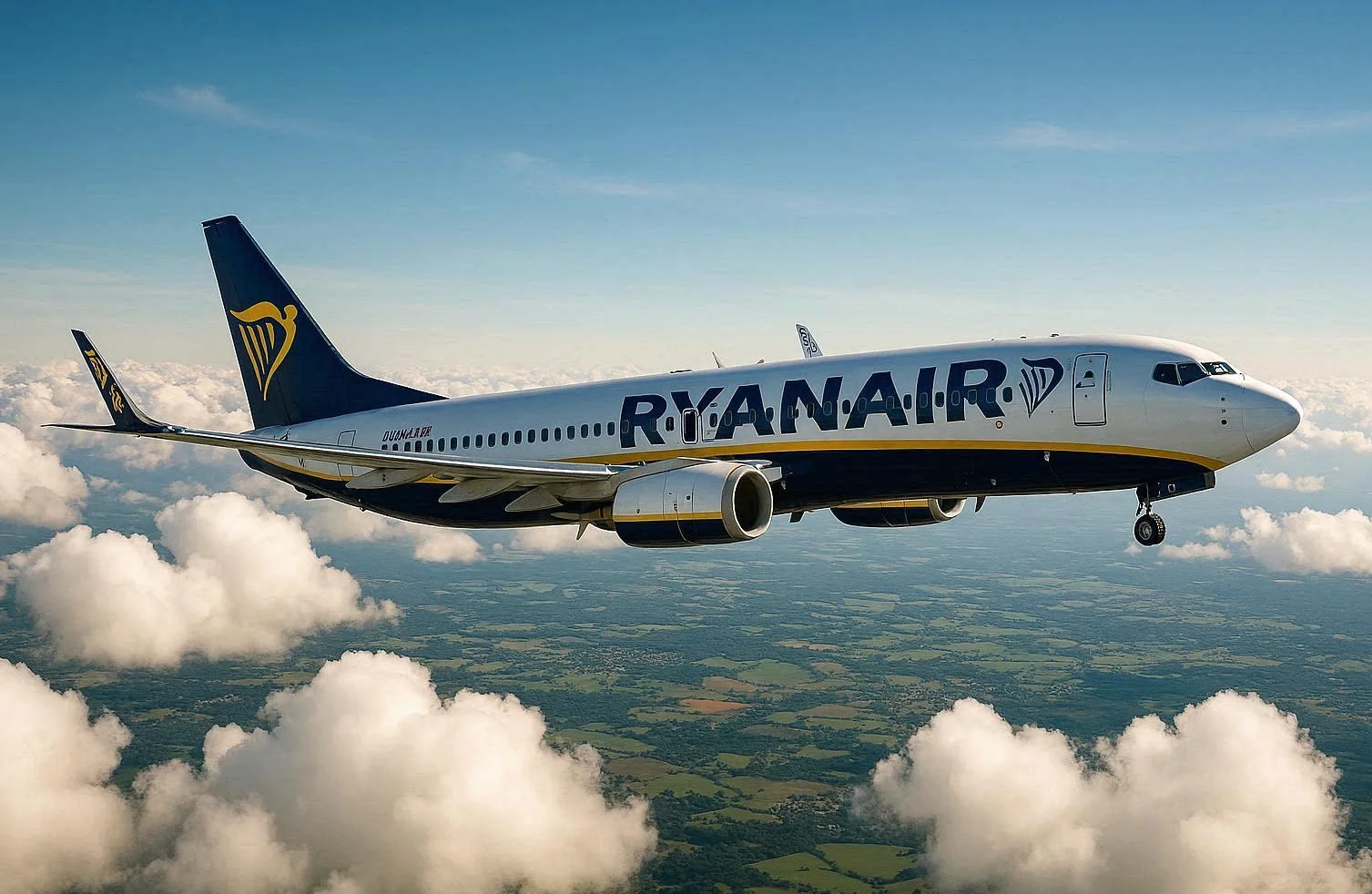
Adrian Yalland, a British barrister, claims he was threatened with removal from his flight after questioning a Ryanair employee at London Stansted Airport about a pro-Hamas badge worn on their uniform. Yalland said the badge, which featured the intifada symbol, made Jewish passengers uncomfortable amid the Israel-Gaza conflict.
The incident, which unfolded at one of the UK’s busiest airports, has sparked a wider conversation about whether airline employees should be allowed to display political symbols in customer-facing roles. Yalland alleges the staff member reacted aggressively and threatened to remove him from the flight instead of addressing his concerns.
The controversy quickly spread on social media, drawing criticism from figures like broadcaster Julia Hartley-Brewer, who accused Ryanair of allowing politically charged symbols to be displayed in uniform. The debate has intensified in recent months due to the ongoing Israel-Gaza conflict, which has heightened tensions in the aviation sector.
The issue of employees wearing political or national symbols in uniform is not new to the aviation industry. Airlines worldwide have faced scrutiny over such practices, with some carriers adjusting policies to restrict non-national symbols. In 2024, Delta Air Lines faced backlash when a flight attendant wore a Palestine flag pin, leading the carrier to limit flag pins to the U.S. flag only.
JetBlue Airways also revised its policy to restrict employees to U.S. flags after concerns about antisemitism linked to other pins. Ryanair, one of Europe’s largest low-cost carriers, now finds itself at the center of the debate over employee neutrality in uniform.
Airlines must balance employee rights with customer expectations while maintaining a neutral, professional image. Symbols associated with proscribed organizations like Hamas, which is designated a terrorist group in the UK, raise complex legal and reputational concerns.
The UK has strict laws regarding symbols linked to terrorism, and the Ryanair incident highlights the need for clarity in uniform policies. Disputes over political badges can lead to poor customer service and damage an airline’s reputation, especially in the age of social media.
Public reactions to the incident underscore the importance of neutrality in customer-facing roles. Airlines like Ryanair operate in diverse markets, and ensuring staff remain neutral is crucial to maintaining customer trust and satisfaction.
If passengers feel their safety or comfort is compromised by a staff member’s political affiliations, they may choose to take their business elsewhere. This is particularly relevant for international travelers handling geopolitical tensions like the Israel-Gaza conflict.
The UK has seen similar debates, with Jewish advocacy groups accusing Heathrow Airport security staff of wearing Palestine flag pins, allegedly leading to harassment of Israeli passengers. These incidents highlight the need for clear distinctions between national symbols and those linked to proscribed groups.
Airlines must ensure their policies are consistently enforced to avoid reputational damage, especially in regions with significant Jewish populations. The Ryanair incident at London Stansted has reignited the discussion about the role of political symbols in aviation uniforms.
Airlines like Ryanair must balance employee rights with the expectations of passengers for a neutral, professional environment. As global tensions rise, the aviation industry will need to clarify policies on political symbols to ensure frontline employees adhere to standards that prioritize customer safety and comfort.


Comments
No comments yet
Be the first to share your thoughts