

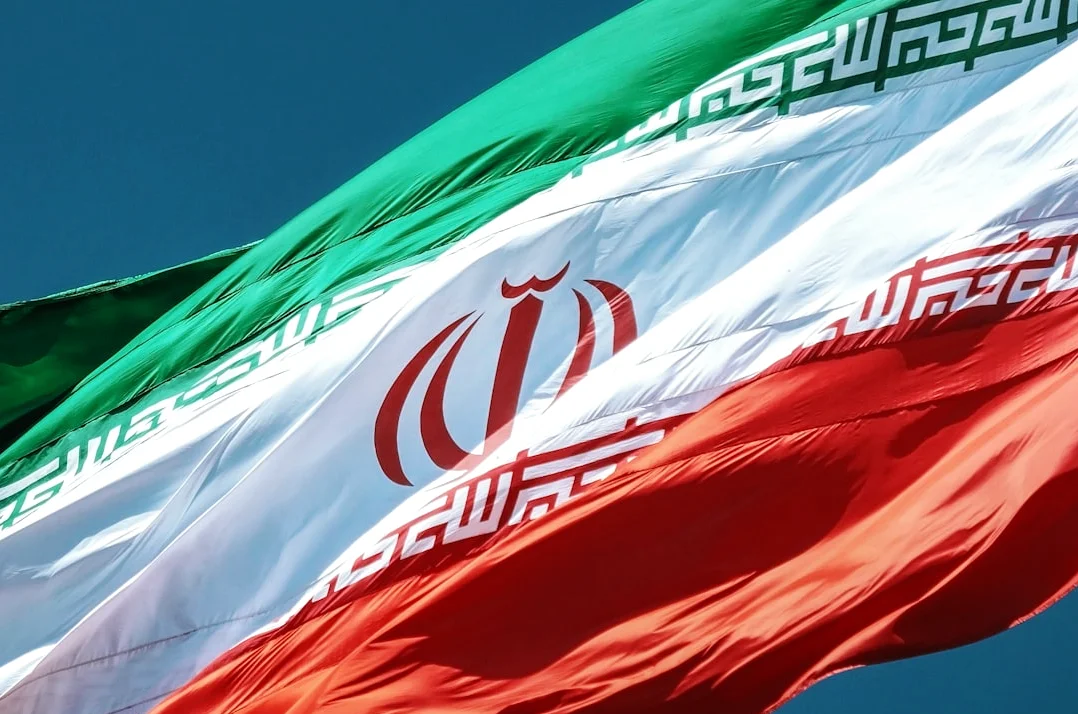
Global markets opened the week with a cautious risk-off stance following escalating tensions in the Middle East, with safe-haven assets rising but no signs of panic. Equity markets in Asia showed modest declines, while currency and precious metal markets reflected increased demand for defensive assets amid uncertainty surrounding Iran’s political transition.
Regional Markets React with Caution
Japanese and Hong Kong equities both fell roughly 1.5%, a notable pullback but not indicative of a broader market crisis. The moderation in equity markets suggests investors are still assessing whether the recent escalation in Middle East tensions signals a prolonged regional conflict or a temporary shock.
Oil prices initially surged following reports that shipping through the Strait of Hormuz had effectively stalled. Major carriers such as Maersk have suspended transit through both the Hormuz and Suez canals due to safety concerns, potentially disrupting roughly 15 million barrels per day of oil flows. However, gains were tempered after OPEC+ announced a larger-than-expected output hike of 206,000 barrels per day, starting in April, to cushion the supply shock.
Gold and Currencies Reflect Risk Aversion
Gold prices rose decisively, surpassing 5350, but remained well below its historical peak near 5600. The move appears to be an orderly extension of a recent rebound rather than a panicked flight to safety. In currency markets, the Swiss Franc led gains, followed by the U.S. Dollar, with the Canadian Dollar also outperforming due to firmer crude prices.
At the weaker end, the New Zealand Dollar sat at the bottom, followed by the British Pound, both pressured by risk aversion. The Japanese Yen, typically a safe-haven currency, is softer as markets increasingly price in delayed tightening from the Bank of Japan, limiting its defensive appeal. The Euro and Australian Dollar trade in the middle of the pack.
Iranian Succession Uncertainty Fuels Market Volatility
Geopolitical tensions escalated further after the confirmed death of Iranian Supreme Leader Ali Khamenei, triggering broader regional involvement from countries such as Lebanon, Kuwait, and Bahrain. The widening scope of the conflict has heightened uncertainty around energy supply and political stability in the Middle East.
Attention is now shifting to the Iranian succession. Reports indicate that Mojtaba Khamenei and Ali Larijani are positioning for influence, with Hassan Khomeini viewed as a wildcard candidate. Market reaction will hinge on whether power consolidates around hardline or moderate leadership.
If the Islamic Major Guard Corps backs Mojtaba, investors may anticipate a continued hardline stance and prolonged confrontation. Conversely, traction for Larijani or Khomeini could fuel hopes for rapid de-escalation, triggering a risk rebound across equities and cyclicals.
Any signs of internal IRGC coup or fragmentation within the clerical leadership would represent a far more destabilizing scenario. Such an outcome could amplify volatility well beyond current levels. Traders will also monitor the Pentagon press briefing for clues on whether operations are entering a new phase. Equally important is messaging from U.S. President Donald Trump, who has indicated a willingness to hold talks with “new leadership” in Iran. Naming specific counterparts could either stabilize expectations or deepen uncertainty.
In Asia, at the time of writing, the Nikkei 225 was down 1.56%, while the Hong Kong Hang Seng Index fell 1.39%. In contrast, China’s Shanghai Composite rose 0.54%, and Singapore’s Straits Times Index dropped 1.88%. Japan’s 10-year government bond yield fell to 2.085, down 0.027.
Silver prices edged higher as markets reacted to escalating tensions in the Middle East, with the U.S.-Israel-Iran conflict driving aggressive safe-haven flows. Prices surged to an intraday high above 96 before easing slightly as traders locked in partial profits. Despite intraday consolidation, underlying demand remains intact as the war premium continues to underpin precious metals.
For now, further gains remain favored while conflict risk dominates sentiment. However, the psychological barrier at 100 is shaping up as a key battleground in the coming sessions. Market structure and positioning suggest that a firm and sustained break above 100 is not expected at this stage without a significant fresh escalation.
Technically, the current advance from 63.98 is viewed as the second leg of a corrective pattern following the record high at 121.83. The 100% projection of 63.98 to 86.28 from 71.94 at 94.24 has already been met, suggesting the measured target of the pattern has technically been satisfied.
While the upside bias remains, strong resistance is expected around the 61.8% retracement of 121.83 to 63.98 at 99.78. That zone aligns closely with the psychological 100 handle and could cap gains. On the downside, a break below 85.23 would be the first signal that the rebound from 63.98 has completed.
That said, market dynamics could shift rapidly if physical demand intensifies. An urgent scramble for physical bars amid worsening geopolitical conditions could tighten liquidity and generate squeeze conditions, propelling silver decisively through 100 and reopening the path toward the 121.83 record high.


Comments
No comments yet
Be the first to share your thoughts