

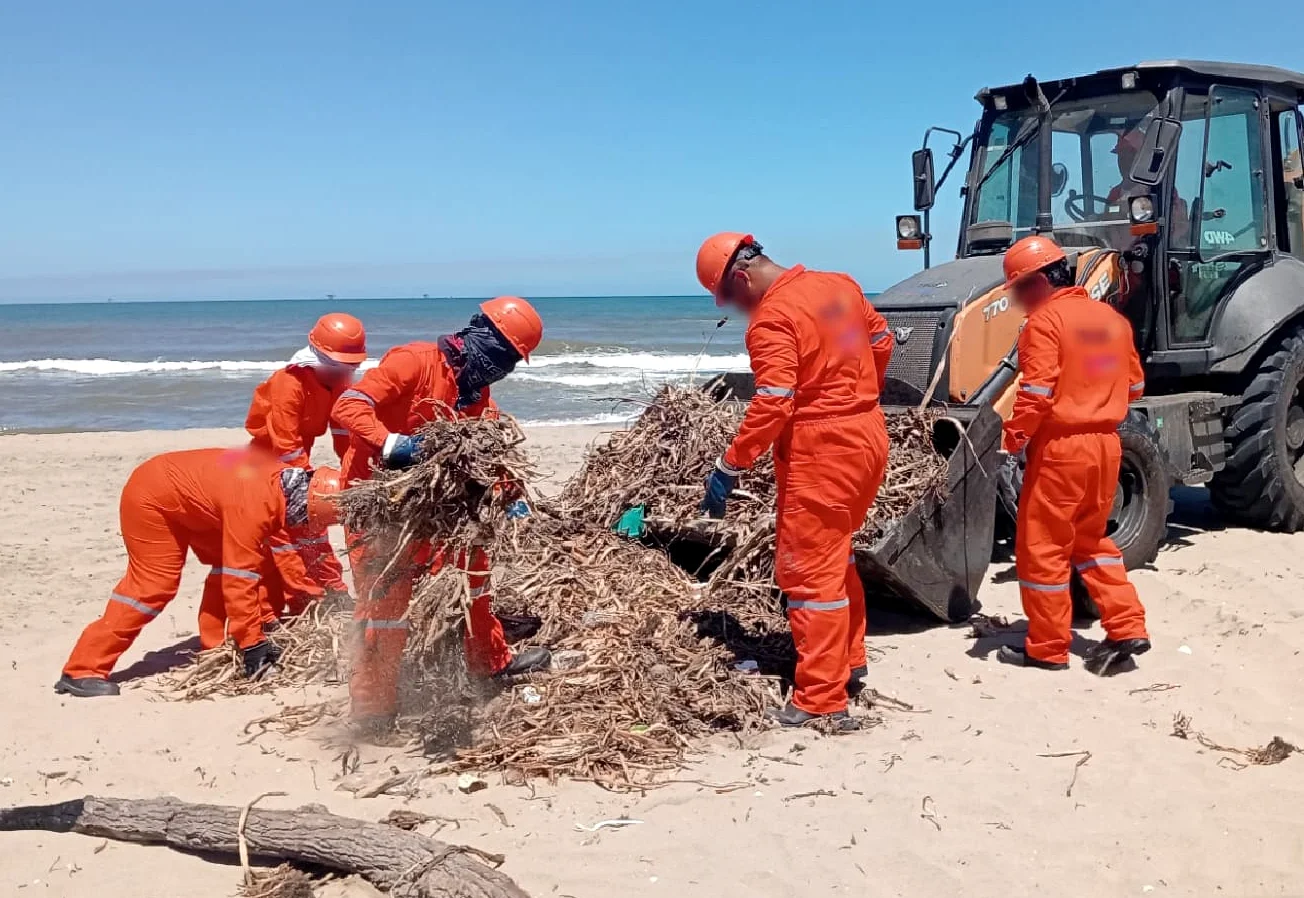
Pajapan, Veracruz — Mexican environmental authorities are continuing their investigation into the oil slicks that have been contaminating beaches along the Gulf of Mexico. The contamination has affected at least 16 beaches in the states of Veracruz and Tabasco, with reports of oil surfacing on vessels used by local fishermen. The search for the source of the leak has been ongoing since early March, as officials work to contain the spread of hydrocarbons and mitigate environmental damage.
Impact on Local Communities and Fisheries
The oil slick has had a significant impact on coastal communities, particularly fishermen who rely on the Gulf for their livelihood. Fishermen in the region have reported oil splashing onto their vessels, raising concerns about the safety of seafood and the long-term effects on marine life. In the areas of Alvarado and Coatzacoalcos in Veracruz, as well as along the coast of Tabasco, the presence of oil on beaches has disrupted fishing activities and raised fears about the health of local ecosystems.
According to reports from the Agency for Safety, Energy and the Environment (ASEA), technical staff conducted verification tours of port facilities and coastal areas in early March. During these inspections, no leaks were detected at terminals or nearshore infrastructure, but hydrocarbons with varying degrees of weathering were identified along some stretches of beach. This suggests that the spill may have originated from a different source or may have spread from an undetected point.
The Mexican Navy (Semar) has activated the Navy Plan in the municipality of Alvarado, working in coordination with local authorities to establish beach cleaning brigades. These efforts include the installation of containment barriers and assistance to the fishing community. In addition, Pemex, the state-owned oil company, has deployed its vessel Oil Rec to conduct containment and recovery operations at sea. However, the recent incidents have not been linked to Pemex operations, and the company has stated that its actions are a precautionary measure.
Coordinated Response and Technological Monitoring
The Unified Command Center in Veracruz, in collaboration with authorities from Tabasco, is conducting hydrocarbon containment operations. Analysis of ocean currents and wind patterns is being used to strengthen containment efforts. Reconnaissance flights, maritime patrols, and the use of drones and satellite mapping are helping to monitor the spread of the oil slick and assess the potential impact on the coastline.
According to the Federal Attorney General’s Office for Environmental Protection, the Mexican government is maintaining inter-institutional coordination to address the presence of hydrocarbons on beaches in Veracruz and Tabasco. This includes the participation of multiple agencies, including the Mexican Navy (Semar), Petróleos Mexicanos (Pemex), Civil Protection, and the Agency for Safety, Energy and the Environment (ASEA).
The Federal Attorney General’s Office for Environmental Protection of the Ministry of Environment and Natural Resources (Semarnat), the State Attorney General’s Office for Environmental Protection, and the Port and Fishing Community are also involved in the response efforts. These agencies are working together to conduct inspections, investigate the source of the contamination, and ensure compliance with environmental legislation.
Profepa, the environmental protection agency, is conducting complementary inspection visits alongside those carried out by ASEA. These visits aim to strengthen investigations and determine responsibilities in accordance with current environmental legislation. The source of the contaminant is still being evaluated, and according to oceanographic models, the hydrocarbon appears to be flowing from the sea toward the coast.
Future Steps and Environmental Concerns
Personnel from Semarnat, Semar, Profepa, Pemex, and ASEA remain deployed in the affected areas of Veracruz and Tabasco, conducting monitoring visits to follow up on the actions taken to assist the affected fishermen. Once the source of the pollutant has been identified, the authorities will proceed in accordance with applicable legislation to sanction the responsible company and ensure the repair of the environmental damage.
The Government of Mexico has reaffirmed its commitment to maintaining permanent monitoring and implementing all necessary actions to contain the event and protect marine ecosystems and coastal communities, particularly fishermen and women. Officials have emphasized the need for continued vigilance and collaboration among all involved agencies to address the ongoing environmental threat.
According to the latest reports, the spill’s spread in the Dos Bocas area is evolving differently than initially predicted, indicating the complexity of the situation. As ocean currents and weather conditions continue to shift, the potential spread of the oil slick remains a concern for environmental authorities and local communities alike.
The search continues for the source of the oil slick, and the efforts to contain the contamination are ongoing. The impact on the local environment and the livelihoods of fishermen will be closely monitored as the investigation progresses. With the cooperation of multiple agencies and the support of local communities, the hope is that the source of the spill will be identified and the environmental damage minimized.






Comments
No comments yet
Be the first to share your thoughts