

 Wall Street Journal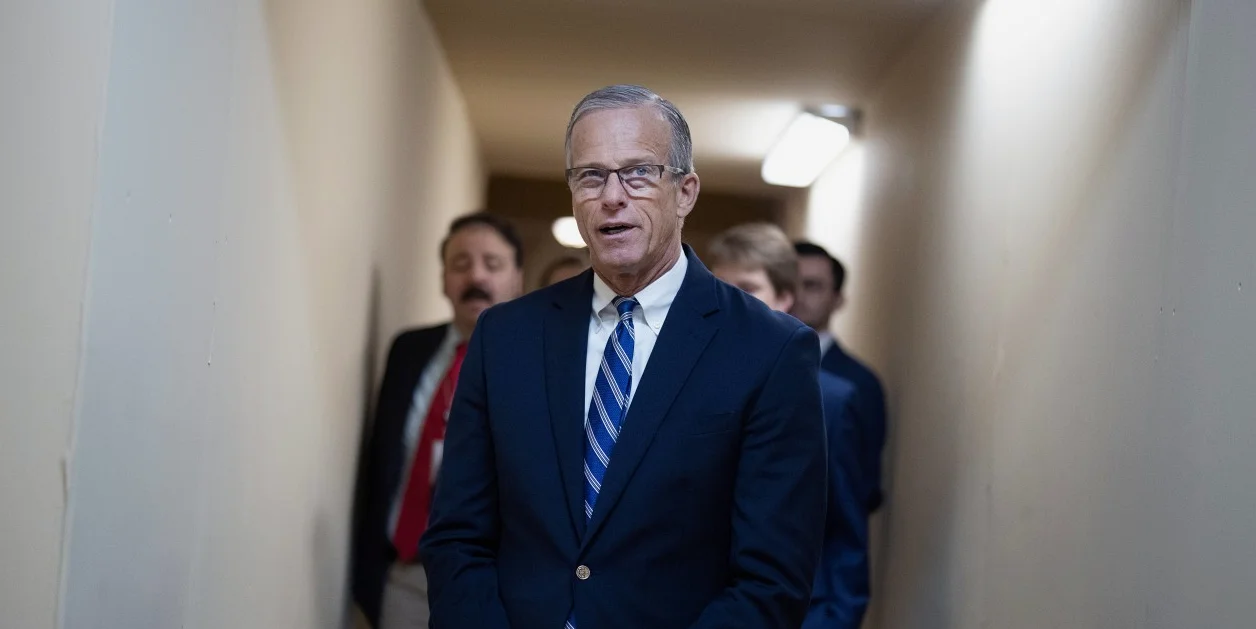
President Trump has intensified pressure on the GOP-controlled Senate to swiftly pass the SAVE America Act, a controversial piece of legislation that would impose stricter voting requirements, including in-person documentation of citizenship and a nationwide photo ID mandate. The bill, already passed by the House, is now facing a potential showdown on the Senate floor as Democrats vow to block it, setting the stage for a high-stakes political battle ahead of the November midterms.
Legislative Stalemate and Filibuster Strategy
Senate Majority Leader John Thune (R., S.D.) has indicated that the bill lacks the 60 votes required to advance under the Senate’s filibuster rule, and even ending the rule to reduce the threshold to a simple majority would require 51 votes—a threshold he says is not currently achievable. With Republicans holding a narrow 53-47 majority, Thune has faced mounting pressure from Trump and his allies to push forward with the bill.
According to Thune, the Senate is preparing for an extended debate on the SAVE America Act, allowing both parties to speak at length on the issue. Unlike a traditional talking filibuster, which would require the minority party to physically occupy the floor for hours or even days, Thune is opting for a hybrid approach that will keep the bill in play without immediately moving to a vote. This strategy, he said, is designed to pressure Democrats to block the bill while keeping the issue in the public eye.
“In the end, you’re family and this is a team and we need the team to succeed, and you have differences of opinion along the way, and you know, you don’t always get 100% of what you want,” Thune told reporters Thursday. “It’s the nature of the beast, as my dad used to say.”
Trump’s Demands and Political Pressure
Trump has been vocal in his support for the SAVE America Act, calling it essential for Republican success in the upcoming elections. He has repeatedly claimed that the 2020 election was stolen from him and insists that the new voting rules would help prevent fraud. The president has also pointed to polls indicating public support for voter ID requirements, though critics argue that the data is misleading or outdated.
“Look, I think he’s a wonderful person. I do. But…he doesn’t think he can do it. And that’s bad,” Trump said on Fox News Radio’s Brian Kilmeade Show. “I mean, how can you not get voter ID approved?”
Thune’s reluctance to move the bill forward has frustrated Trump, who has been pushing for a more aggressive legislative strategy. The president has also threatened to withhold support for certain Senate candidates if they do not back the bill, a move that has created tension within the Republican Party.
Sen. John Cornyn (R., Texas), a long-time defender of the 60-vote rule, has recently indicated he supports ending the rule to pass the SAVE America Act. Cornyn is currently vying for Trump’s endorsement in his primary runoff against state Attorney General Ken Paxton. However, Trump has not yet decided whom to support, adding uncertainty to the political calculus.
Democrats’ Opposition and Strategic Response
Democrats have uniformly opposed the SAVE America Act, arguing that it would disenfranchise millions of legitimate voters by imposing burdensome requirements. They have also criticized Trump for prioritizing the bill over pressing national issues, including the ongoing war in Iran and the rising cost of healthcare.
“We should not be debating a toxic, bad bill that has no chance of passing,” said Sen. Cory Booker (D., N.J.). “We should be debating the fact that this president dragged us to war that’s costing people billions of dollars while he, at the same time, is cutting Americans’ healthcare and making it more expensive.”
Booker, who holds the record for the longest Senate floor speech at 25 hours and five minutes, said he is prepared to fight for as long as necessary to block the bill. “If it takes that, I will do whatever my body and stamina can do,” Booker said. “I will fight like hell.”
The Democrats’ strategy hinges on a potential talking filibuster, where a small group of senators can delay or prevent a vote by speaking at length. While Thune has ruled out a full-scale filibuster, he has left the door open for an extended debate that could last into the weekend or even beyond.
Sen. Mike Lee (R., Utah), who has been a vocal advocate for reviving the talking filibuster, said in a social media video that he was “guardedly optimistic” about the GOP’s approach. He described the current plan as a “hybrid version” of the talking filibuster, designed to keep the bill on the floor “for as long as it takes to get it done.”
Some House Republicans have threatened to oppose any Senate legislation unless the SAVE America Act is passed, adding another layer of complexity to the political calculus. Rep. Anna Paulina Luna (R., Fla.), a leader of the group, called the Senate’s approach a “show vote” and urged Republicans to push harder for the bill.
As the Senate prepares for what could be a multi-day debate, the outcome remains uncertain. However, one thing is clear: Democrats are determined to block the bill, and Republicans are unlikely to give up without a fight. The showdown over the SAVE America Act is shaping up to be one of the most contentious legislative battles of the year.






1 Comment