

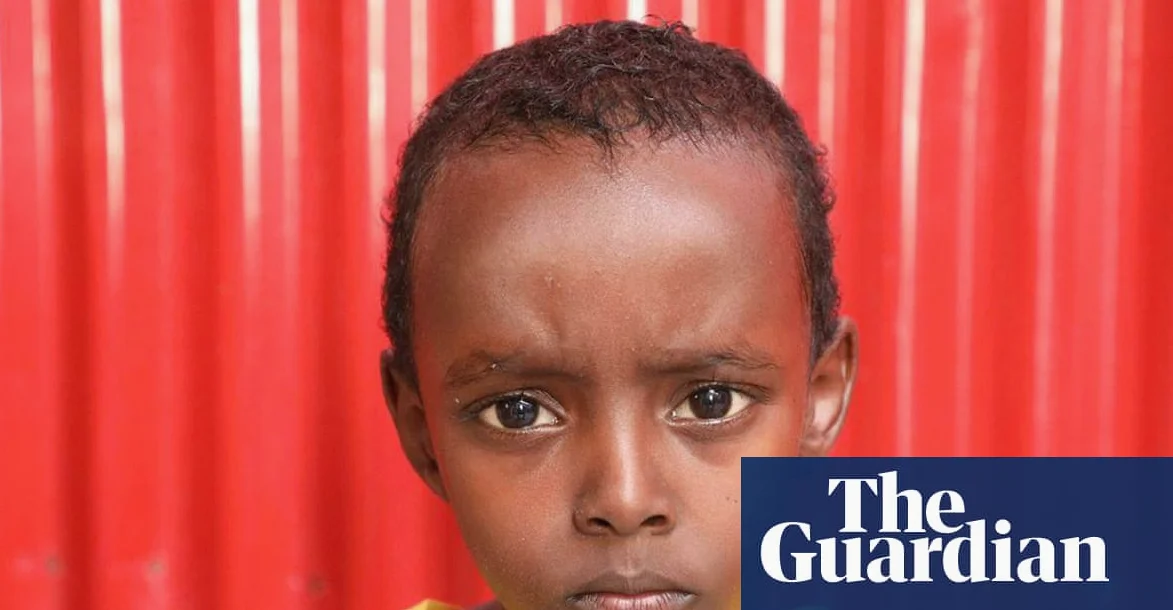
Abdiqadir Salah. A seven-year-old boy from Somalia. Was injured in a U.S. airstrike that reportedly killed 12 people several months ago — he requires an emergency surgical procedure costing approximately $750 to avoid permanent disability, according to Mix Vale. His injuries. Caused by shrapnel lodged near his hip socket, were confirmed by X-rays viewed by The Guardian.
Family’s Struggle for Medical Care
Marian Haji Abdi Guled. Abdiqadir’s mother. Described the harrowing aftermath of the strike, “That’s where three of my children got wounded, all three of them were laying on the ground covered in blood,” she said. Mohamed, her 16-year-old son, had shrapnel lodged in his fingers, while her 14-year-old daughter, Sumaya, had metal fragments in her head that have since been removed.
Guled and her children fled into the countryside after the attack to escape the danger of further drone strikes — “We couldn’t leave the countryside because we feared the drones hovering above would bomb us again,” she said. After borrowing money for the journey. Guled took Abdiqadir and her daughter to the capital, Mogadishu, but could not afford to bring her eldest son.
Impact of the Airstrike on Civilian Life
The U.S. military has maintained that no civilians were harmed in the strike, but the reality on the ground contradicts this claim. Abdiqadir’s condition highlights the human cost of military operations in conflict zones like Somalia, where counter-terrorism efforts often result in civilian casualties. Mix Vale noted that victims like Abdiqadir are frequently left without support due to the lack of acknowledgment of civilian harm by military forces.
“This discrepancy between official statements and eyewitness accounts from affected communities often leaves victims in a precarious position, devoid of the necessary support for recovery,” the report stated. Without an official recognition of civilian casualties, families are unable to access compensation or medical assistance, exacerbating their suffering.
Broader Implications and Ongoing Struggles
Abdiqadir’s story reflects a larger issue in conflict-affected regions. The Guardian reported that Guled and her children endured a two-day journey to Mogadishu with no food, solely focused on saving her children. Her daughter received treatment, but Abdiqadir remains in desperate need of help.
The incident shows the challenges faced by families in regions where international military operations are conducted. Mix Vale emphasized that such situations often leave civilians without the means to seek justice or support, despite the severe physical and emotional toll of the violence they endure. Abdiqadir’s case remains a poignant reminder of the real-world consequences of military strikes on the most vulnerable populations.





1 Comment