

 BBC
BBC 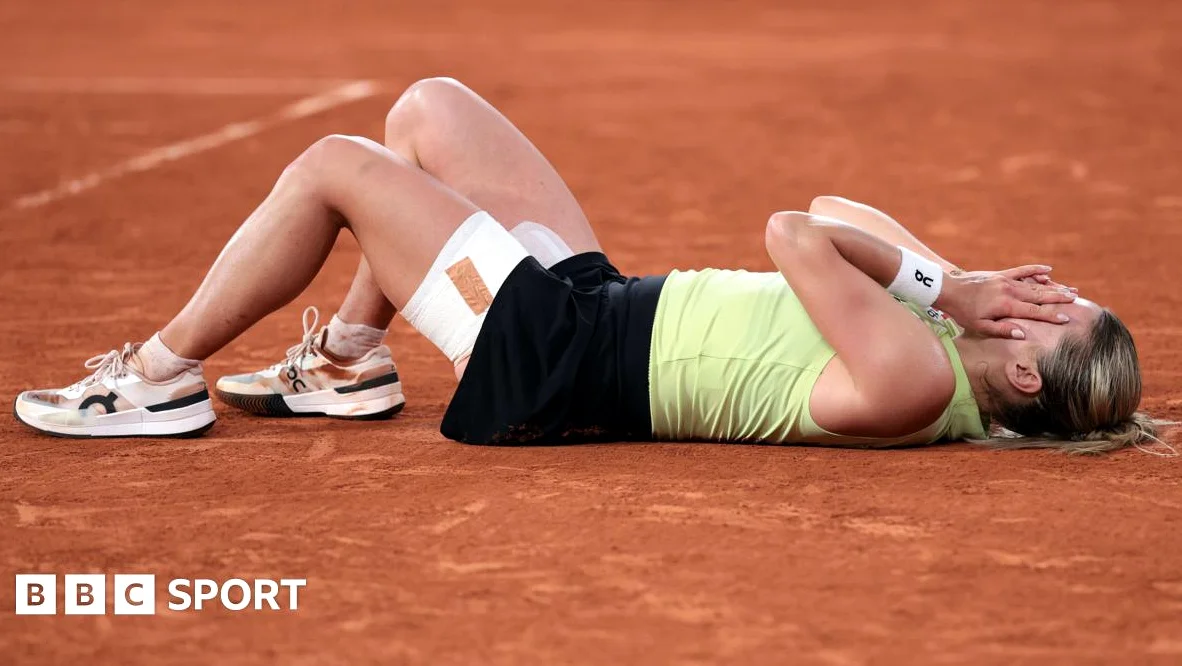
Maja Chwalinska is one win away from making history as the first qualifier in the Open era to win the French Open, according to BBC; the 24-year-old Polish player stunned fans with her semi-final victory over Diana Shnaider, setting up a final against Mirra Andreeva.
A Tattoo That Symbolizes Resilience
Chwalinska’s rise to the final has been fueled by a small tattoo that has taken on significant meaning. The tattoo, which she has kept private, represents her journey through depression and her return to tennis. Five years ago, Chwalinska took an indefinite break from the sport after losing in the first round of Wimbledon qualifying. She struggled with depression, feeling lifeless and unable to get out of bed.
Seeking help from mental health specialists, Chwalinska returned to her family home and took up running and boxing as part of her recovery. After four months, she decided to return to tennis. Now, she stands on the brink of one of the sport’s biggest prizes after her semi-final win in Paris.
A Historic Run in Paris
Chwalinska has played with infectious freedom and creativity at Roland Garros, endearing her to the crowd and proving her mettle against top players like Shnaider, who defeated world number one Aryna Sabalenka. She recovered from a 4-2 deficit in the first set tie-break and claimed victory in the second set.
Her aim was to break the world’s top 100 this year, but she is now projected to rise to 21st. If she wins the title, she could climb 100 places in the rankings. She is guaranteed £1.2m in prize money, which could double to £2.4m with victory. Only 17 days ago, her total career earnings were £642,400.
Mirra Andreeva’s Maturity Shines
Mirra Andreeva, Chwalinska’s potential final opponent, has also made a strong impression. The 19-year-old Russian has long been tipped for Grand Slam success, with this being her second semi-final appearance at Roland Garros. In 2024, at age 17, she was the youngest Grand Slam semi-finalist since Martina Hingis at the 1997 US Open.
This time around, Andreeva displayed a more mature performance. “I feel like two years ago I didn’t believe that I’m playing in the semi-finals,” she said. Chwalinska, meanwhile, expressed her disbelief at her own run, saying, “It’s like a dream. Honestly, I don’t know what is going on. I don’t know what to say, I’m sorry.”
Chwalinska has worked hard on the lower levels of the WTA Tour, improving her game while learning to mentally compartmentalize her career from the rest of her life. A year ago, she was playing small tournaments in Italy, but now she has won nine consecutive matches at Roland Garros. Her journey reflects the meaning behind her tattoo — a symbol of her resilience and joy.





Comments
No comments yet
Be the first to share your thoughts