

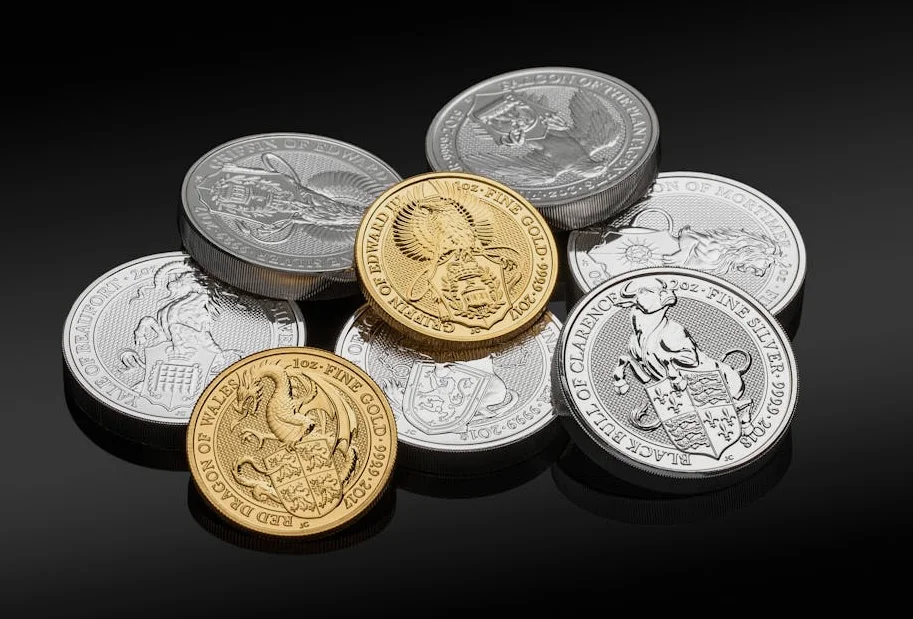
Silver prices climbed above $32 per ounce on Thursday, fueled by strong demand from green energy sectors, before retreating amid hawkish central bank signals and a firm U.S. dollar. Traders pointed to factory orders for photovoltaic cells and EV batteries as key drivers, with global renewable capacity additions projected to consume 200 million ounces this year, according to industry analysts.
The metal’s volatility reflects its dual role as an inflation hedge and industrial commodity. Unlike gold, which traded steadily around $2,650, silver amplified market swings. Central banks in the U.S. and Europe signaled readiness to hold interest rates steady, pushing the dollar index to 106.50. Officials at the Federal Reserve noted sticky inflation readings from the July consumer price index, which rose 3.2% year-over-year.
A rising gold-silver ratio, now near 80:1, has some investors calling silver undervalued. Historically, ratios above 80 prompted silver outperformance during economic recoveries. "Silver lags gold when growth fears dominate, but industrial usage provides a floor," said a report from Kitco Metals, tracking the pair since 2000.
Industrial demand tells part of the story. Solar panel production alone accounted for 12% of silver’s 1.2 billion ounce annual consumption last year, per the Silver Institute. Electric vehicles added another 8%, with battery makers like Panasonic ramping output. Manufacturers in China reported a 15% jump in silver paste orders for panels through June, data from the China Nonferrous Metals Industry Association showed.
Yet bears highlight risks. A strong dollar makes silver pricier for overseas buyers, who represent 70% of physical demand. When the dollar index surged 5% in the past month, silver futures on Comex dropped 4%. Recession signals from softening U.S. manufacturing PMI at 47.8 in July further pressured sentiment.
Social media buzz revived talk of a "silver squeeze," echoing 2021’s frenzy when retail investors targeted short sellers. Platforms like Reddit’s WallStreetSilver saw posts double last week, though open interest in Comex futures held steady at 180,000 contracts. Large speculators added 10,000 long positions, per CFTC data, but commercials—hedgers like miners—increased shorts by 8,000.
Key technical levels loom. Support sits at $30.50, the 50-day moving average, with resistance at $33.80 from June highs. A break above could target $36, analysts said, while a drop below $30 might test $28. Traders watched Friday’s nonfarm payrolls report, expected to show 185,000 jobs added.
For physical buyers, dollar-cost averaging emerged as a strategy. "Stack on dips below $31," advised one dealer in London, where spot premiums reached 5% over futures. U.S. mint sales of Silver Eagles hit 1.8 million ounces in July, the third-highest monthly total on record, U.S. Mint figures indicated.
Geopolitical tensions added fuel. Supply disruptions from Russian and Peruvian mines, which produce 20% of global output, tightened availability. Peru’s output fell 10% year-to-date after protests halted operations at MMG’s Las Bambas mine, local officials reported.
Bulls bet on rate cuts by year-end, with Fed funds futures pricing a 75% chance of a September move. That scenario could lift real yields lower, easing pressure on non-yielding assets like silver. Bears countered with warnings of policy delays if inflation rebounds.
The debate rages in trading pits and online forums alike. Volatility suits day traders, who captured 3% intraday swings this week. Long-term holders focus on structural shifts: the International Energy Agency forecasts solar capacity doubling to 1,500 gigawatts by 2030, implying sustained silver needs.
Risk management stays paramount. Use amplifies moves; one London trader lost 20% on margined positions after Tuesday’s spike reversed. Experts urged stops below key supports and position sizing under 2% of capital.





Comments
No comments yet
Be the first to share your thoughts