

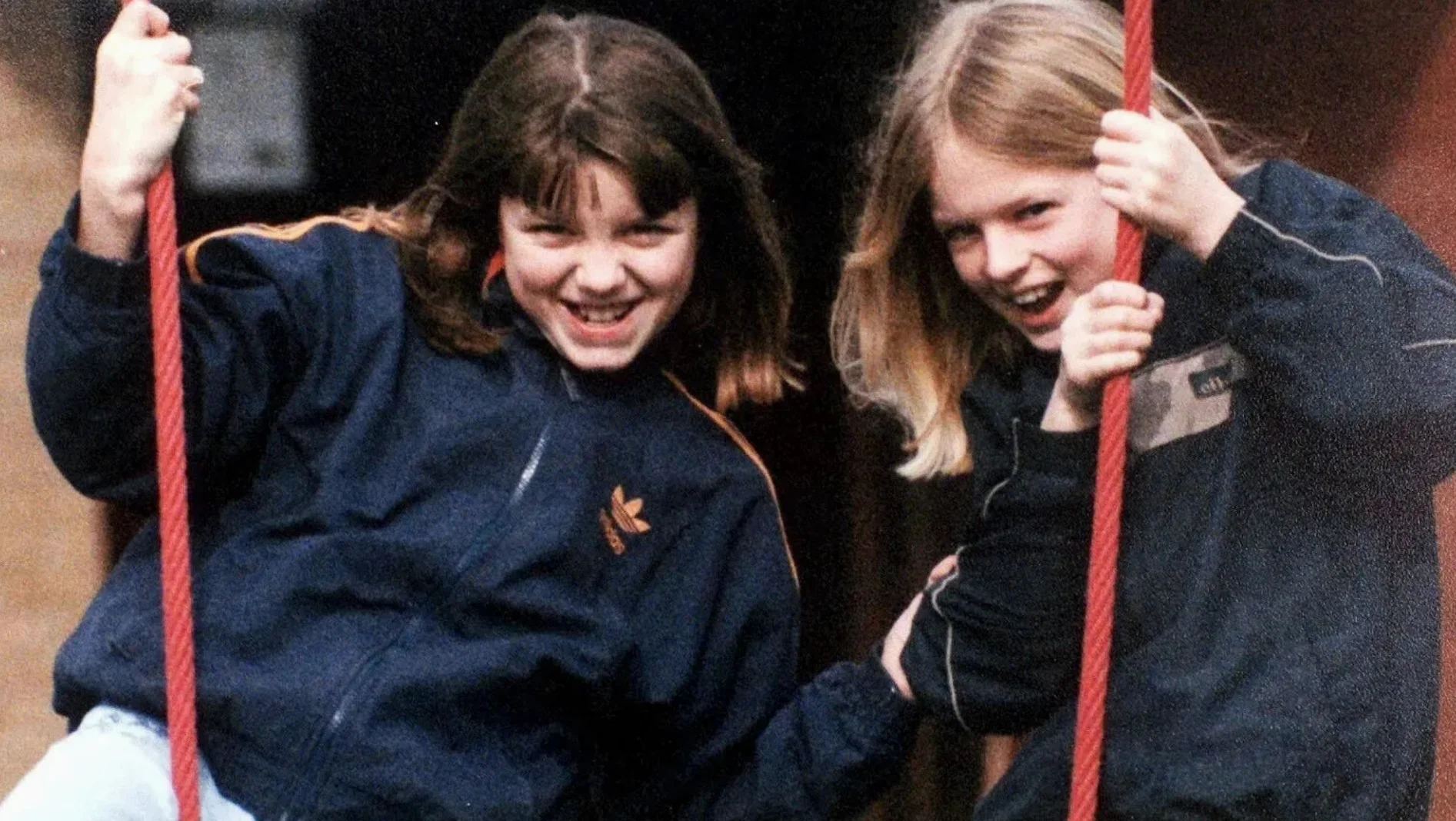
On a warm August evening in 2002, ten-year-old best friends Holly Wells and Jessica Chapman left their family barbecue in Soham, Cambridgeshire, to buy sweets at a sports centre. They changed into matching Manchester United shirts and black shorts, posed for a photo with Holly’s mother, and vanished shortly after. Ninety minutes later, the two girls were gone, victims of a crime that would shatter the nation.
The Town in Shock
The disappearance of Holly and Jessica sent shockwaves through Soham, a small, sleepy town that had never faced such horror before. Posters with the girls’ faces were plastered on lampposts, shop windows, and front pages of newspapers across the country. The town was gripped by fear, and the search for the missing girls consumed the lives of everyone in the community.
Police carried out fingertip searches and used Soham Village College as a command center for daily briefings. Reporters, including the Sun’s Paul Sims, packed into the hall, unaware that the man standing at the back of the room — Ian Huntley, the college caretaker — would later be revealed as the killer.
Huntley, in a navy blue polo shirt and blue trousers, was ever present. He held the keys to the college, opened it for the police, and even laid out plastic chairs for the briefings. As the days passed, pressure mounted on the police, and the town’s anxiety grew.
A Breakthrough and a Capture
The turning point came when Jessica’s mobile phone was found turned off, triggering a signal that led investigators to three possible locations in Soham — one of which was directly outside Huntley’s house. That led to his arrest on suspicion of murder, and the next day, two bodies were discovered in a drainage ditch near Lakenheath airbase in Suffolk.
Paul Sims described the moment he learned of the discovery: ‘My heart sank like a stone.’ The bodies of the two girls, their clothes shredded and partially burned, were found in a ditch where they had been left for days. The town fell into silence, mourning the two schoolgirls who went out for sweets but never came home.
Huntley, known to have taken a sexual interest in young girls, had been accused of sexual assaults in Grimsby before moving to Soham. He was tried in 2003 at the Old Bailey, where he claimed their deaths were accidental. He was convicted by an 11-to-one majority verdict and sentenced to a minimum of 40 years in prison. His accomplice, Maxine Carr, was jailed for perverting the course of justice and released in 2004, later living under a new identity.
The Legacy of a Tragedy
Twenty-four years later, the impact of the Soham murders still lingers. The town has never fully recovered, and the memory of the girls remains a source of pain for their families and the community. Their parents, Kevin and Nicola Wells, fought relentlessly for justice, clinging to the ‘glimmer of hope’ that kept them going through the darkest days.
‘It’s been an incredible roller coaster of a night,’ Kevin Wells said at the time. ‘We found out the news officially at about 6.30am. It’s been extremely upsetting. We were obviously fearing the worst but we are still here to carry on the fight.’
The tragedy has also had lasting effects on the national psyche. It exposed flaws in the justice system and highlighted the vulnerability of children in small towns. The case remains a cautionary tale of how quickly innocence can be stolen and how deeply such crimes can affect a community.
For Paul Sims, the story will forever remain etched in his memory. ‘What happened in Soham 24 years ago will stay with me forever,’ he said. The town may have moved on in some ways, but for many, the scars of that summer remain.





Comments
No comments yet
Be the first to share your thoughts