

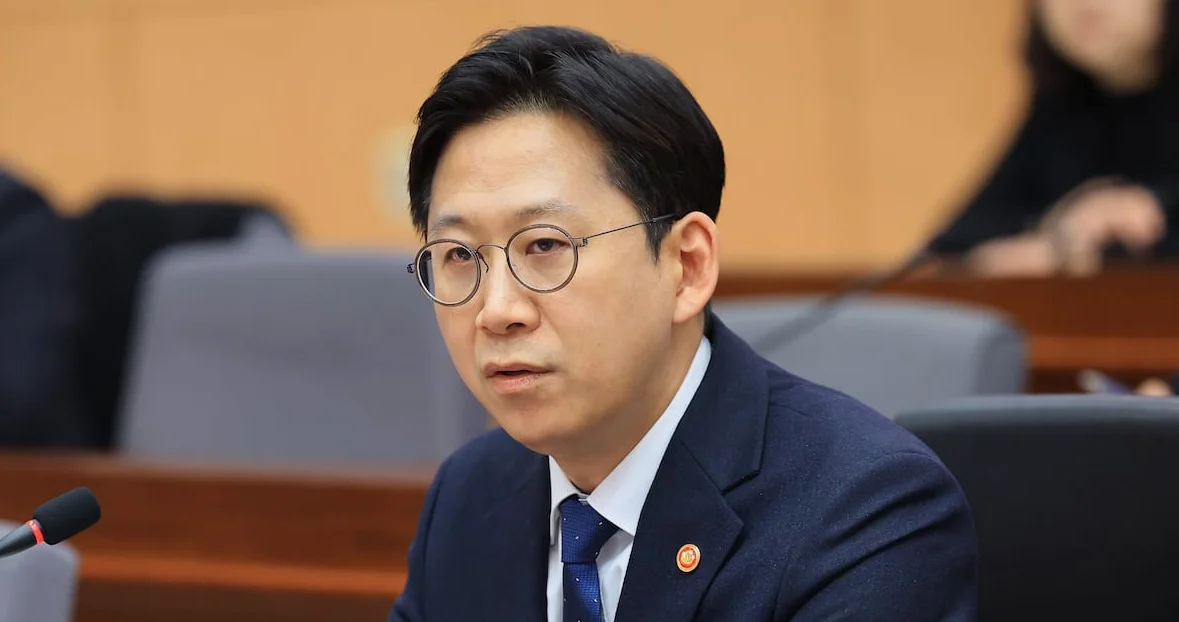
South Korea is rolling out a thorough plan to ensure that all citizens can use artificial intelligence in their daily lives, with the goal of educating 33 million people by 2030. The government has begun implementing the ‘AI for All’ policy, a presidential pledge aimed at enhancing AI accessibility and utilization across the population. Deputy Prime Minister and Minister of Science and ICT Bae Kyung-hoon approved the ‘AI Utilization Capacity Strengthening and Daily Life Integration Plan’ at the 5th Science and Technology-Related Ministers’ Meeting on March 11.
Expanding AI Infrastructure and Education
The government plans to expand the use of government-supported AI foundation models in daily platforms and services. Starting in the first half of this year, companies providing related APIs will receive support in the form of graphics processing unit (GPU) resources secured by the state. This initiative aims to lower the barrier for citizens to access AI models with proven performance.
The Ministry of Science and ICT plans to establish an online integrated education platform called ‘Our AI Learning’ by June. The platform will complement nationwide on-site AI education programs in community spaces such as large supermarkets, local child centers, and senior centers. The government also plans to launch the ‘National AI Competition’ for all generations starting this month and operate an online ‘AI Lab for All,’ where AI can be practiced without prior coding knowledge.
Offline AI practice spaces will be established in each region, and customized education programs will be offered to students, the general public, and digitally vulnerable groups. The government has set a clear target of providing AI education to a total of 33 million people by 2030.
Competition and Practical Experience
The National AI Competition will include multiple events such as an AI utilization case contest, AI quiz competition, AI creation contest, and robotics challenge for students, as well as the AI Rookie competition for university students and the AI Champions competition for research teams. There will also be the National Happiness AI Competition for digitally vulnerable groups. The government aims to broaden direct experience in AI utilization and enhance overall AI literacy through these competitions.
Linkages with existing private and public events will also be , including KT’s ‘K-AI Content Contest,’ Kakao’s ‘AI Top 100,’ and the Ministry of National Defense’s ‘Defense AI Competition (MAICON).’ The National AI Competition will commence with an opening ceremony on March 26 and run in full swing from April through November. Outstanding achievements will be awarded at the year-end AI Festival, with total prize money amounting to 3 billion Korean won.
Addressing Ethical and Security Concerns
The government will also address potential side effects of AI diffusion, including the establishment of ‘AI Ethics Principles’ as a standard for AI utilization. A ‘Youth AI Mental Health Research Group’ will be operated to mitigate dysfunctions such as AI overdependence. These measures are part of a broader effort to ensure responsible AI development and use.
Meanwhile, the meeting also outlined plans for a cloud transition in the public sector. The government aims to fully transition the public sector to the cloud by 2030, currently at 42.4%. A phased cloud transition roadmap up to 2030 will be prepared this year. For Grade 1 and 2 core information systems, a ‘cloud-native’ suitability survey will be conducted from the design stage to assess the applicability of cloud technology.
Based on this, priority systems for application will be selected. The government also plans to revise regulations and security certification systems that hinder the expansion of private cloud usage and improve related policies to review the applicability of cloud-native approaches from the budget planning stage.
According to officials, these initiatives reflect a broader strategy to position South Korea as a global leader in AI innovation and digital transformation. The government’s focus on education, practical application, and ethical considerations highlights its commitment to ensuring that AI benefits all citizens, not just a select few.






Comments
No comments yet
Be the first to share your thoughts