

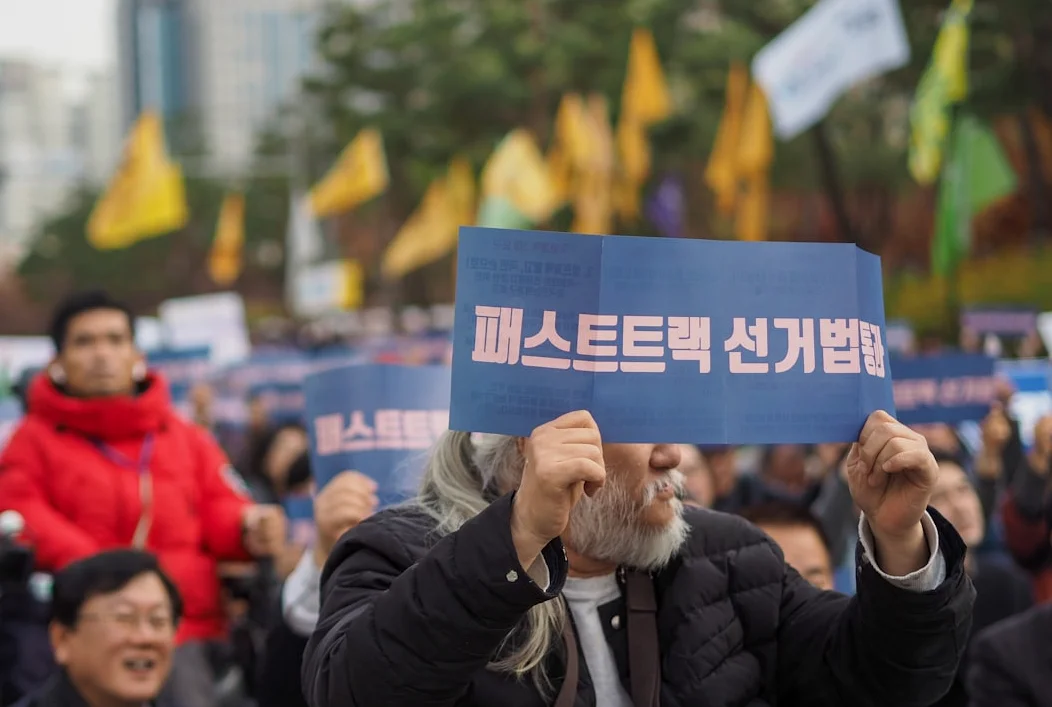
SEOUL — Top presidential aides, government ministers and Democratic Party leaders met Sunday to lock in plans for passing a special US investment bill by the March 9 deadline, according to a party spokesperson.
Rep. Mun Geum-ju of the Democratic Party announced the consensus in a written briefing after the policy coordination session. “The party, government and presidential office share the view that the swift enactment of the special law on investment in the U.S. is in the best interest of our national interest, and we agreed to make every effort to ensure its passage by March 9 as agreed by the ruling and opposition parties,” Mun said.
Kim Yong-beom, presidential chief of staff for policy, chaired the meeting alongside National Security Adviser Wi Sung-lac. Attendees included Finance Minister Koo Yoon-cheol, Industry Minister Kim Jung-kwan, Trade Minister Yeo Han-koo and DP floor leader Han Byung-do.
The group focused on South Korea’s response to the Trump administration’s next moves after Friday’s US Supreme Court decision. That ruling invalidated Trump’s sweeping emergency tariffs, prompting him to issue a proclamation hours later for a temporary 10 percent global tariff under Section 122 of the 1974 Trade Act. The White House set the effective time for 12:01 a.m. Tuesday in Washington.
Trump escalated further on Saturday, posting on Truth Social that he would lift the rate to 15 percent. The shift comes after his administration had imposed 15 percent reciprocal tariffs on South Korean goods — reduced from 25 percent under a bilateral deal. Seoul pledged $350 billion in US investments and other commitments in exchange for that tariff cut.
Officials at the meeting assessed the status of South Korean investment projects in the United States, according to sources familiar with the discussions. They weighed how Trump’s new tariff measures could disrupt those plans and broader trade ties.
The special law aims to formalize and accelerate South Korea’s US investment commitments amid the shifting tariff landscape. Ruling and opposition parties had previously aligned on the March 9 target, and Sunday’s agreement reinforces that timeline.
South Korea’s push reflects urgency to secure economic stability. The country relies heavily on exports to the US market, and tariff hikes threaten key industries like autos and electronics. Trump’s reciprocal tariff policy had already forced negotiations, with Seoul opting for major investments over prolonged trade friction.
No immediate details emerged on the bill’s exact provisions. Party officials indicated lawmakers would prioritize floor debates and committee reviews in the coming weeks to meet the deadline.
The Supreme Court’s rejection of Trump’s original tariffs marked a rare judicial check on his trade agenda. Legal experts noted the decision hinged on limits to presidential emergency powers under the International Emergency Economic Powers Act.
Trump’s quick pivot to Section 122 authority — aimed at balance-of-payments crises — drew criticism from trading partners. South Korean trade officials have signaled readiness to consult with Washington on mitigating impacts.



Comments
No comments yet
Be the first to share your thoughts