

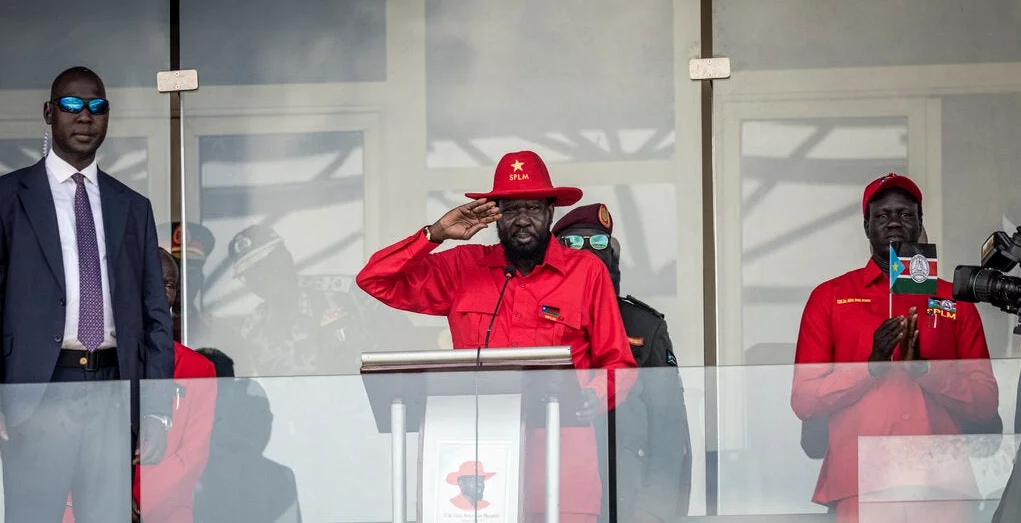
Voter registration was scheduled to begin Saturday, with 3,161 registration centers set up nationwide. But the locations of these centers had not been published, leaving citizens unsure where to register. Gabriel Bol Deng, chairperson of the National Election Commission, urged eligible citizens to register and called on political parties and civil society to help raise awareness. The World Bank estimates that 90 percent of South Sudan’s 15 million people lack state-recognized identification, complicating the registration process.
The postponement follows warnings that elections could further destabilize the country. The South Sudan Civil Society Forum said in a statement that conditions did not support a fair and credible election within the remaining time. Yasmin Sooka, chair of the U.N. Commission on Human Rights in South Sudan, said in October that rushed elections could heighten the risk of renewed conflict and atrocities.
President Salva Kiir dissolved the transitional unity government in September and replaced it with a caretaker administration, a move that critics say consolidates power in his hands. Riek Machar, the former vice president and main opposition figure, has been under house arrest since March 2025 and is on trial for crimes against humanity. With Machar sidelined, there are no credible challengers to Kiir, who is expected to win the election.
Violence has continued to escalate in recent months, including attacks on political figures. Two SPLM delegates were killed in Western Equatoria state while returning from party primaries and congresses. One of the victims was Veronica Lucy Gordon, a former journalist and candidate for a women’s seat in the National Legislative Assembly. Edmund Yakani of the Community Empowerment for Progress Organization condemned the attack and called for transparency in the election commission’s decisions.
The International Crisis Group warned in a briefing to the U.N. Security Council that the conditions for credible elections are not in place and that rushed elections could lead to renewed large-scale violence. Anita Kiki Gbeho, head of the U.N. Mission in South Sudan, said elections must be a milestone in the country’s transition, not its conclusion.
South Sudan is also facing severe economic and humanitarian challenges, including soaring food prices, drought, and flooding. More than 8 million of the country’s 12 million people require food assistance, according to the Famine Early Warning Systems Network. The government has not paid civil servants in over a year, and parts of the country are controlled by armed groups.
Information Minister Ateny Wek Ateny said the postponement would allow more time to register voters and educate them about the process. He acknowledged that the government could not access all parts of the country but insisted the election would be credible.

Comments
No comments yet
Be the first to share your thoughts