

 BBC
BBC 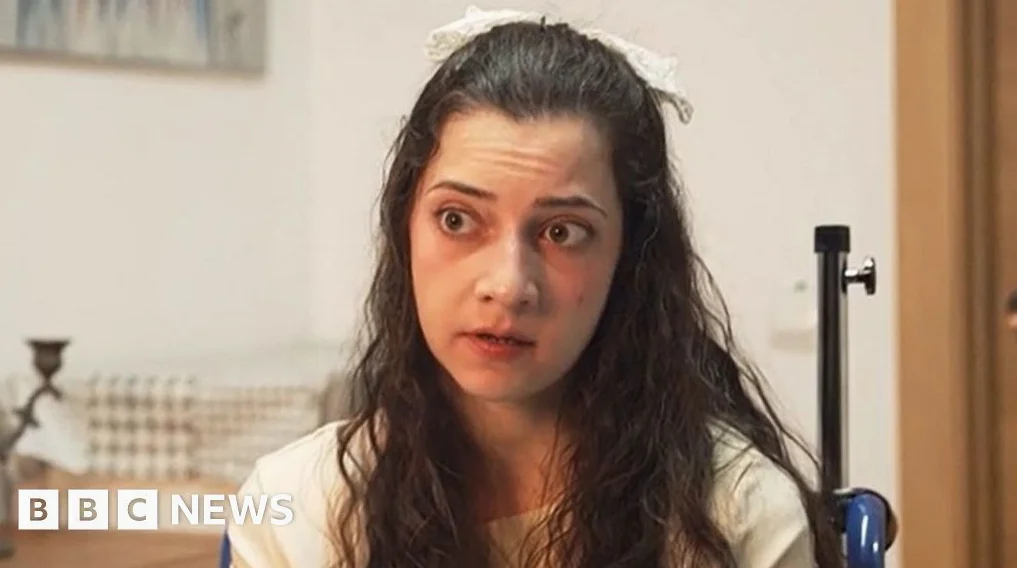
Noelia Castillo. A 25-year-old Spanish woman. Died by euthanasia at a Barcelona hospital on Thursday evening, according to the BBC. Castillo had been left paraplegic after attempting to take her own life in 2022 and had fought for nearly two years to end her life through legal means. Her case has sparked debate about the failures of the state in providing adequate care and the delays in fulfilling her wishes.
Legal Battle and Institutional Failures
Castillo was granted the right to assisted dying in 2024 by the Catalan regional government, but the process was suspended at the last moment due to legal objections raised by her father, supported by the campaign group Christian Lawyers. The case received significant attention in Spain, with Christian Lawyers attempting to block her death until the final hours.
After an 18-month legal battle, the European Court of Human Rights (ECHR) ruled in Castillo’s favor this week, allowing her death to proceed; the ECHR’s decision marked the first time a case had gone to court for a judge to decide under Spain’s 2021 euthanasia law.
Castillo had spent much of her childhood in care homes and had recounted the impact on her mental health from her father’s alcohol problems, sexual assault by an ex-boyfriend, and abuse by several men in a nightclub. In a TV interview. She said nobody in her family had supported her decision to die by euthanasia, and her father ‘hasn’t respected my decision and never will.’.
Public and Institutional Responses
Castillo’s mother had disagreed with her decision but joined her at the Sant Camil Barcelona clinic, and a former friend, Carla Rodríguez, attempted to enter the hospital to persuade Castillo to change her mind, but police prevented her from doing so. British pianist James Rhodes. Who lives in Spain. Issued an appeal to Castillo via social media, offering to pay her medical costs until she felt ‘able to take this decision from a slightly more tranquil place.’.
Christian Lawyers warned that Castillo’s case had highlighted failures in her care. José María Fernández of Christian Lawyers stated, ‘For a girl who obviously has had a very tough life, which we all regret, the only thing that could be offered to her by the healthcare system is death.’
Conservative opposition party People’s Party (PP), which had voted against the 2021 euthanasia law, echoed similar concerns. PP leader Alberto Núñez Feijóo wrote on social media, ‘The institutions that should have protected Noelia failed her,’ and added, ‘I refuse to believe that the state did not have the tools to give her care.’
The Catholic Church, which is closely aligned with the PP, said that Castillo’s story ‘reflects an accumulation of personal suffering and institutional failures.’
Legal and Ethical Complexities
Other observers criticized the fact that Castillo’s wishes were obstructed by legal challenges from her father and Christian Lawyers. El País, a left-leaning newspaper, noted in an editorial that ‘the desire to put an end to her suffering by using the right to euthanasia was… sabotaged by a legal crusade that added nearly two years of pain to her existence.’
Alberto Ibáñez, a member of Congress for the left-wing Sumar platform, stated that ’19 doctors have supported her decision and we should be respectful of it,’ while acknowledging the issue was ‘deeply complex.’
Spain is one of a few European countries, including the Netherlands, Belgium, and Luxembourg, that have passed laws allowing euthanasia to be carried out by physicians. Under Spain’s 2021 law, any Spanish adult over 18 requesting euthanasia must be suffering from an incurable disease or ‘serious, chronic and disabling condition,’ and their decision must be free of external pressure.
The decision must be made twice in writing and certified by a doctor who then consults with another doctor. The request then passes to a Guarantee and Evaluation Commission, which assesses whether the conditions have been met. According to government data, 426 requests for assisted dying were granted in 2024, the most recent year for which data is available.
Castillo’s case has raised questions about the legal and ethical implications of euthanasia in Spain and the role of the state in ensuring that individuals with terminal illnesses are not denied the right to end their suffering. Her death has also sparked discussions about the need for reforms to simplify the euthanasia process and reduce delays that can cause additional pain for those seeking assisted dying.
With the number of euthanasia requests continuing to rise, experts are calling for a reevaluation of the current legal framework to ensure that the rights of individuals are upheld without unnecessary bureaucratic hurdles. The case of Noelia Castillo has become a symbol of the ongoing debate over the balance between individual autonomy and institutional responsibility in end-of-life care.





Comments
No comments yet
Be the first to share your thoughts