

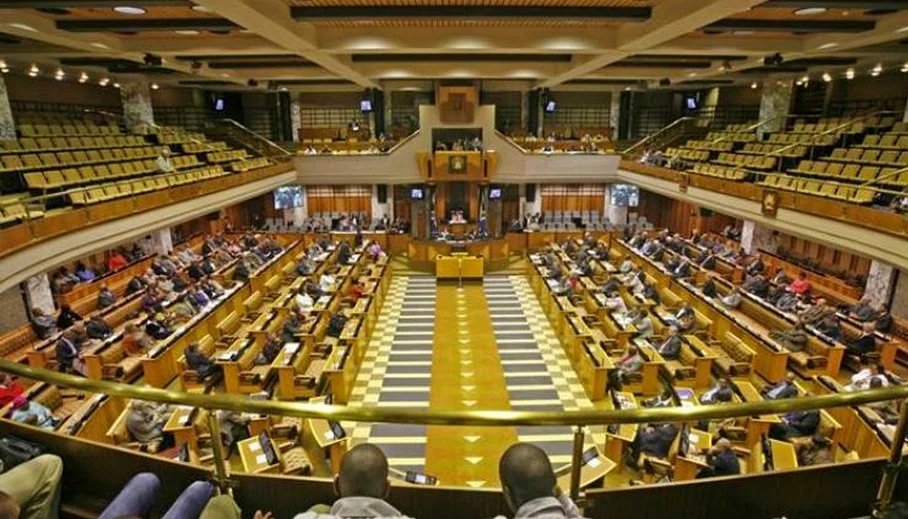
South African National Assembly Speaker Thoko Didiza has raised concerns following the unexpected departure of a witness during a critical parliamentary inquiry into allegations against KwaZulu-Natal Police Commissioner Lieutenant-General Nhlanhla Mkhwanazi. The incident occurred on Thursday when Paul O’Sullivan, a witness appearing before the Ad Hoc Committee, walked out of the session while giving evidence.
Impact on Oversight and Accountability
The incident has sparked concerns about the ability of Parliament to fulfill its constitutional mandate to exercise oversight and hold public officials accountable. Didiza described the situation as an ‘unfortunate development’ and expressed concern over its implications for the integrity of parliamentary processes.
According to a parliamentary statement, committees are constitutionally mandated to conduct oversight, gather evidence, and interrogate matters of public importance in a manner that upholds the dignity and authority of the institution. The statement emphasized that witnesses are expected to cooperate fully with proceedings and respect the authority of Parliament.
The Powers, Privileges and Immunities of Parliament and Provincial Legislatures Act, 2004, explicitly prohibits any person from improperly interfering with or impeding Parliament or its committees in the exercise of their authority. The Act also bars individuals from creating or participating in any disturbance while a committee is meeting.
Speaker Seeks Urgent Report
Didiza has requested an urgent report from the committee’s Chairperson, Molapi Lekganyane, detailing the proceedings and the circumstances surrounding the witness’s departure. The report is expected to provide clarity on what transpired during the session and whether the witness’s actions were in line with parliamentary procedures.
Parliament stated that once the report is received and considered, the Speaker will determine what action, if any, may be necessary under the Powers and Privileges Act and the Rules of the National Assembly. The aim, the statement noted, is to safeguard the integrity of Parliament and ensure that its constitutional mandate is not undermined.
‘Parliament remains committed to ensuring that its processes are conducted in accordance with the Constitution, the law, and its established Rules, and that oversight is exercised firmly, fairly and without fear or favour,’ the statement added.
Broader Implications for Public Trust
The incident has raised questions about the effectiveness of parliamentary oversight in holding powerful officials accountable. With O’Sullivan walking out during the inquiry, the public may question whether the process is strong enough to ensure transparency and justice.
Analysts have noted that such disruptions can erode public confidence in the legislative process. According to a 2022 report by the South African Institute of Race Relations, parliamentary oversight has seen a decline in effectiveness over the past decade, with only 45% of inquiries resulting in actionable recommendations.
Speaker Didiza’s request for a detailed report from the committee’s chair highlights the gravity of the situation. The outcome of this inquiry could set a precedent for how future parliamentary sessions are conducted and whether witnesses will be held accountable for disruptions.
The Ad Hoc Committee was established to investigate allegations made by Mkhwanazi, who has faced scrutiny over corruption and misconduct. The inquiry has drawn significant public attention, with many calling for transparency in the police service.
The next steps for Parliament will be critical in determining whether this incident will be treated as an isolated event or a sign of broader challenges in the legislative process. The Speaker is expected to make a decision on potential actions after reviewing the committee’s report, which could include disciplinary measures or procedural changes.
Parliament’s ability to maintain its authority and ensure accountability in the face of such disruptions will be a key test of its commitment to democratic principles and the rule of law.






Comments
No comments yet
Be the first to share your thoughts