

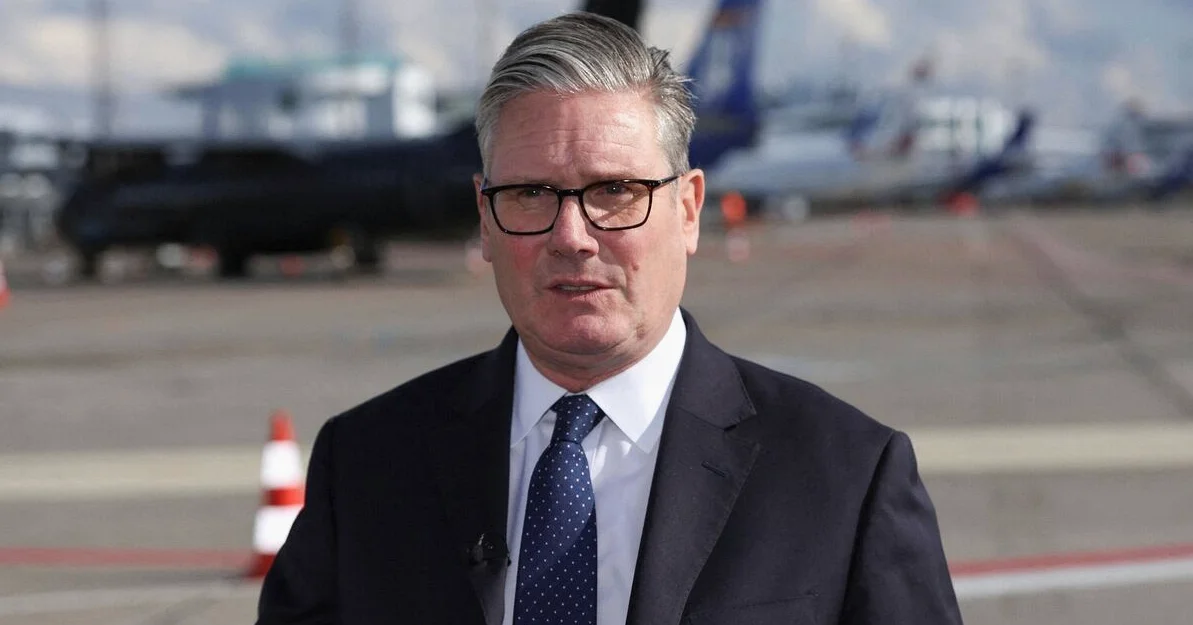
Prime Minister Keir Starmer’s push for greater alignment with European Union regulations has drawn sharp criticism from business leaders, who argue it will impose costly bureaucratic hurdles on UK firms, many of which do not export to Europe.
Red Tape for All, Not Just Exporters
According to a senior Tory MP, the plan—dubbed ‘dynamic alignment’—risks turning the UK back into a de facto rule-taker from Brussels, despite the majority of businesses operating outside the EU.
Mark Francois, chairman of the European Research Group, told the Daily Mail that the policy is effectively a return to EU rulemaking without parliamentary oversight. ‘So-called “dynamic alignment” is just code for becoming a rule taker from Brussels again, regardless of the wishes of our own Parliament,’ he said.
Businesses that do not export to the EU—accounting for 92% of UK firms—will now be subject to the same regulatory burdens as those that do, according to critics. This includes compliance with EU product standards, data protection rules, and environmental regulations, which could increase operational costs and reduce competitiveness.
Exporters vs. Domestic Businesses
Only 8% of UK businesses export to the EU, while 14% trade with the rest of the world, according to the Daily Express. The newspaper has launched a campaign called ‘Give Us a Proper Brexit’ in response to what it calls Starmer’s reversal of the 2016 referendum result.
‘We are talking about real businesses, real employers: the Somerset cheesemaker with export trade halved, the Welsh shellfish trader turning down orders because their catch isn’t fresh by the time the paperwork is done, the Scottish farmer who can no longer sell seed potatoes to customers they’ve supplied for decades,’ the paper said in an editorial.
Businesses that rely on global markets, rather than EU trade, are particularly concerned that increased red tape will make them less competitive in international markets. The UK’s trade with non-EU countries has grown significantly since Brexit, and critics argue that aligning with EU rules will undermine this progress.
‘This just makes us less competitive in world markets,’ said one unnamed business leader, who highlighted the growing cost of compliance as a key concern.
Costs and Consequences
Small and medium-sized enterprises (SMEs) are particularly vulnerable to these changes, as they often lack the resources to handle complex regulatory frameworks. With the cost of running businesses already rising, many are being forced to reduce employment or cut back on operations.
‘It’s just another burden of red tape loaded onto businesses, which at the moment are already reducing employment because the cost of running businesses is soaring,’ a business representative said.
Analysts warn that the policy could lead to a slowdown in economic growth, particularly in sectors reliant on global trade. The UK’s trade with the rest of the world has grown by over 12% since the Brexit referendum, and many companies are now focused on expanding into Asia, the Americas, and Africa.
The government has defended the move, saying it will reduce delays in trade and help keep shelves stocked with goods. ‘By reducing delays and unnecessary paperwork, this deal will help keep shelves stocked, protect jobs and put downward pressure on food price inflation for families across the country,’ a government spokesperson said.
However, the opposition and business groups remain skeptical. ‘British businesses deserve better, and we will work hand-in-hand with them to ensure this deal is a success,’ the Daily Express said in a statement.
With the new regulations set to take effect in early 2025, businesses are being urged to prepare for increased compliance costs. The government has not yet provided detailed guidance on how the new alignment will be implemented, leaving many companies in uncertainty.





Comments
No comments yet
Be the first to share your thoughts