

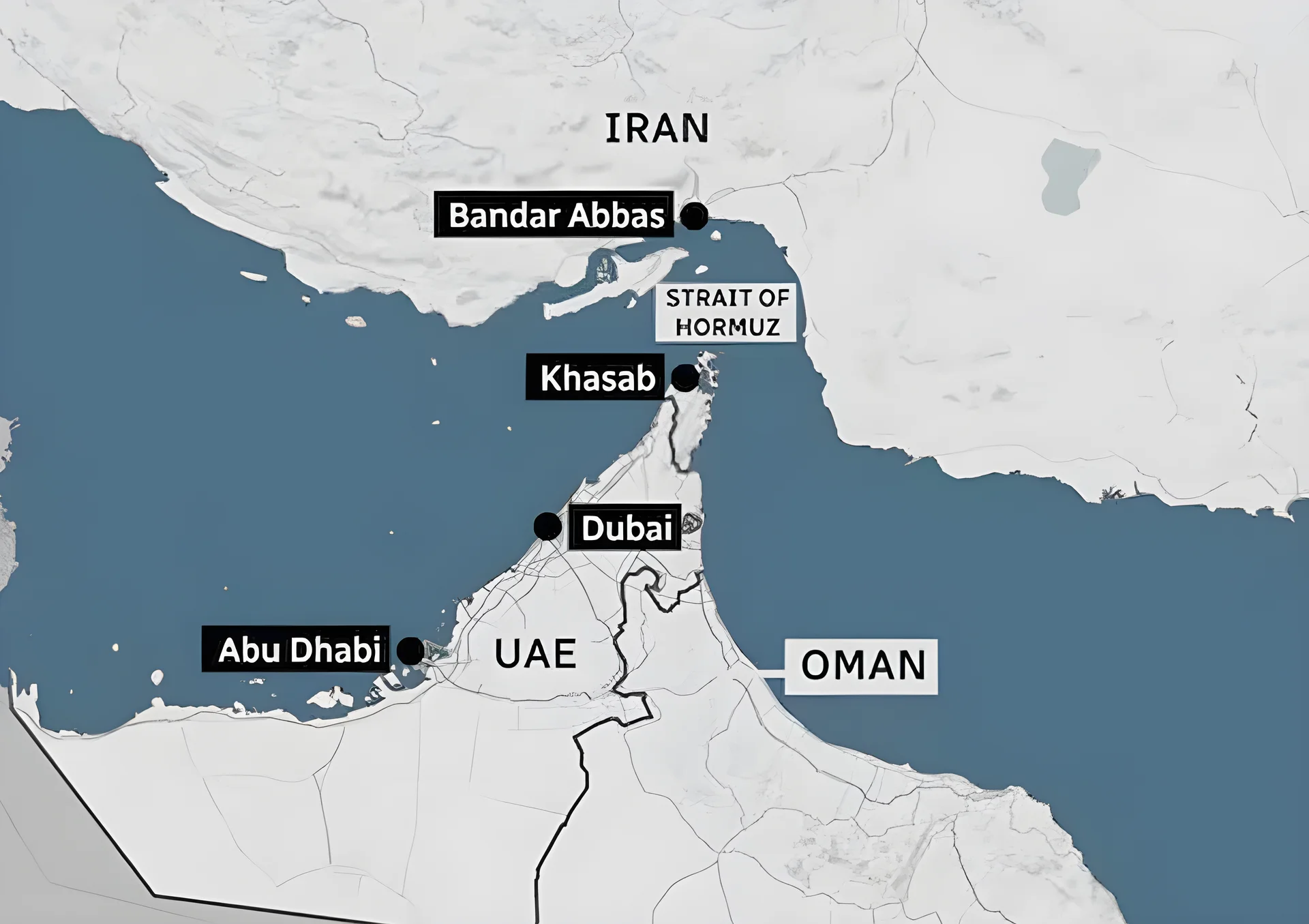
Iran’s Islamic Major Guard Corps (IRGC) announced on 2 March 2026 that it would close the Strait of Hormuz to commercial shipping and threaten attacks on vessels attempting passage, marking the most explicit and forceful maritime stance in recent history. The narrow waterway, through which about 20 percent of the world’s crude oil and a significant portion of liquefied natural gas transit daily, has become the epicenter of a geopolitical and economic crisis. The move has triggered a near collapse of normal shipping flows, with international tanker companies and container operators halting bookings and cancelling transits across the strait.
Energy Markets in Turmoil
The immediate impact on energy markets has been profound. Following Iran’s warnings of closure, crude oil prices surged, with Brent crude rising by 8.6 percent amid reports of halted tanker traffic and escalating tensions. Traders are factoring in the potential for long-term disruption at a chokepoint that supports energy flows to Asia, Europe, and beyond. Reports from shipping analytics indicate that freight costs for very large crude carriers bound for Asia have spiked, illustrating how risk repricing along one route reverberates through global transport markets.
Higher insurance premiums, rising by as much as 50 percent, have further embedded elevated costs into the logistics ecosystem, dampening trade and squeezing profit margins for shippers and commodity buyers. With roughly 10 percent of the global container fleet now caught in a bottleneck near Hormuz, the crisis starkly illustrates how swiftly geopolitical risk can translate into logistical paralysis.
Systemic Risk to Global Energy Security
The significance of Hormuz as a maritime artery cannot be overstated. At about 33 km at its narrowest point, it is one of the world’s most critical chokepoints, with oil, gas, and petrochemical exports from producers in Saudi Arabia, the United Arab Emirates, Kuwait, Qatar, and Iran traversing this corridor en route to global markets. The strait’s closure thus represents not just a regional flashpoint but a systemic risk to global energy security.
The geographic concentration of energy exports through a narrow seaway demonstrates how systemic shocks from regional conflicts can be transmitted instantaneously. Maritime chokepoints, far from being passive conduits of commerce, are potential fault lines that governments and corporate organisations must confront. This realisation is likely to shape longer-term planning, from energy diversification strategies to naval deployments aimed at ensuring freedom of navigation.
Impact on Major Importers
India’s exposure to the crisis is particularly acute, with estimates indicating that almost half of the country’s monthly oil imports pass through the Strait of Hormuz. As a major importer, India sources a significant portion of its crude and LNG via routes through the strait. With tanker movements stalled and supply chains disrupted, New Delhi has issued advisories for Indian-flagged vessels to exercise extreme caution, highlighting the risk to national trade interests and the safety of seafarers.
Similar risks exist in the Indo-Pacific region for China, the world’s largest importer of crude. A protracted closure or ongoing risk premium on Gulf crude supplies would restrict refinery throughput, strain inventories, and potentially lower export competitiveness amid higher input costs. In the European Union (EU), where energy markets remain sensitive to global oil and LNG prices, heightened volatility amplifies cost-of-living pressures and complicates monetary policy for growth and inflation control.
Japan and South Korea, heavily reliant on imported energy and lacking substantial domestic resources, are especially vulnerable even to brief disruptions. Delays in LNG and oil deliveries can necessitate stockpile draws and refinery slowdowns, raising production costs and increasing inflationary pressure. Together, these patterns show how chokepoint risk translates into actual economic vulnerability for major importers, strengthening the motivation for strategic reserves and diverse sourcing.
Shipping companies and ports are scrambling to adapt to the new reality. Carriers are exploring long reroutes around Africa’s Cape of Good Hope or seeking transhipment options that avoid the Gulf entirely, since Hormuz is essentially off-limits. These changes, however, involve clear trade-offs, including longer journey times, higher fuel consumption, and increased congestion at other hubs. These inefficiencies ripple through inventory cycles, delivery schedules, and consumer prices in importing economies, not just the cost of a single voyage.
The crisis unfolding in the Middle East is arguably the most severe in decades. Beyond the battlefield, it constitutes a systemic stress test for global maritime commerce and energy supply chains, highlighting the fragility of interconnected systems and the need for strong policy responses that address both the immediate impacts and the structural vulnerabilities exposed by such disruptions.





Comments
No comments yet
Be the first to share your thoughts