

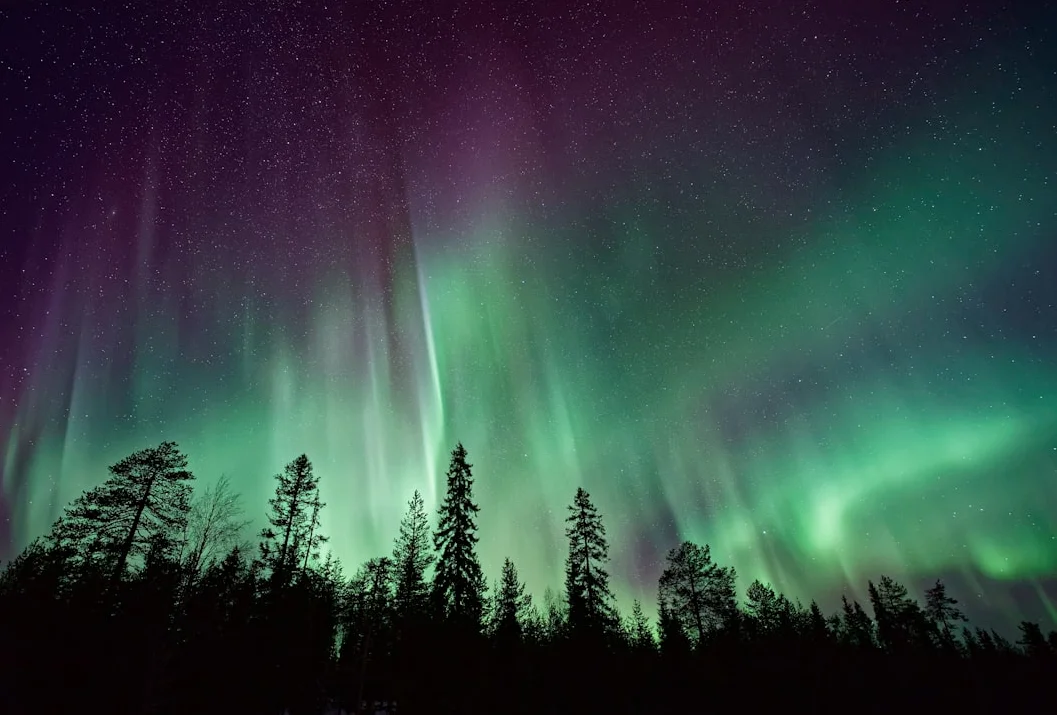
Solar Activity Drives Aurora Visibility
The National Oceanic and Atmospheric Administration (NOAA) reported that a recent solar storm increased the likelihood of the northern lights being seen in regions far south of their typical range. This activity is attributed to a coronal mass ejection that reached Earth earlier in the week.
The aurora borealis, typically seen near the Arctic Circle, has been observed as far south as Texas and Georgia in recent years — However, Thursday’s forecast is more limited, predicting visibility in a narrower band across the United States.
According to the Geophysical Institute at the University of Alaska Fairbanks, the aurora borealis is caused by charged particles from the sun colliding with Earth’s atmosphere. These collisions produce the colorful displays seen in the sky during geomagnetic storms.
States in the Forecast
The list of states potentially seeing the aurora on Thursday includes Minnesota, Wisconsin, Michigan, Iowa, North Dakota, South Dakota, Nebraska, Illinois, and Indiana; these areas have a higher probability due to their northern latitude and clearer skies.
Weather conditions will play a significant role in whether the aurora is visible; Cloud cover and light pollution can obscure the view, making it difficult to see the lights even in favorable locations. The best viewing times are expected between 9 p.m. and midnight.
Experts recommend using light-pollution maps to identify optimal viewing locations; Dark sky preserves and rural areas are ideal for spotting the aurora, as they offer fewer obstructions and a clearer view of the night sky.
Historical Aurora Sightings
Aurora sightings in the U.S. are not uncommon but are typically limited to northern states like Alaska and the Upper Peninsula of Michigan; In 2022, the aurora was visible as far south as North Carolina and Georgia due to an unusually strong solar storm.
According to NASA, solar activity follows an 11-year cycle, and the current cycle is expected to peak in 2025 — As solar activity increases, the likelihood of aurora sightings in lower latitudes will also rise.
While the aurora is a natural phenomenon, it has also become a popular tourist attraction in northern regions, but States like Minnesota and Wisconsin have seen an increase in visitors during periods of high auroral activity, boosting local economies.
The University of Alaska Fairbanks and NOAA continue to monitor solar activity and provide real-time updates on aurora visibility. These forecasts help residents and travelers plan their viewing experiences and increase public awareness of space weather.






Comments
No comments yet
Be the first to share your thoughts