

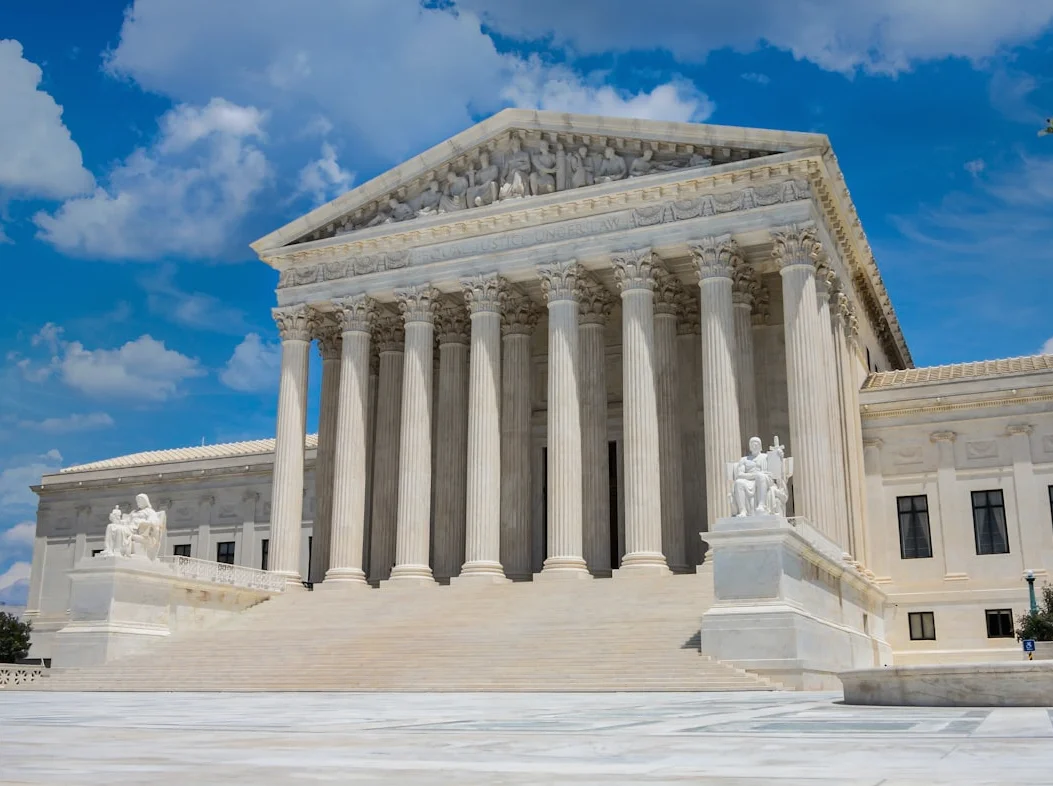
The U.S. Supreme Court rejected without comment a petition by Virginia Democrats to revive a voter-approved redistricting amendment that had been struck down a week earlier by the Supreme Court of Virginia, according to Maryland Matters. The one-line order from the high court dashes Democrats’ hopes of pausing the state ruling while an appeal moved forward, and it does little to quiet the national debate over redistricting as the 2026 midterms approach.
Legal Battle Over Redistricting Procedure
In an emergency application filed Monday with Chief Justice John Roberts, attorneys representing Virginia House Speaker Don Scott, Senate Majority Leader Scott Surovell, Senate President Pro Tempore Louise Lucas, and the commonwealth of Virginia asked the court to pause the state ruling while the appeal moved forward. The filing stated that the irreparable harm from the Supreme Court of Virginia’s decision was profound and immediate. It noted that the court had forced the Commonwealth to conduct its congressional elections using districts different from those adopted by the General Assembly pursuant to a constitutional amendment the people just ratified.
The Virginia Supreme Court ruled 4-3 on May 8 that the constitutional amendment authorizing mid-decade redistricting violated procedural requirements in the Virginia Constitution and therefore could not take effect, according to Fox News. The decision left in place the congressional map adopted in 2021 after Virginia’s bipartisan Redistricting Commission deadlocked — the procedural defect, the court said, “incurably taints the resulting referendum vote,” effectively killing Democrats’ effort to redraw congressional districts ahead of the 2026 midterms.
Impact on 2026 Midterm Elections
Democrats had pursued the revised map as part of a broader national fight over mid-decade redistricting ahead of the 2026 elections, where control of the House is expected to again hinge on a few competitive seats, according to Fox News. The Democratic-backed proposal was designed to make multiple Republican-held Virginia congressional seats more competitive. It was approved by voters in an April 21 special election by a 51.7% to 48.3% margin.
The Virginia redistricting map was approved by voters in an April special election after the Virginia Supreme Court allowed the referendum to proceed amid an ongoing legal challenge over the process lawmakers used to place it on the ballot. The U.S. Supreme Court declined to intervene in the high-stakes redistricting dispute, leaving intact the Virginia Supreme Court ruling that invalidated the voter-approved congressional map overhaul.
Procedural Disputes and Legal Precedent
The Virginia Supreme Court’s May 8 ruling found that lawmakers advanced the proposal after early voting had already begun in the required intervening election cycle, according to Fox News. SCOTUS acted in a brief unsigned order, and no justice publicly dissented. The justices denied state Democrats’ emergency request to block the Virginia high court’s decision.
Republicans currently hold a slim majority in the House, and the outcome of the 2026 midterms could hinge on a few competitive seats. The ruling has broader implications for redistricting efforts in other states. The rejection by the U.S. Supreme Court of the Democrats’ appeal does little to resolve the ongoing national debate over redistricting and the balance of power it can influence in upcoming elections.






Comments
No comments yet
Be the first to share your thoughts