

The Supreme Court’s decision to strike down a significant portion of former President Donald Trump’s emergency tariffs has thrown a major wrench into the Republican Party’s financial strategy, creating a $1.9 trillion revenue shortfall over the next 11 years, according to the Committee for a Responsible Federal Budget.
Revenue Loss and Fiscal Dilemma
Maya MacGuineas, president of the nonpartisan fiscal watchdog group, said the ruling undermines the Republican Party’s ability to offset the growing national debt.
The group’s estimate suggests that the revenue lost from the invalidated tariffs could significantly exacerbate the projected $4.1 trillion increase in the federal deficit from 2025 to 2034, as outlined by the Congressional Budget Office (CBO). The CBO did not include the tariff revenue in its calculations, highlighting the uncertainty in the current fiscal landscape.
Representative Richard Neal, the top Democrat on the House Ways and Means Committee, said the loss of tariff revenue complicates the financial situation further. ‘The numbers never added up, and now they’re further complicated,’ he said.
Trump’s Response and Legal Hurdles
President Trump has vowed to continue using tariffs to pressure trading partners and generate revenue, despite the Supreme Court ruling. He plans to replace the invalidated emergency tariffs with a new 15 percent global tariff using a different law, but the new law only allows the tariffs to remain in effect for 150 days unless approved by Congress.
Treasury Secretary Scott Bessent said the administration would be able to enact enough new tariffs using other laws to avoid a revenue drop this year. However, the refund process could take months as lower courts determine the next steps.
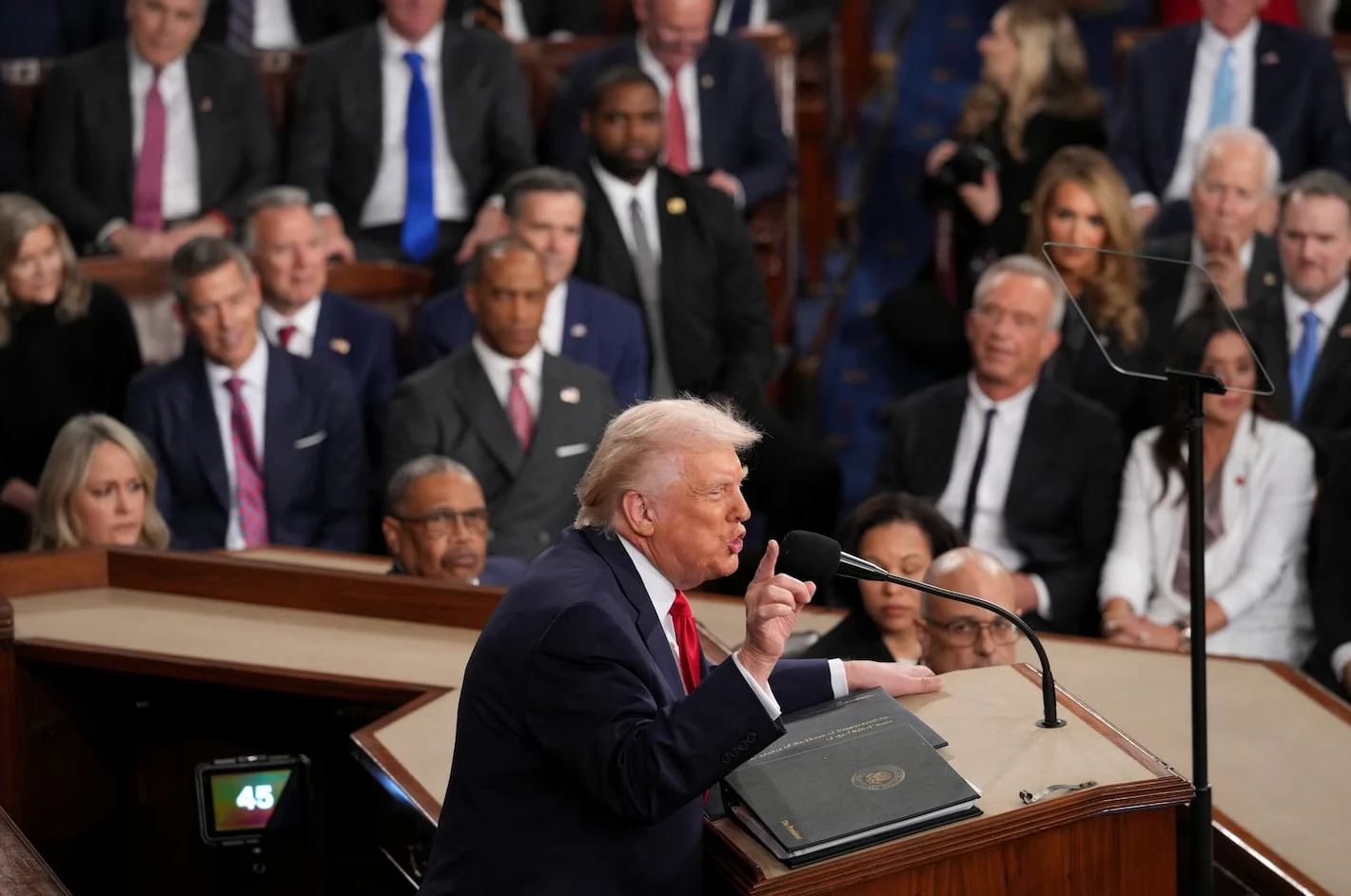
Trump claimed in his State of the Union address that the tariffs have generated hundreds of billions of dollars in revenue and helped secure trade deals. ‘Countries that were ripping us off for decades are now paying us hundreds of billions of dollars,’ he said.
Economic Impact and Criticisms
Economists warn that Trump’s tariffs have contributed to slower job growth and elevated inflation, as businesses face higher costs from the levies. Douglas Holtz-Eakin, president of the American Action Forum, criticized the use of tariffs as a revenue tool, calling them ‘highly distortive’ and ‘regressive.’
Representative Chip Roy, a Texas Republican, said he never expected the tariff revenue to be a reliable source. ‘Use it to pay down the debt, use it to help Americans,’ he said, suggesting that new tax cuts could help offset the costs of the tariffs.
However, additional tax cuts could worsen the national debt, which is now nearly $39 trillion. Despite increased tariff revenue of about $120 billion in the fiscal year that ended in September, the CBO found that the federal budget deficit remains essentially the same as in 2024.
Massachusetts Senator Elizabeth Warren has called for the Trump administration to refund the money from the invalidated tariffs and scale back tax cuts for billionaires and corporations. ‘Now that that tariff revenue has disappeared, it’s time to roll back those tax cuts,’ she said.
MacGuineas warned that the loss of the tariff money, combined with the projected cost of the tax cuts, makes the nation’s fiscal situation more dire. ‘An already terrible fiscal situation will be even worse,’ she said.





Comments
No comments yet
Be the first to share your thoughts