

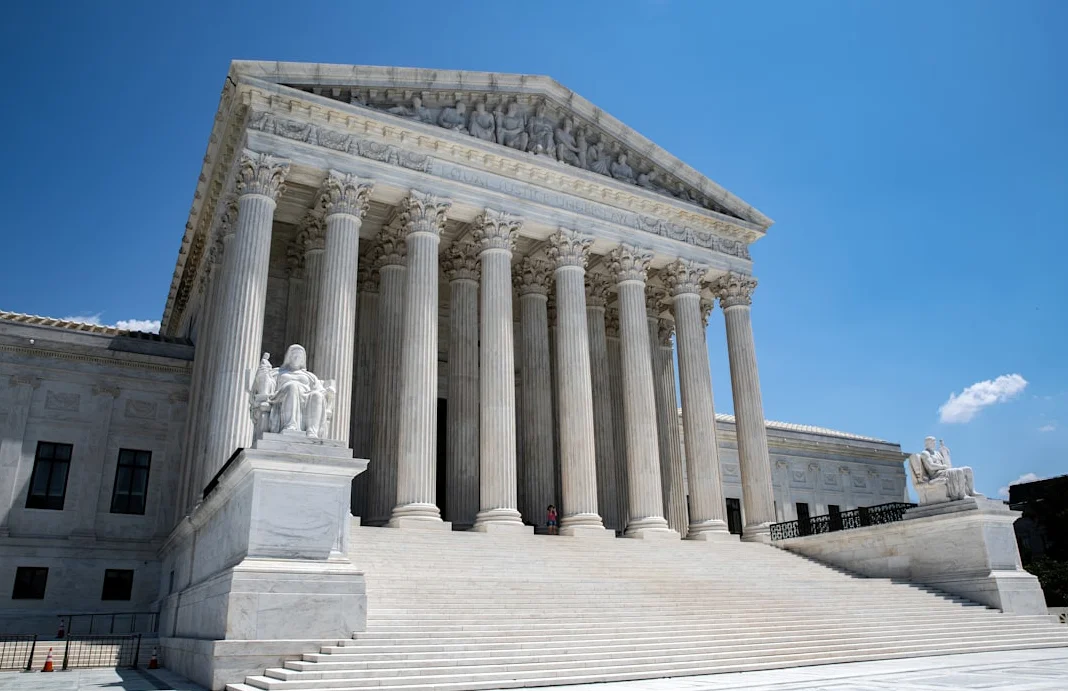
The Legal Precedent and Historical Context
The case hinges on the landmark 1898 decision in United States v, while Wong Kim Ark, which established that anyone born in the United States, regardless of their parents’ nationality, is automatically a citizen under the 14th Amendment. NBC News reports that this precedent is being tested as the court considers the Trump administration’s argument that the phrase ‘subject to the jurisdiction thereof’ in the amendment may exclude children of undocumented immigrants.
In a moment that could take on new significance almost 150 years later, Omaha election official Charles Wilkins on April 5, 1880, refused to register John Elk to vote on the grounds that he was Native American, and therefore not an American citizen. According to NBC News. This historical reference is being used to frame the current legal debate.
The Court’s Questions and Legal Scrutiny
During the hearing, Supreme Court justices posed pointed questions to the administration’s legal team. According to CNN, Justice Thomas asked the first question about the Dred Scott case, a historical reference to the 1857 ruling that denied citizenship to Black Americans. Justice Barrett questioned the administration’s attempt to fill a perceived ‘hole’ in their arguments, stating, ‘That’s not textual.’
Chief Justice Roberts, who presided over the hearing, noted, ‘It’s a new world. It’s the same Constitution,’ according to CNN. This statement reflects the court’s acknowledgment of evolving societal norms while upholding constitutional principles. Meanwhile, Justice Alito criticized immigration authorities for applying immigration laws ‘ineffectively,’ according to Fox News.
Trump’s Presence and Political Implications
President Trump was present at the beginning of the hearing but left before the arguments concluded, according to CNN. His presence revealed the political significance of the case. According to Fox News, Trump has expressed support for the administration’s stance, indicating that a ruling in their favor could have far-reaching implications for U.S. immigration policy.
According to NBC News, the plaintiffs argue that the Trump administration’s move to restrict birthright citizenship could set a dangerous precedent, potentially denying citizenship to children born in the U.S. to undocumented immigrants. The legal team representing the administration has cited historical cases, including the Dred Scott decision, to support their argument.
The Supreme Court’s decision on this case will depend on its interpretation of the key phrase ‘subject to the jurisdiction thereof,’ as reported by EL OBRERO | Periodismo de datos. This phrase, central to the 14th Amendment, has been the focal point of legal debates for decades. The court’s interpretation could either uphold the existing precedent or reshape it significantly.
As the case progresses, legal experts and policymakers are closely watching the proceedings. The outcome could influence not only immigration policy but also the broader interpretation of constitutional rights. According to NBC News, the plaintiffs are emphasizing the importance of maintaining the precedent set by the Wong Kim Ark case, which has been a cornerstone of U.S. citizenship law for over a century.
TelevisaUnivision, while not directly covering the legal proceedings, has highlighted the broader implications of such legal decisions on immigration policy and public discourse. The case has sparked renewed debates about the balance between national sovereignty and constitutional rights, with the Trump administration’s challenge at the center of the discussion.






Comments
No comments yet
Be the first to share your thoughts