

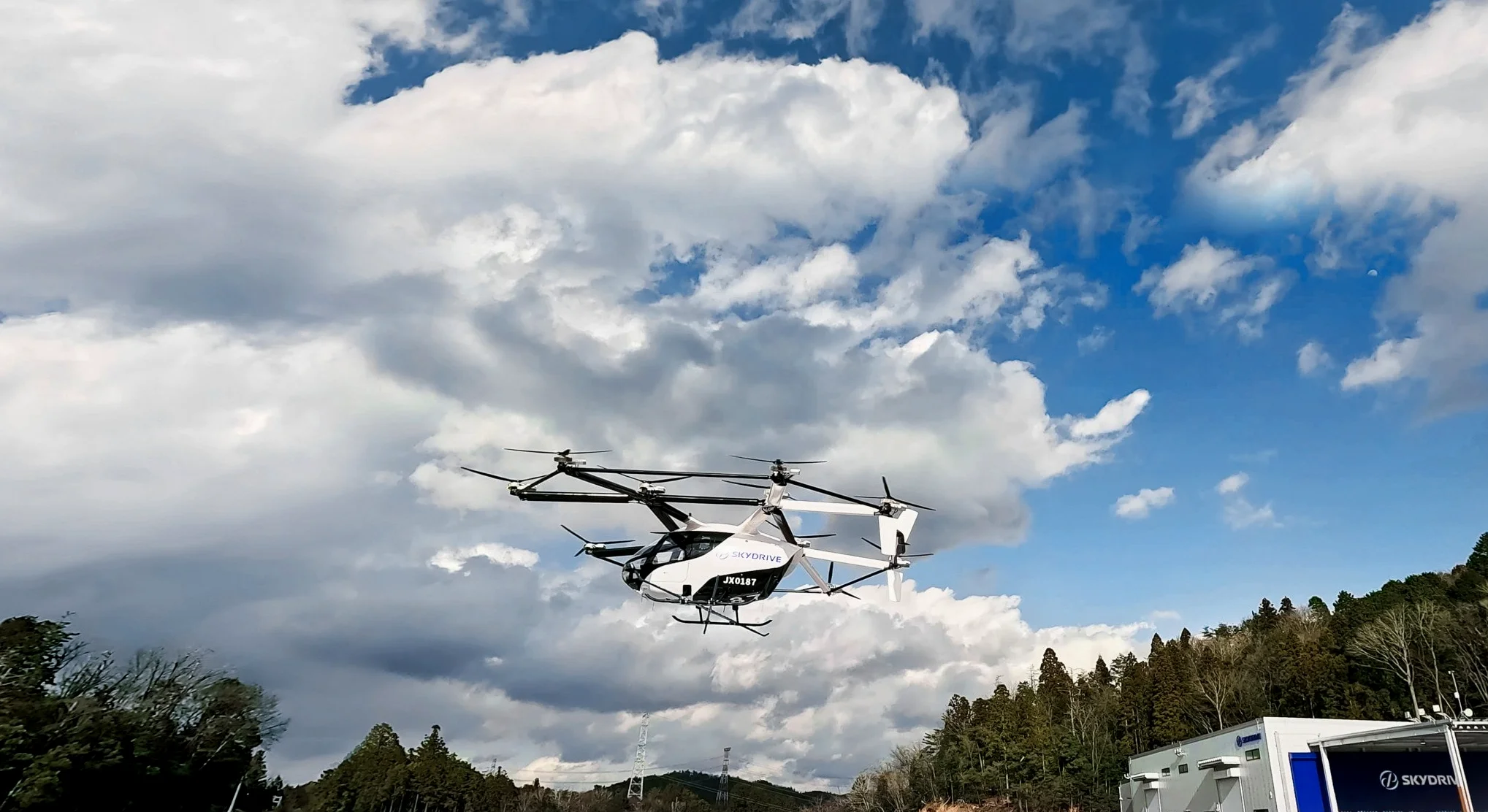
SkyDrive, a Japanese developer of electric vertical takeoff and landing (eVTOL) aircraft, has made a significant stride toward full certification for its SD-05 model, with officials confirming the company has reached a key stage in the regulatory approval process. This progress marks a major step toward the aircraft’s eventual commercial deployment, which is targeted for 2028, and could open the door to the U.S. market through Federal Aviation Administration (FAA) certification.
Progress in Certification Process
The company, which is backed by Suzuki Motor Corporation, has completed the fourth step in the certification process with Japan’s Civil Aviation Bureau (JCAB), according to SkyDrive officials. This phase involves finalizing the General Certification Plan, a detailed outline of how the aircraft will be tested to meet established safety and performance requirements.
The General Certification Plan is a crucial transition point from regulatory planning to actual testing, setting the stage for the first certification flight tests of the SD-05. Once these tests are complete, SkyDrive will enter the final phase of certification, which involves verification and approval from JCAB.
According to SkyDrive, the company is on track to meet its 2028 commercial launch goal, which includes the U.S. market. Officials said the company is also working with the FAA to secure Type Certification for the SD-05 in the United States. While additional steps will likely be required after JCAB approval, the company remains confident about meeting its global launch target.
Strategic Partnerships and Market Expansion
SkyDrive is one of the few eVTOL developers worldwide to benefit from a strategic partnership with a major automotive manufacturer. Suzuki, a long-standing partner, has played a key role in the development and production of the SD-05. Production began in 2024 at a Suzuki-owned plant in Japan, with the automaker also acting as a liaison between SkyDrive and potential customers in India, one of the company’s primary markets.
Suzuki’s involvement is part of a growing trend in the eVTOL industry, where automotive companies are using their manufacturing expertise and supply chains to support the development of electric air mobility solutions. This partnership is expected to accelerate SkyDrive’s path to commercialization and help reduce production costs.
Pioneering AAM in Japan
SkyDrive has long been a pioneer in Japan’s Advanced Air Mobility (AAM) sector. The company was the first to fly a piloted eVTOL in the country and developed the world’s smallest eVTOL at the time, the SD-03. The SD-05, its current model, builds on that legacy with improved performance and safety features.
The company’s progress has been closely watched by industry observers, particularly after its public demonstration at the 2025 Osaka World Expo. The event, which showcased several eVTOL prototypes, was seen as a turning point for the AAM industry, with many companies coming closer to regulatory approval and public acceptance.
According to industry analysts, the success of SkyDrive and other eVTOL developers could have a significant impact on urban transportation, particularly in densely populated areas where traffic congestion is a major issue. The SD-05, once certified, could be used for short-haul flights, emergency services, and even tourism.
SkyDrive’s ability to secure both JCAB and FAA certifications will be critical to its long-term success. If the company meets its 2028 launch target, it could become one of the first eVTOL operators to offer commercial services in Japan and the U.S., setting a precedent for the broader adoption of electric air mobility.
The company’s progress also highlights the growing importance of cross-industry collaboration in the development of emerging technologies. As more automotive and aerospace companies enter the eVTOL space, the pace of innovation and commercialization is expected to accelerate.






Comments
No comments yet
Be the first to share your thoughts