

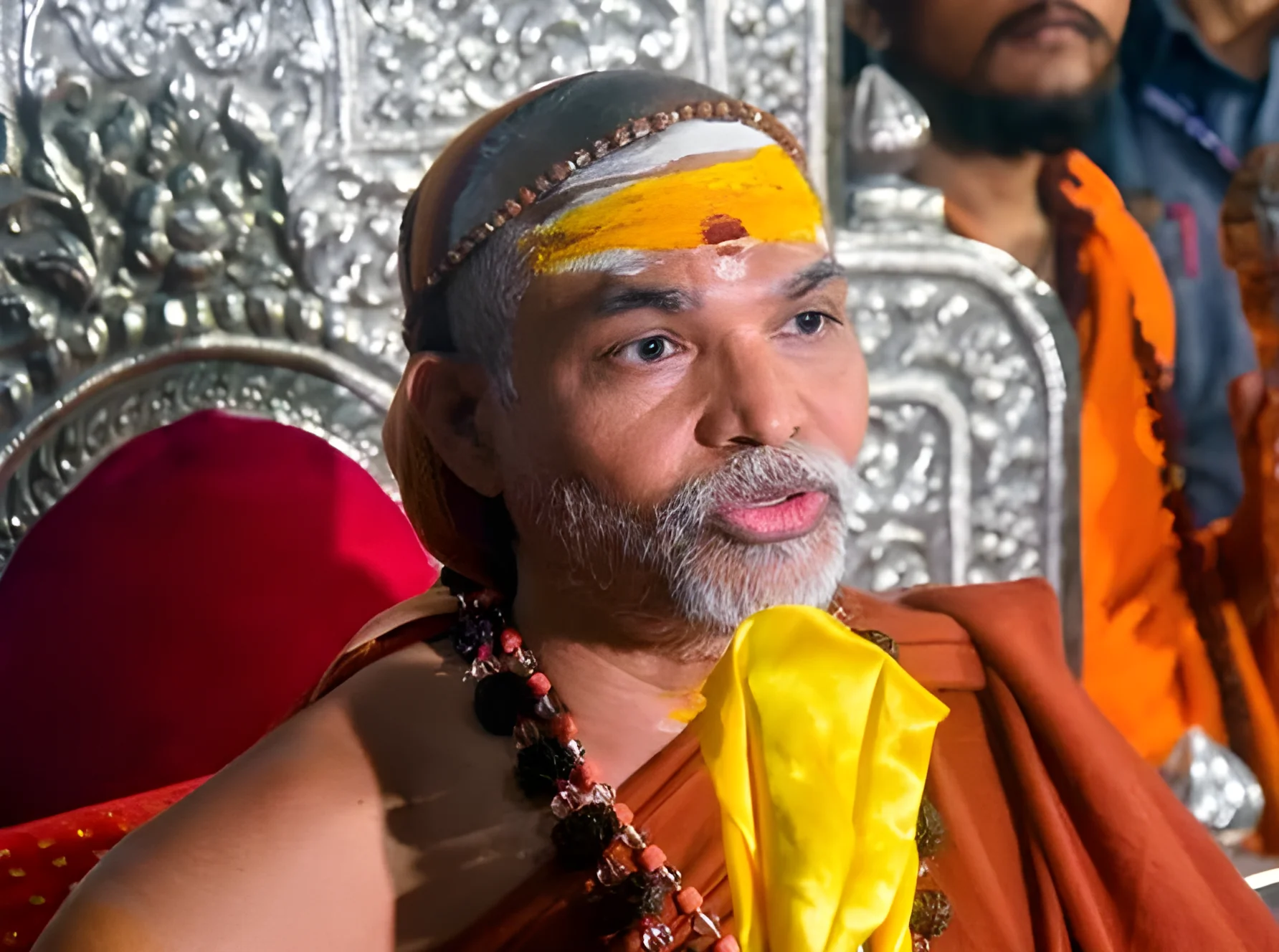
Varanasi, March 1 — Swami Avimukteshwaranand, a prominent Hindu spiritual leader and head of the Kedarnath Peeth, has announced a public march to Lucknow on March 11, citing a lack of response from Uttar Pradesh Chief Minister Yogi Adityanath regarding cow protection. The move comes amid growing public discourse on the role of cows in Hindu tradition and the legal and social challenges surrounding their protection.
Call for Public Participation in Cow Protection
Speaking to reporters in Varanasi, Swami Avimukteshwaranand stated that he had not received any communication from the chief minister regarding cow protection issues. He emphasized that the march is a response to what he perceives as a lack of action on the matter.
‘We have not received any message from Yogi Adityanath, nor any indication that he is in a position to do anything for Gomata,’ he said, referring to the cow as ‘Gomata,’ a term of reverence in Hinduism. ‘In this situation, we have announced a programme to reach Lucknow on March 11. There are still 10 days left. If you can do something, then do it.’
The spiritual leader also mentioned that on March 6, his followers would observe the birth anniversary of Chhatrapati Shivaji Maharaj, who he described as a protector of cows and Brahmins. This religious event is expected to draw large crowds, which could potentially bolster the momentum for the march.
Religious Significance of Cow and Brahmin Unity
Avimukteshwaranand emphasized the deep religious significance attached to cow protection in the Sanatan Dharma tradition. He explained that in the Sanatan tradition, Brahmins and cows are considered inseparable.
‘The point is that Brahmins and cows are not separate — they are one. The Brahmin and the cow belong to the same lineage. A Yajna is performed by combining both: the Brahmin has the mantra, and the cow provides the ghee, which makes the Havan possible. Only when the Brahmin and the cow come together can the Yajna of Sanatan Dharma progress,’ he said.
His comments reflect a broader cultural and religious sentiment in parts of India, where the cow is considered a symbol of purity and life, and its protection is often framed as a moral and spiritual duty. This has led to various movements and protests over the years, sometimes resulting in violent clashes.
March Organized as a Sincere Appeal
Clarifying the nature of the proposed march, Swami Avimukteshwaranand said that no formal organizational arrangements would be made by his side. He emphasized that the initiative is being presented as a sincere appeal rather than an organized event.
‘Look, we are not an organisation in the sense that we can tell people exactly how many should come from where. We don’t have arrangements to provide buses, vehicles, tractors, meals, or anything else. We are only making a sincere appeal. Anyone who wishes to spend their own resources and come for the sake of Gomata will come,’ he said.
He described the march as a ‘historic moment’ and expressed hope that people would voluntarily come forward. ‘This will be a historic moment, in which, at a single call for truth, people will come forward and contribute from their own pockets for the sake of Gomata,’ he added.
The proposed march has raised questions about its logistical feasibility and the potential for large gatherings in the capital of Uttar Pradesh. While the spiritual leader has not sought official permission for the event, authorities in Lucknow have not yet commented on the potential for a mass protest.
With the date of the march less than two weeks away, the situation remains fluid. Activists and community leaders are closely watching the developments, as similar marches have occurred in the past, sometimes leading to significant public and political responses.






Comments
No comments yet
Be the first to share your thoughts