

 BBC
BBC 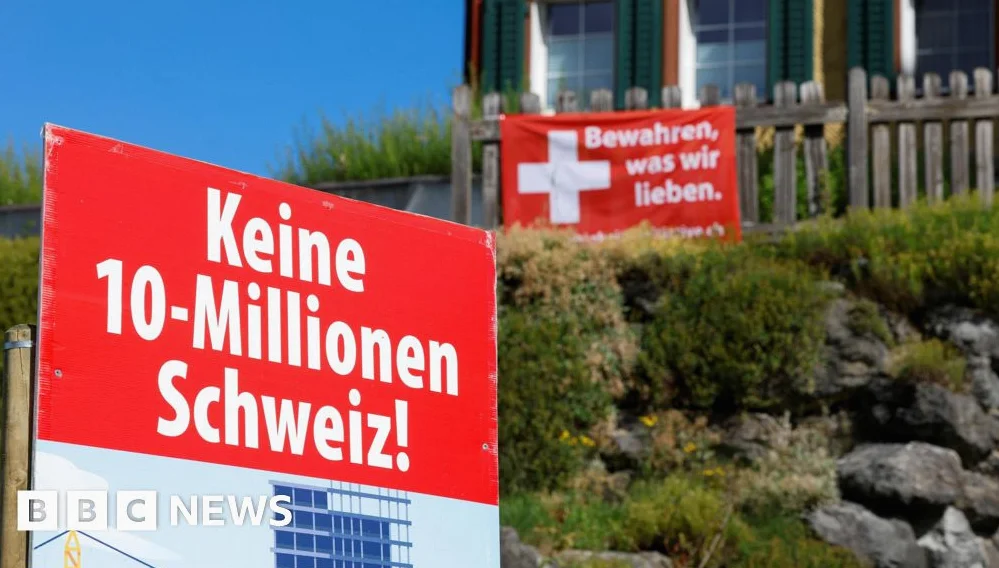
Switzerland’s population has grown significantly since 2002, when it stood at 7.3 million, while As of now, the population is 9.1 million, with 27% of residents not being Swiss citizens, according to the BBC.
Public Services and Immigration Concerns
The Swiss People’s Party (SVP) has long campaigned on an anti-immigrant platform, often attributing societal issues to asylum seekers and minorities; Despite these arguments, the population cap proposal failed to gain enough support. Critics argued that the cap could disrupt essential sectors such as tourism, healthcare, and elder care by limiting the availability of immigrant workers.
Swiss business leaders also expressed concerns, fearing that a population cap would jeopardize Switzerland’s access to the European single market, and Over half of Swiss exports are sold into the EU, and this access depends on Switzerland’s adherence to the EU’s free movement of people agreement. Had the cap been approved. Switzerland would have had to terminate this agreement, according to the BBC.
Geopolitical Considerations
Some voters were reportedly concerned about the potential for isolation in a volatile global environment. Although Switzerland remains neutral, it has been increasing its defense spending and exploring closer security coordination with European neighbors. This context may have influenced voter sentiment regarding the population cap proposal.
Two young politicians with differing views on immigration shared their perspectives prior to the vote. Nils Fiechter, 29, representing the SVP in the canton of Bern, lamented, ‘We have lost control. Unchecked immigration is leading to Switzerland no longer being Switzerland.’
Implications of the Rejection
The rejection of the population cap suggests that many Swiss voters prioritize economic and geopolitical stability over strict immigration controls. The SVP’s argument that capping the population would alleviate pressure on housing, transport, and the environment did not sway enough voters. The outcome highlights the complex balance between maintaining national identity and ensuring access to essential services and international markets.






Comments
No comments yet
Be the first to share your thoughts