

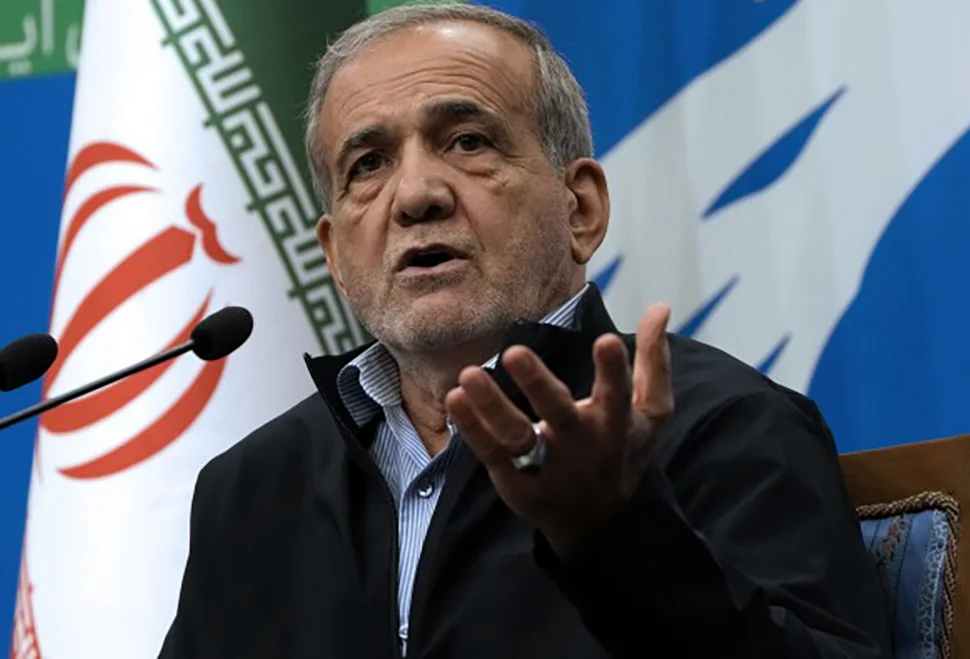
Tehran’s leadership is in turmoil as the newly appointed Supreme Leader, Ayatollah Mojtaba Khamenei, remains absent from public view, leaving officials and citizens uncertain about his condition and authority. The situation has deepened the uncertainty gripping Iran’s political establishment, as the war triggered by Operation Roaring Lion continues to reshape the nation’s internal power dynamics.
Political Disarray and Uncertainty
According to reports compiled by IranWire, Iran’s political leadership is currently functioning in a state of severe disarray. The conflict began with coordinated strikes by the United States and Israel that killed Iran’s long-time Supreme Leader, Ayatollah Ali Khamenei, on the first day of hostilities. Within days, Iran’s Assembly of Experts moved swiftly to appoint his son, Mojtaba Khamenei, as the Islamic Republic’s third Supreme Leader.
Yet in the weeks since that appointment, Mojtaba Khamenei has not appeared publicly, nor has he issued a visible statement confirming his authority. This absence has raised serious questions about how power is currently being exercised in a system where the Supreme Leader traditionally wields ultimate authority over military, judicial, and governmental affairs.
A source inside Iran told IranWire that President Masoud Pezeshkian himself has had no direct contact with Mojtaba Khamenei since the latter’s appointment. ‘We have no information about Mojtaba Khamenei’s status,’ the source reportedly said. ‘Government ministers have no news about him, and as far as I know, Pezeshkian himself has had no contact at all with Ayatollah Mojtaba Khamenei.’
Instability in Government and Civilian Sectors
The absence of visible leadership has coincided with growing instability inside the Iranian government. According to sources speaking to IranWire, President Pezeshkian’s administration is now facing ‘serious disorder’ as ministries struggle to maintain normal operations amid wartime pressures. The conflict has disrupted communications networks, government logistics, and economic planning, leaving civil servants uncertain about their responsibilities and the availability of state resources.
In contrast to the turmoil affecting civilian ministries, the Islamic Major Guard Corps (IRGC) reportedly continues to function with comparatively strong internal coordination. Analysts say this disparity may further strengthen the already significant influence of the Major Guards within Iran’s power structure.
The uncertainty surrounding Iran’s leadership comes at a particularly sensitive moment in the country’s calendar. March 20 marks Nowruz, the Persian New Year, one of the most important cultural and social holidays in Iran. Traditionally, government employees receive end-of-year bonuses along with their regular salaries during this period. Yet according to insiders cited by IranWire, the government’s financial situation has deteriorated so dramatically that officials are unsure whether salaries will even be paid.
‘The government’s instability is so severe that it is unclear whether it will even be able to pay salaries to employees during Nowruz,’ one government insider told the outlet. ‘We have a bleak Nowruz ahead of us.’ For millions of Iranians already facing inflation, sanctions, and wartime disruption, the possibility of missed payments could exacerbate social tensions.
Speculation and Public Sentiment
Since his appointment on March 8, 2026, Mojtaba Khamenei has not released any public photograph, video, or speech confirming his leadership. Sources within the Iranian establishment told IranWire that a statement from the new Supreme Leader is expected eventually, but officials remain uncertain whether it will take the form of a recorded video, an audio message, or a written declaration.
The absence of such a message is unusual for Iran’s political system, where symbolic displays of authority—public appearances, speeches, and televised addresses—play a central role in maintaining the legitimacy of the regime. Despite the uncertainty surrounding Mojtaba Khamenei’s condition, Iran’s powerful security institutions have moved quickly to demonstrate loyalty.
According to Iranian state media reports referenced by IranWire, both the Islamic Major Guard Corps and the regular Iranian army have formally pledged allegiance to the new Supreme Leader. In a statement released shortly after his appointment, the Major Guards declared: ‘We are ready to obey the orders of the Supreme Leader, Mojtaba Khamenei, and even sacrifice ourselves for him.’
Such declarations underscore the key role the IRGC plays in sustaining the regime’s authority, particularly during periods of instability. Yet the regime’s efforts to project unity appear to contrast sharply with sentiments expressed by some segments of the Iranian public. Videos circulating on social media shortly after Mojtaba Khamenei’s appointment reportedly captured crowds chanting slogans such as ‘Death to Khamenei’ and ‘Death to the dictator.’
According to coverage compiled by IranWire, the chants could be heard in multiple locations, reflecting the anger that has simmered within Iran since years of political repression and economic hardship. Other videos show regime supporters gathering in Tehran to celebrate Mojtaba’s selection, illustrating the sharp divide within Iranian society.
Observers note that Mojtaba Khamenei is widely regarded as an ultra-conservative figure whose political views are considered even more hardline than those of his father. According to analyses cited by IranWire, he has long been associated with the Major Guards and is believed to have cultivated close ties with key figures within the organization. He is known for his strongly anti-Western and anti-Israeli positions, making him a natural choice for factions within the Iranian establishment that favor confrontation with foreign powers.
Complicating the situation further are reports that Mojtaba Khamenei may have been injured during the early stages of the war. Iranian state television acknowledged that he had sustained injuries but did not provide details about when or how they occurred. Additional reports suggest that Israel may have attempted to assassinate him during the conflict, although those claims remain unconfirmed. A source cited by the Jerusalem Post indicated that intelligence assessments suggest Mojtaba remains capable of carrying out his duties despite the injuries.
The intrigue surrounding the new leader deepened further when the Persian-language social media account associated with Israel’s intelligence agency Mossad posted a cryptic message referencing Mojtaba Khamenei. ‘Why did Khamenei’s son burn his father’s will?’ the post read. ‘You should check that.’ The message sparked widespread speculation online about possible power struggles within Iran’s ruling elite.
For now, Iran’s political future remains uncertain. With its new Supreme Leader hidden from public view, its government ministries struggling to maintain order, and its population bracing for an uncertain Nowruz holiday, the country appears to be handling one of the most turbulent periods in its modern history. As the war continues and questions surrounding Mojtaba Khamenei’s leadership persist, the silence at the top of Iran’s political hierarchy has become one of the most pressing issues facing the nation.






Comments
No comments yet
Be the first to share your thoughts