

 WH News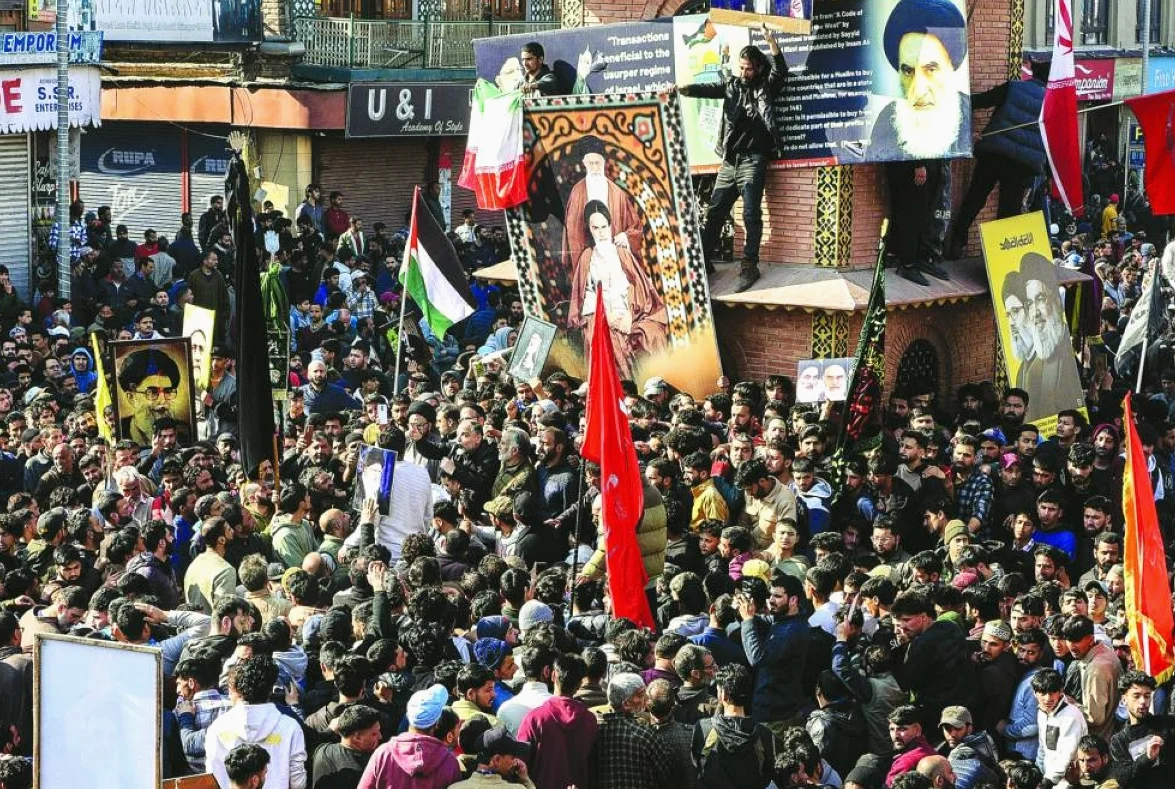
The Aftermath of a Cataclysmic Strike
In the heart of Indian-administered Kashmir, thousands of protesters gathered in Srinagar, their voices raised in mourning for Ayatollah Ali Khamenei. The death of the Iranian leader, reported by Iranian state television, sent shockwaves through the region and beyond. Syed Towfeeq, a 40-year-old demonstrator, lamented the loss, declaring that Khamenei’s martyrdom would not be in vain. ‘You cannot oppress while we, the sons of Khamenei, are alive,’ he said. The protests, though largely peaceful, reflected a deep emotional and political divide, with many calling for unity against perceived foreign adversaries.
The Iranian Succession Crisis
Khamenei’s death has plunged Iran into its most severe crisis since the 1979 revolution. The Islamic Republic, which has long been defined by its unique political structure, now faces an existential threat. Under Iran’s constitution, a council of clerics is meant to select a new supreme leader. However, the Israeli airstrike that killed Khamenei also targeted senior IRGC commanders and political leaders, leaving the regime’s chain of command in disarray.
Analysts warn that the absence of a clear successor could accelerate the collapse of the regime. ‘Khamenei’s death is a massive blow to the regime and could accelerate its collapse,’ Axios reported. His death ‘sets off an immediate succession crisis with no clear answer.’ The Iranian system was built to survive the loss of a leader, but the question remains whether it can withstand the current chaos.
The Role of the IRGC
At the center of Iran’s political and military structure is the Islamic Major Guards Corps (IRGC), often regarded as the true power behind the regime. The IRGC’s ability to maintain order and stability will be crucial in the coming days. Danny Citrinowicz of the Atlantic Council noted, ‘The Iranian system is bigger than one man – removing Khamenei could harden the regime rather than weaken it.’ However, the question remains whether the IRGC will emerge more entrenched or weakened by battlefield losses and internal frictions.
Alex Vatanka, a senior fellow at the Middle East Institute, highlighted the uncertainty surrounding the IRGC’s future. ‘The real question is whether Khamenei’s death takes the air out of the IRGC – the force that actually runs Iran – or whether they close ranks and harden.’ If the IRGC decides that there is no future for the regime, it may be difficult to keep it together.
A Global Power Struggle
The death of Khamenei has not only shaken Iran but also triggered a global response. US and Israeli officials have stated that their goal was to weaken the Iranian regime. The strikes, which killed Khamenei and other key figures, have been described as unprecedented and a major violation of international law. Iranian President Masoud Pezeshkian, in a televised address, vowed to continue in Khamenei’s footsteps, calling his death the culmination of years of sacrifice. He announced the formation of a new three-member interim leadership council under Article 111 of Iran’s constitution.
Foreign Minister Abbas Araghchi echoed Pezeshkian’s resolve, pushing back against regional pressure to de-escalate. He stated that governments angry at the situation should direct their pressure at Washington and Tel Aviv, not Tehran. Araghchi emphasized that Iran was acting in self-defense with no restrictions or limits, and that it would continue targeting US military personnel and operational facilities across the Middle East while avoiding civilian and diplomatic targets.
Escalating Tensions and Casualties
The U.S. military reported that three American service members had been killed and five others seriously wounded during the attacks on Iran. This marked the first American casualties in a major offensive that has sparked retaliation from the Islamic Republic. The U.S. Central Command denied Iranian claims that the USS Abraham Lincoln aircraft carrier was struck with ballistic missiles, stating that the ‘missiles launched didn’t even come close.’
President Donald Trump had warned that American troops could be killed or injured in the operation. ‘The lives of courageous American heroes may be lost, and we may have casualties,’ he said in a video address released early Saturday. ‘That often happens in war. But we’re doing this not for now. We’re doing this for the future.’
A Regional and Global Implosion
The death of Khamenei has not only triggered an internal crisis within Iran but also intensified regional and global tensions. Iran’s counterattacks have already struck US bases in Bahrain and the United Arab Emirates. The Major Guard has threatened to launch its ‘most intense offensive operation’ ever targeting Israeli and American military installations.
The situation has taken on a new dimension as the world watches to see if the Islamic Republic can survive the loss of its supreme leader. The IRGC’s role in maintaining order and stability will be crucial in the coming days. Whether the regime can withstand the current chaos or if it will collapse under the weight of its own divisions remains uncertain.
The Legacy of Khamenei
Ayatollah Ali Khamenei, who served as the Supreme Leader of Iran for 36 years, was a central figure in shaping the Islamic Republic. His death marks the end of an era, but it also raises questions about the future of Iran and its role in the Middle East. The absence of a clear successor, combined with the internal divisions within the regime, creates a precarious situation that could lead to further instability.
Khamenei’s legacy is one of resilience and resistance, but the challenge now lies in whether Iran can continue to maintain its influence and power in the region. The coming days will determine if the Islamic Republic can handle this crisis or if it will be forced to confront its own fragility.






Comments
No comments yet
Be the first to share your thoughts