

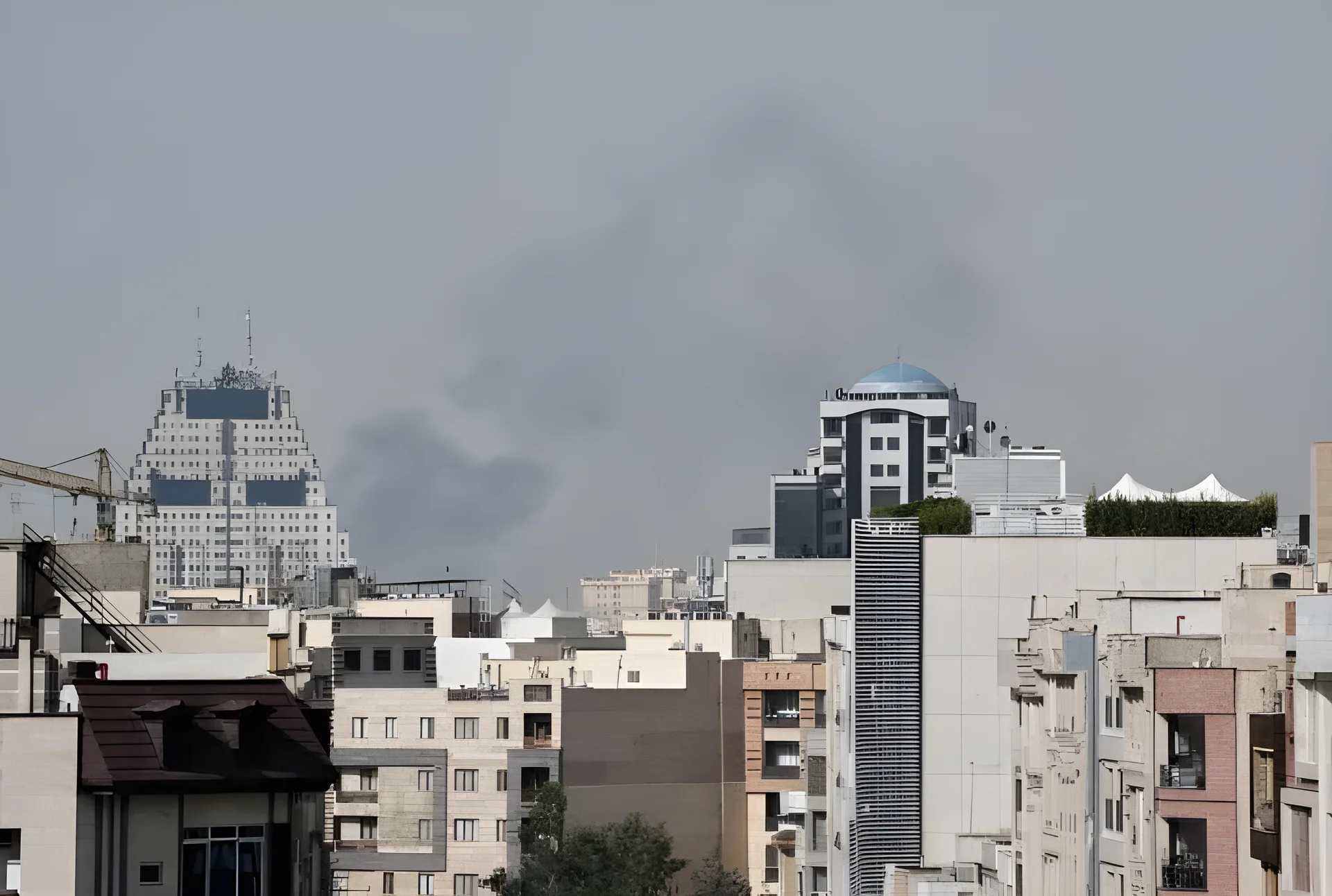
The United States and Israel launched coordinated attacks on Iran Saturday, with strikes reported near the offices of Supreme Leader Ayatollah Ali Khamenei and across multiple cities. According to Iranian state media, smoke was visible rising from Tehran, and traffic was diverted as residents fled the capital. President Donald Trump announced via social media that the U.S. had begun ‘major combat operations in Iran,’ citing concerns over Iran’s nuclear program and missile development.
Impact on Civilian Life and Infrastructure
Iran’s state news agency, IRNA, reported that authorities had converted a major highway connecting Tehran to the north into a one-way route to accommodate the heavy traffic leaving the capital. Supermarkets in northern Tehran saw a surge in customers seeking essentials like bread and bottled water, but supplies were limited, and some items were unavailable in certain stores. Long queues formed at gas stations, and state television showed footage of heavy traffic on the Soleimani highway.
Flights across the Middle East and beyond were disrupted as Israel, the United Arab Emirates, and Qatar closed their airspace. Dubai International Airport, the world’s busiest for international flights, and Dubai World Central — Al Maktoum International Airport were shut down indefinitely. Major airlines canceled flights to and from parts of the region through Sunday or early next week, urging passengers to check flight status online before heading to the airport.
Regional Reactions and Diplomatic Responses
Russia’s Foreign Ministry condemned the U.S.-Israeli strikes as ‘a preplanned and unprovoked act of armed aggression’ and called for an immediate halt to the military campaign and a return to diplomacy. It warned the attacks risked triggering a ‘humanitarian, economic and possibly radiological catastrophe’ in the region.
British Prime Minister Keir Starmer chaired an emergency meeting on Saturday and planned to hold calls with allies. A government spokesperson said Britain does not want to see further escalation into a wider regional conflict and reiterated support for a negotiated solution to Iran’s nuclear ambitions. The UK’s Foreign Office also updated travel advice, warning against all travel to Israel and Palestine and urging British nationals in other Middle Eastern countries to ‘immediately shelter in place.’
European Union leaders issued a joint statement calling for restraint and regional diplomacy to ‘ensure nuclear safety.’ European Commission President Ursula von der Leyen and European Council President António Costa emphasized the need to prevent further escalation and protect civilians, while noting that the EU has extensive sanctions in place against Iran’s regime.
Saudi Arabia strongly condemned the Iranian assaults on the United Arab Emirates, Bahrain, Qatar, Kuwait, and Jordan, calling them a breach of sovereignty and warning of ‘dire consequences’ if such actions continued. The Kingdom affirmed its support for those countries and urged the international community to take measures to confront the Iranian attacks.
International Travel and Security Concerns
Canada’s Prime Minister Mark Carney expressed support for the U.S. actions against Iran, stating the Islamic Republic is the ‘principal source of instability and terror’ in the Middle East. He urged Canadians in Iran to shelter in place.
Pakistan’s Foreign Minister Ishaq Dar condemned the attacks on Iran and called for an ‘immediate halt to escalation through urgent resumption of diplomacy.’ Kuwait’s national news agency reported that its air defenses successfully repelled what it called a ‘heinous Iranian attack.’
France’s junior Defense Minister Alice Rufo warned that a ‘military escalation is underway’ and compared the situation to the 12-day war in June. She emphasized that the priority was the protection of French citizens and forces in the region. No information was available on whether French forces were involved in the strikes or targeted in retaliation.
Iranian state media reported that strikes were occurring in multiple cities, including Isfahan, Shiraz, and Tabriz, with explosions near the capital. Blasts were also reported in western towns and around Persian Gulf port cities such as Asaluyeh, which is critical to Iran’s major oil trade.
The situation remains fluid, with no immediate statements from Iraqi officials or the U.S. about the attacks on a U.S. base near Irbil. Local media reported that missiles were shot down, and an AP journalist on site reported hearing explosions.
As the conflict continues, the region faces the risk of further escalation, with international actors urging restraint and diplomatic resolution to prevent a broader regional conflict.






Comments
No comments yet
Be the first to share your thoughts