

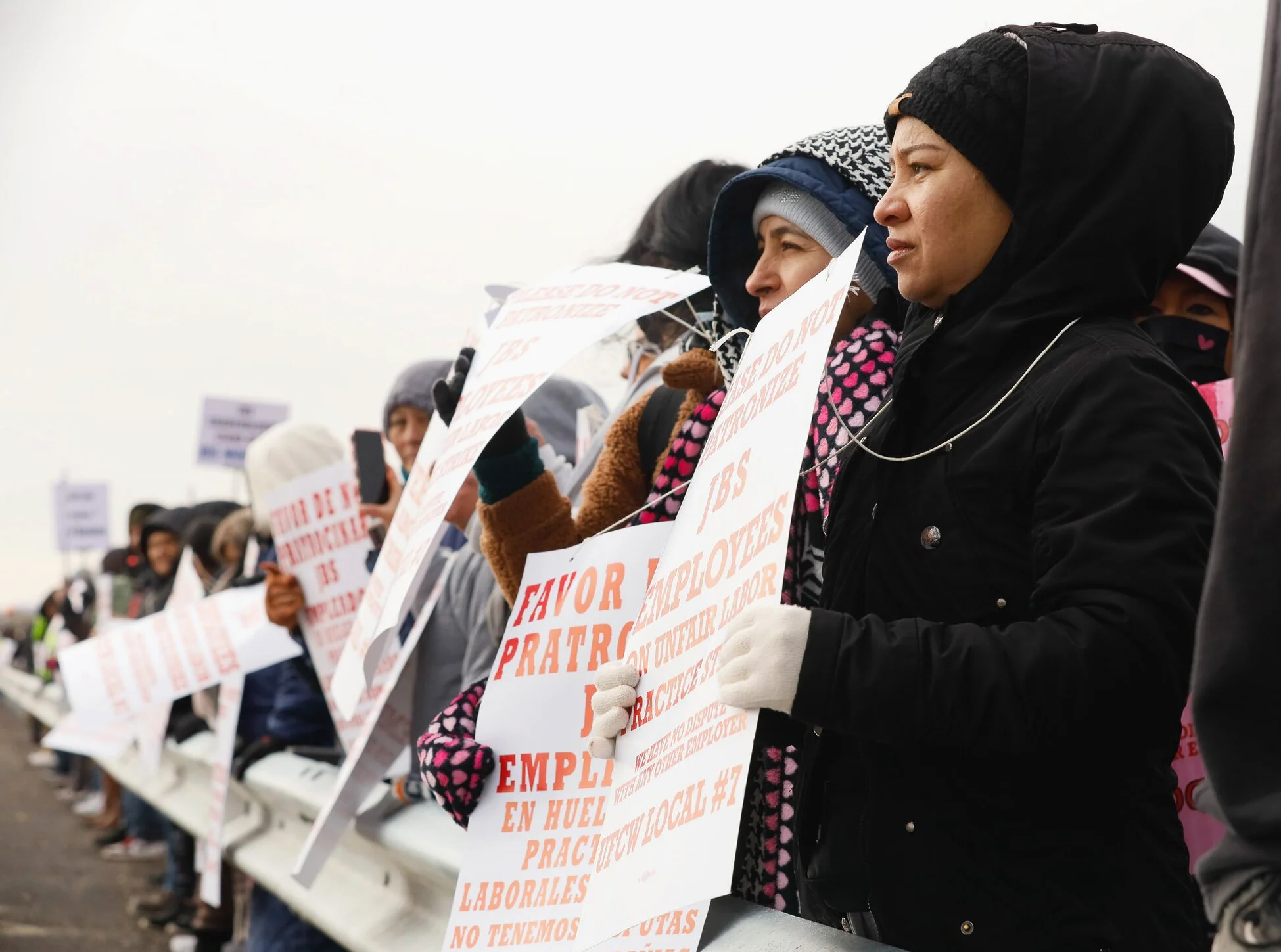
GREELEY, Colo. — Over 3,000 union workers at the JBS-owned Swift Beef Co. plant in Greeley, Colorado, walked off the job early Monday morning, marking the first strike at a U.S. beef slaughterhouse since the 1980s. The walkout, which began just before dawn, has sent shockwaves through the meatpacking industry and has raised concerns about the potential impact on beef prices across the country.
Strikers Demand Higher Wages and Better Safety
The strike, organized by the United Food and Commercial Workers (UFCW) union, follows months of negotiations between union representatives and JBS, the world’s largest meat processing company. Key demands from the union include higher wages, improved safety equipment, and lower health care premiums for employees.
On Feb. 4, 99% of union workers at the plant voted to authorize a strike, signaling the urgency of their demands. The plant, one of the largest beef slaughterhouses in the U.S., processes over 11,000 head of cattle daily. If not resolved, the strike could lead to a significant rise in beef prices, according to industry analysts.
Jennifer Lynn, a 26-year-old production line worker at the plant, said she earns $23.25 an hour, but still needs to work double shifts three times a week to make ends meet. ‘For what we do, we are not paid enough. We’re the backbone of the company. Without us, they couldn’t run,’ she said, standing on the picket line with a group of fellow workers.
Strike Sparks Concerns Over Beef Supply and Prices
The strike comes at a time of heightened concern over the U.S. beef supply. Last year, the U.S. cattle population hit a 75-year low, and beef prices rose by 11% to 25%, depending on the cut. Analysts warn that a prolonged strike at the Greeley plant could further strain the supply chain and drive prices even higher.
The JBS plant in Greeley is one of the largest in the nation, and its shutdown could disrupt the flow of beef to processing plants and retailers across the country. The plant is located in a region that is a major hub for cattle production and meat processing, making the strike particularly significant.
‘This is the first time in decades that we’ve seen a walkout at a major beef processing plant in the U.S., and it’s happening now when the industry is already under pressure,’ said Michael Smith, an agricultural economist at Colorado State University. ‘The ripple effects could be felt nationwide.’
The strike also occurs amid broader tensions between U.S. ranchers and the federal government. President Donald Trump recently moved to increase beef imports from Argentina, a decision that Colorado ranchers criticized as a threat to domestic producers. The move has added to the economic pressures on the industry, making the current strike even more significant.
Workers Describe Harsh Conditions and Lack of Safety
Many workers have spoken about the hazardous conditions they face on the plant floor. Lynn said that supervisors often push the line faster than workers can handle, increasing the risk of injury. ‘They don’t care about our safety,’ she said, describing a work environment that has left many employees exhausted and concerned about their long-term health.
Other workers echoed her sentiments, describing long shifts, repetitive motions, and a lack of proper safety equipment. ‘We’re constantly being rushed,’ said another worker, who asked not to be named. ‘If we slow down, they yell at us. It’s not safe, but we don’t have a choice.’
The UFCW has been pushing for better working conditions, including the implementation of more protective gear, improved ventilation systems, and better access to medical care. The union also wants to see a reduction in the cost of health insurance, which has been a major burden for many workers.
Despite the harsh conditions, the mood on the picket line was upbeat. Some workers danced to Haitian music played from a handheld boombox, while others marched to keep warm in the cold Colorado morning. The strike has become a symbol of workers’ fight for better treatment and fair pay, with many hoping that their actions will lead to meaningful change.
JBS has not yet commented on the strike, but the company has a history of resisting unionization efforts at its plants across the country. In recent years, JBS has faced multiple strikes at its facilities in Texas, Iowa, and South Dakota, with workers demanding better wages, benefits, and working conditions.
The strike at the Greeley plant is expected to last for several weeks, with negotiations between the union and JBS likely to continue. The outcome of these talks could have far-reaching implications for the meatpacking industry, as well as for the workers who toil in the plants every day.
With the U.S. beef supply already under pressure, the strike has raised questions about the future of meat production and the role of labor in the industry. As the situation unfolds, the world will be watching to see whether the workers’ demands can be met and what the long-term impact of the strike will be.






Comments
No comments yet
Be the first to share your thoughts