

 The Guardian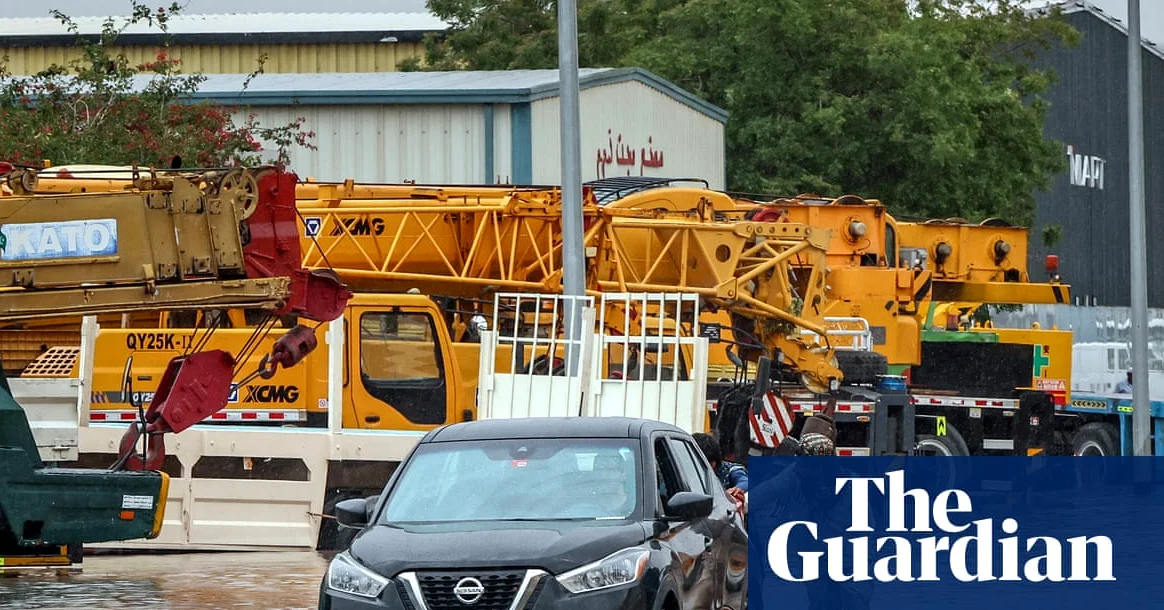
Unusual weather patterns unleashed severe thunderstorms across parts of the Middle East last week, battering countries including the United Arab Emirates and Saudi Arabia, but the Arabian peninsula, typically dominated by arid desert climates, received up to 150mm of rain in just a few days, according to The Guardian.
Record Rainfall and Extreme Weather
The deluge was caused by an abnormally strong jet stream, which helped form a deep area of low pressure to develop north of Saudi Arabia; This, in turn, drew moist tropical air from the Indian Ocean and triggered intense storms. In Oman. Hailstones as large as tennis balls fell during Wednesday evening’s storms, alongside torrential rain; Doha, Qatar’s capital, experienced flooding the same day.
Further thunderstorms developed on Thursday evening, with a more organized line crossing the UAE and hitting densely populated areas such as Dubai and Abu Dhabi. Gusts of up to 80mph. Large hail and intense lightning were reported, as heavy rainfall caused widespread flooding. A weather station on Jebel Yanas in northern UAE recorded 244mm of rainfall, with many others exceeding 100mm in just a few days, far surpassing typical annual totals of 60-100mm.
First-ever in the Region
While thunderstorms are not rare in the region—Dubai endured extreme flooding from a storm system in April 2024—the multiday nature of last week’s deluge is more commonly seen in the US and central Europe in spring and summer. The event reflects a broader global trend of storms bringing more intense rainfall as the climate warms.
The unusual rainfall has left residents and officials grappling with the consequences of extreme weather in a region not typically prepared for such conditions; In Dubai, where infrastructure is designed for arid climates, the sudden influx of water overwhelmed drainage systems, leading to localized flooding and road closures.
Residents in areas such as Abu Dhabi reported heavy rains washing away sand from streets and filling parking lots with water. Schools and businesses in some areas were forced to close temporarily as authorities worked to manage the situation.
Broader Climate Trends
Scientists have long warned that climate change is increasing the frequency and intensity of extreme weather events. The recent storms in the Middle East align with this trend, as warmer temperatures lead to more moisture in the atmosphere, resulting in heavier rainfall when storms occur.
According to a report from the World Meteorological Organization, the number of extreme weather events has increased by 50% over the past 30 years, with regions previously unaffected now experiencing severe storms and flooding. The Arabian Peninsula. With its low annual rainfall, is now seeing more frequent and intense weather patterns that challenge local infrastructure and emergency response systems.
“These events are becoming more common as the climate continues to change,” said Dr. Aisha Farid, a climate scientist at the University of Dubai. “We are seeing a shift in weather patterns that are not typical for this region, and this has serious implications for urban planning and disaster preparedness.”
The region’s rapid urbanization has made it more vulnerable to extreme weather. Many cities have been built with infrastructure that is not designed to handle heavy rainfall, leading to increased risks of flooding and damage to property.
Attention is shifting to the Mediterranean, where a developing low-pressure system southeast of Italy is expected to bring heavy rain and thunderstorms to Greece, Turkey, and other countries in southeast Europe this week. Rainfall totals could reach in places on Tuesday and Wednesday, raising the risk of flooding, while 60-80mph gusts may affect parts of northern Africa, including Libya, which was hit by Storm Samuel, a similar system this month.
Authorities in several countries are monitoring the situation closely, with emergency services on high alert for potential flooding and other weather-related incidents. In Libya, where Storm Samuel caused significant damage earlier this month, officials are preparing for another potential crisis.
As the climate continues to change, the frequency of such extreme weather events is expected to rise, forcing governments and communities to adapt to new realities. The recent thunderstorms in the Middle East are a stark reminder of the growing risks posed by a warming planet.






Comments
No comments yet
Be the first to share your thoughts