

 BBC
BBC 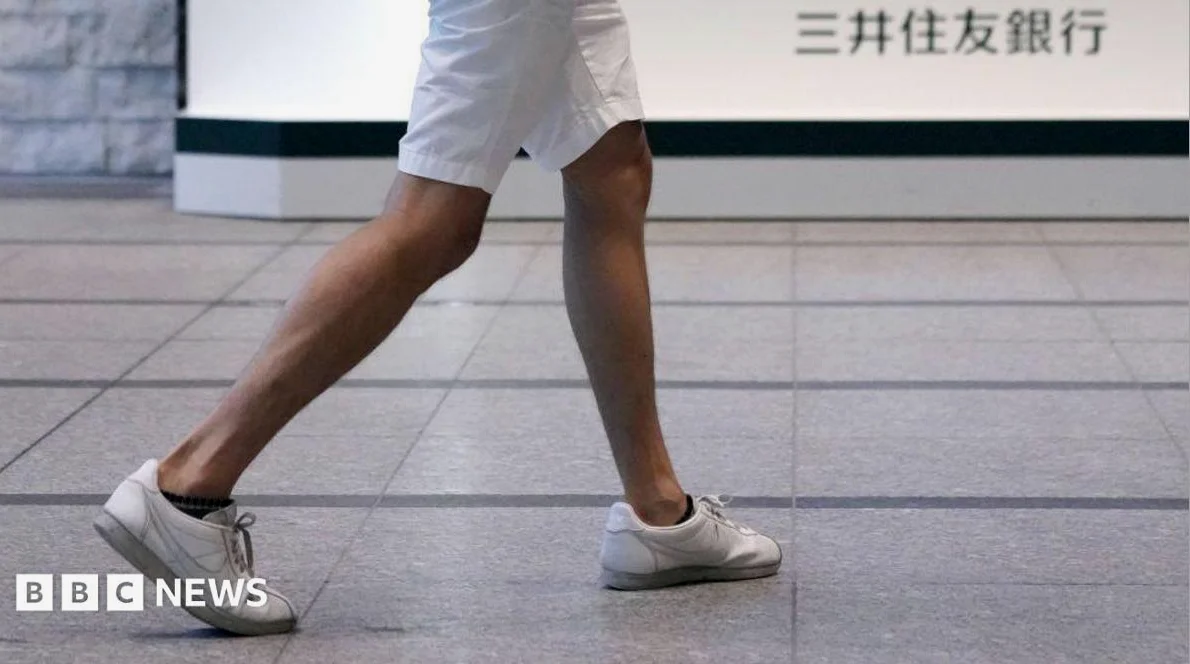
Tokyo is urging men to wear shorts at work to combat rising summer temperatures, but the move has generated mixed reactions; the Tokyo Metropolitan Government launched a new policy in April called “Tokyo Cool Biz,” which encourages more casual office attire, including t-shirts, trainers, and shorts. The initiative builds on a long-running effort to reduce heat-related stress and energy use in workplaces.
Policy Sparks Debate Over Fairness
While some workers appreciate the relaxed dress code, others argue the policy is unfair to women, who are still expected to wear tights when showing legs. A few women have described the experience of “leg hair harassment,” a term coined online as “sunehara,” referring to the discomfort of seeing male colleagues’ leg hair.
“We want to give people more options in the severe heat, not tell them what to wear. There should be no issue as long as the work attire is not offensive to anyone,” said Noboru Watanabe, an environmental official with the Tokyo Metropolitan Government.
Survey Shows Divided Opinions
A June survey by Gorilla Clinic revealed 53.5% of respondents opposed wearing shorts to work in the summer, while 46.5% supported the new recommendation; For those against the policy, the main concern,shared by both men and women—was body shape and leg hair visibility. The clinic noted that women significantly outnumbered men in their response, suggesting they may be more resistant to seeing male colleagues’ bare legs.
Akifumi Funatsu, director of Gorilla Clinic, reported an increase in clients seeking laser hair removal not just for cosmetic reasons, but as a matter of “social etiquette when wearing shorts.” He believes many women expect men to have less leg hair, prompting some to take action to avoid offending others.
Broader Climate and Health Concerns
Tokyo Governor Yuriko Koike first introduced a similar initiative in 2005 as Japan’s environment minister; she launched the national energy-saving campaign “Cool Biz,” encouraging workers to wear short-sleeve shirts. Government leaders. Including then Prime Minister Junichiro Koizumi, participated by going tieless and jacketless in public.
In 2011. Following the Tohoku earthquake and tsunami, the government expanded the guidelines with “Super Cool Biz,” aimed at reducing energy use both at work and at home. This year’s heatwave has intensified the need for such measures as Japan faces record temperatures and energy price spikes driven by instability in the Middle East.
Japan has experienced extreme heat in recent months, with forecasters warning of continued high temperatures — the Japan Meteorological Agency has introduced the term “kokusho-bi,” meaning “brutally hot day,” to describe days when temperatures exceed 40C.
According to the Fire and Disaster Management Agency, seven people died from heatstroke in Japan between July 6 and July 12, and 4,580 were hospitalized, Government officials continue to stress the importance of staying hydrated and using air conditioning. In addition. Residents are turning to products like clothes with built-in fans, disposable wet towels, UV and heat blocking umbrellas, and portable handheld fans to cope with the heat.
Experts from the Japan Academic Network for Disaster Reduction emphasize the need for heat acclimatisation, noting that the body takes several weeks to adapt to high temperatures. They advise starting preparations during the rainy season to prevent heatstroke before the full summer heat arrives.
Japan’s high humidity complicates cooling efforts, as it makes it harder for sweat to evaporate. The country continues to balance climate challenges with public health and workplace norms, as seen in the ongoing debate over casual office attire and leg hair etiquette.




Comments
No comments yet
Be the first to share your thoughts