

 BBC
BBC 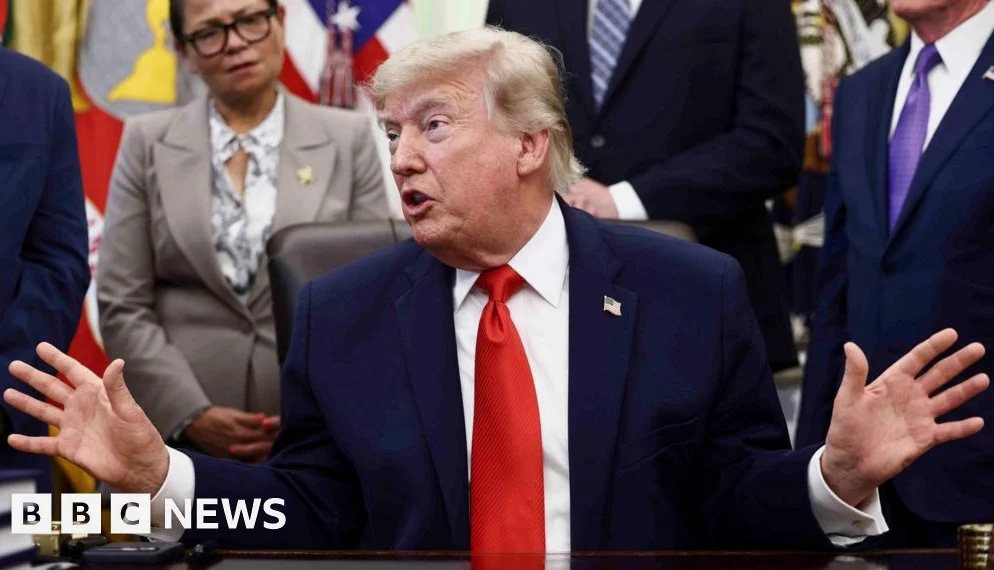
US President Donald Trump has accused Iran of leaking details of an alleged deal to end the war that have ‘nothing to do with the terms that were agreed to’ and ‘bear no relation to the truth,’ according to BBC. Trump described the Iranians as ‘very dishonorable people to deal with’ and urged them to ‘get their act together, and FAST!’
Conflicting Reports Emerge on Peace Talks
The reaction came as Iranian media reported purported details of the deal that included much of what Tehran has been publicly demanding and the US has been rejecting. US officials have also mentioned terms that Iran has consistently rejected, while Iran’s Foreign Minister Seyed Abbas Araghchi said a deal had ‘never been closer’ and urged the media to ‘refrain from entering speculation about its content.’
Trump has also repeatedly talked up the prospects of a deal to end the war that began with wide-ranging US and Israeli strikes across Iran on 28 February. Iran responded with attacks on Israel and US-allied states in the Gulf, effectively closing the Strait of Hormuz, a key shipping route for the world’s oil and liquefied natural gas.
Reports of Agreement Terms and US Rebuttals
Despite having agreed a ceasefire in April, the US and Iran have exchanged intermittent fire, including two rounds of tit-for-tat strikes this week. On Thursday. The US president had threatened new attacks only to state later that he had cancelled them because negotiators had ‘just made a great settlement’ with Iran—a deal that was likely to be signed imminently. It prompted Iran to say reports of an agreement were ‘speculative’ and ‘nothing had been finalised.’
On Friday, Iranian media published what they described as terms of an agreement. The reported details included the lifting of a US naval blockade and ‘at least $300bn (£223bn)’ to address the damage caused by the US and Israeli strikes on Iran. The talks have been mostly mediated by Pakistan and are meant to lead to an extension of the ceasefire and the start of negotiations on key issues, including Iran’s nuclear programme.
For decades. Iran has been accused by Western countries of trying to build a nuclear weapon, and it has denied the accusations, stating its programme is for peaceful purposes—to generate electricity and for research. Iran’s Mehr news agency. Which published the alleged contents of the deal, said Iran wanted a final agreement to be endorsed by a UN Security Council resolution.
The agency added that ‘the final agreement shall be limited to issues concerning the future of enriched materials and enrichment activities, sanctions relief, and the programme for rebuilding Iran’s economy.’ It also stated that ‘final negotiations shall not begin until half of Iran’s frozen assets have been released, Iranian oil sanctions have been suspended, and the naval blockade has been lifted.’
US and Iran Diverge on Key Issues
From the US perspective. A senior administrative official told the BBC the Iran deal included the expectation that nuclear material would be destroyed and removed, and the nuclear programme dismantled. The official said that none of Iran’s money would be released until the Iranians had met US demands, the Strait of Hormuz would be opened, and Iran would be expected not to fund terrorist groups—a reference to Hezbollah and other Iranian proxies across the Middle East.
US Vice-President JD Vance added his voice later, saying he had noticed ‘a couple of bizarre things in the reporting over the last few hours.’ ‘Iranians are not receiving any cash. No funds are being released for simply signing a deal or attending a meeting,’ Vance said in a post on X. He added that the deal ‘is structured to ensure that the US and its allies’ concerns are prioritized, and that if the Islamic Republic of Iran meets its obligations, then economic benefits will flow to them and to the entire region.’
Iran’s foreign ministry spokesperson. Esmail Baghaei, said large parts of the text under negotiation had been finalised but Iran would not compromise on its red lines. ‘So far, Iran has not reached a final conclusion on the agreement,’ Baghaei said. Tasnim, the semi-official Iranian news agency, wrote that ‘until a potential understanding is announced by Iran, any news from Trump on this matter should be dismissed.’
A diplomat briefed on the talks said that the deal had largely been agreed to several weeks ago but that there was still a ‘50% chance’ that it will collapse. ‘There are a lot of potential spoilers,’ the diplomat said. The new agreement would provide for a timeline for demining the Strait of Hormuz, during which the US naval blockade would remain in place. It also discusses mechanisms for further nuclear talks and the release of frozen Iranian assets but does not contain concrete agreements about how that will take place.






Comments
No comments yet
Be the first to share your thoughts