

 Associated Press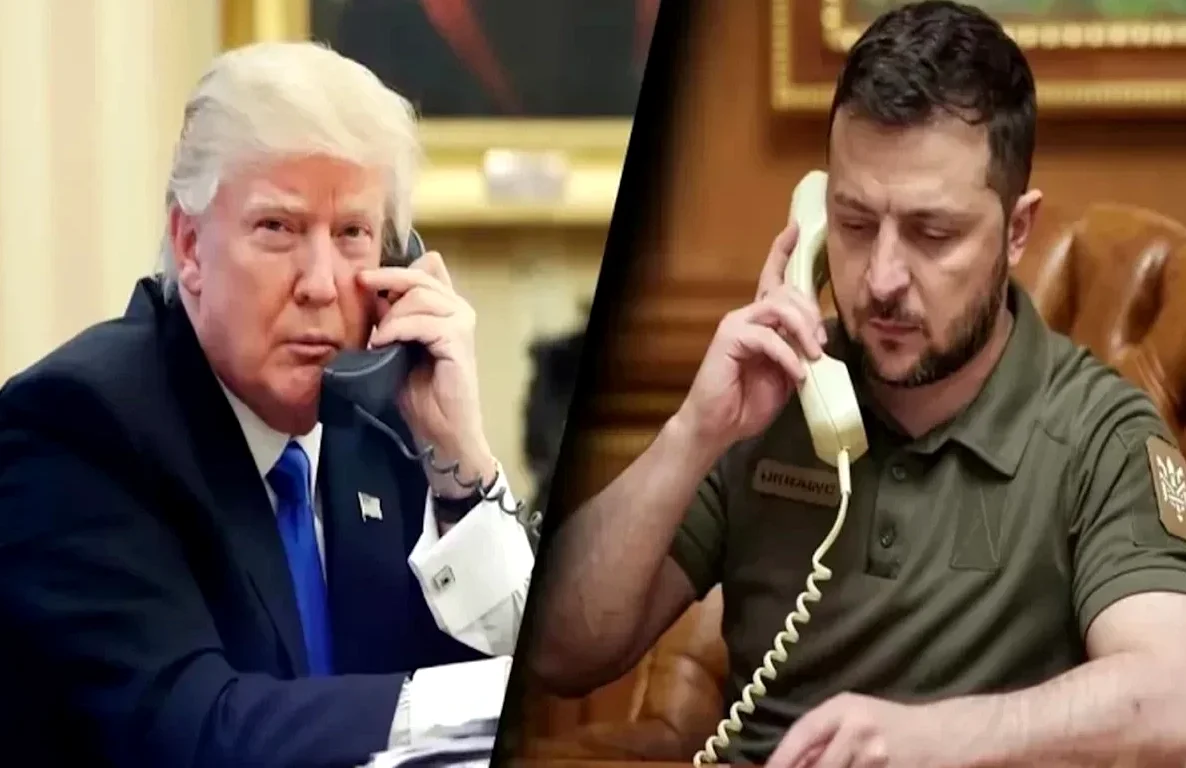
U.S. President Donald Trump has expressed a desire to end the war in Ukraine within 30 days, according to sources close to the White House, during a recent call with Ukrainian President Volodymyr Zelenskyy. The conversation, which lasted about 30 minutes, was described as ‘very friendly and positive’ by Ukrainian officials, who said Zelenskyy thanked Trump for his support and claimed only he could stop Russian President Vladimir Putin from continuing the war.
Trump’s Stated Goal: A Peace Deal by Summer
During the call, Trump reiterated his commitment to concluding a peace agreement by the summer, according to a source cited by Axios and reported by APA. However, the path to peace remains fraught with obstacles, particularly over the issue of territorial control in the Donbas region, where Russia and Ukraine have been locked in a protracted conflict since 2014.
According to the source, Zelenskyy expressed hope that the war would end this year, to which Trump responded that the conflict had already lasted too long and that he would prefer it to conclude within a month. Trump also reportedly confirmed his willingness to provide Ukraine with ‘significant security guarantees’ from the United States as part of a potential peace agreement with Russia.
Despite Trump’s optimism, analysts have pointed out that the differences between Ukraine and Russia on territorial issues are unlikely to be resolved quickly. The Donbas region, which includes parts of eastern Ukraine, has been a flashpoint since Russia annexed Crimea in 2014 and supported separatist movements in the region.
Ukraine’s Position and the Road Ahead
Ukraine has consistently maintained that it will not negotiate with Russia while under occupation, a stance that has complicated efforts to reach a lasting peace. The current conflict, which began in February 2022 with Russia’s full-scale invasion, has already claimed over 10,000 lives and displaced millions of people, according to the United Nations.
Dmytro Lytvyn, an advisor to Zelenskyy, confirmed that the call with Trump had concluded, as reported by RBC Ukraine and cited by APA. The conversation, which took place on Wednesday, was the first direct communication between the two leaders since Trump’s return to the White House in January 2021.
Trump’s remarks come amid growing international pressure on Russia to end the war, as well as increasing calls for a ceasefire and diplomatic resolution. The United States, which has provided billions of dollars in military and economic aid to Ukraine, has not ruled out further support if needed.
According to a recent report by the Congressional Research Service, the U.S. has allocated over $54 billion in direct aid to Ukraine since the start of the war, with more funding expected to be approved in the coming months. This aid has been critical in enabling Ukraine’s defense against Russian aggression.
However, Trump’s approach to the war has been controversial, with some U.S. officials warning that his rhetoric could inadvertently encourage further Russian aggression. Others have praised his willingness to challenge the status quo and push for a resolution to the conflict.
What’s Next in the Ukraine Conflict?
With Trump’s comments, the focus now shifts to whether his statements will lead to concrete diplomatic efforts or further escalation. Analysts say that while Trump’s influence on global affairs is considerable, the path to peace will require cooperation from both Ukraine and Russia, as well as the international community.
Experts warn that without a thorough agreement that addresses Ukraine’s security concerns and Russia’s demands, the conflict could continue for years. The war has already had a profound impact on the global economy, with energy prices rising sharply and supply chains disrupted.
According to the International Monetary Fund, the war has cost the global economy an estimated $1.2 trillion in lost output and has contributed to inflation in many countries. The situation remains fluid, with both sides continuing to prepare for potential military operations and negotiations.
As Trump continues to push for an end to the war, the coming weeks will be critical in determining whether his vision for a quick resolution can be realized or if the conflict will continue to drag on.





Comments
No comments yet
Be the first to share your thoughts