

 Reuters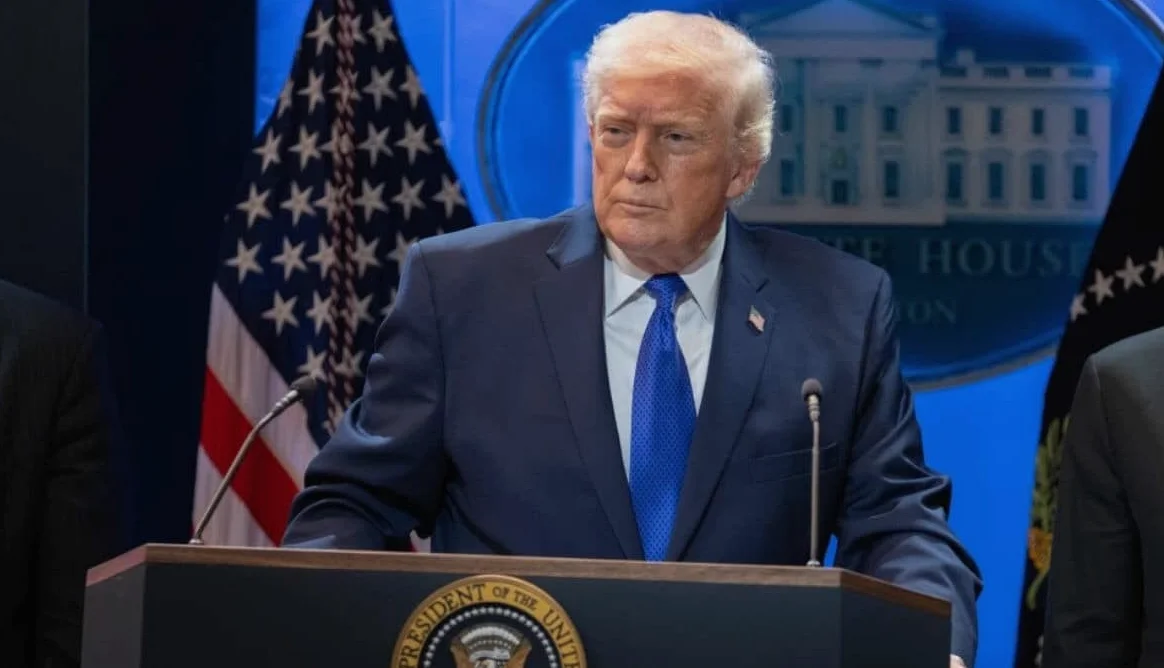
Former U.S. President Donald Trump has made a new claim that he prevented the death of Pakistan’s prime minister during the May 2025 India-Pakistan military confrontation, according to remarks he made at a recent event. Trump was referring to the May 2025 military confrontation that followed the Pahalgam terror attack, in which 26 people were shot dead. In response, India carried out Operation Sindoor, striking on terror bases in Pakistan-occupied Kashmir (PoK) and Pakistan.
Trump’s Role in the 2025 Standoff
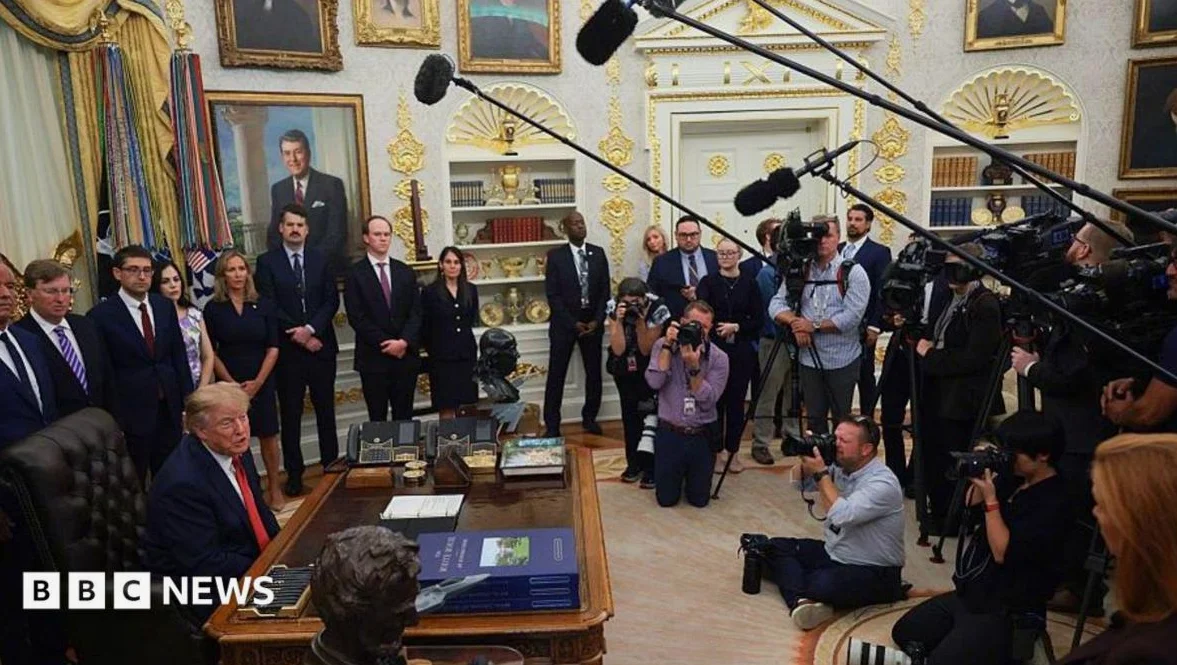
Speaking at his Board of Peace event, Trump reiterated his claim that he had mediated between India and Pakistan during the May 2025 standoff. He said that he had warned India and Pakistan that trade negotiations would be halted unless they resolved their differences.
“…I called them and I said, listen, I’m not doing trade deals with you two guys if you don’t settle this up… And all of a sudden, we worked out a deal. I said, if you fight, I’m going to put 200 per cent tariffs on each of your countries,” he said.
The May 2025 conflict followed the Pahalgam terror attack, which occurred in the Kashmir region of India. The attack, which killed 26 people, was attributed to a group linked to Pakistan. In response, India launched Operation Sindoor, a series of airstrikes targeting suspected terrorist camps in Pakistan-occupied Kashmir and other areas in Pakistan.
Significance of the 2025 Conflict
The 2025 India-Pakistan conflict was one of the most serious confrontations between the two nations in recent years. The incident raised concerns about the potential for a full-scale war in South Asia, which could have had significant regional and global implications.
According to military analysts, the conflict involved the use of advanced weaponry and tactical maneuvers by both sides. The situation escalated rapidly after the Pahalgam attack, with both countries accusing each other of failing to prevent the violence.
The conflict also highlighted the fragile nature of the relationship between India and Pakistan, which has been marked by periodic tensions over the disputed region of Kashmir. The 2025 conflict was the first major military confrontation between the two nations since the 2019 Pulwama attack and subsequent Indian airstrikes in Pakistan.
Impact on Trade and Diplomacy
Trump’s claims about his role in the 2025 conflict have sparked renewed debate about the role of the United States in South Asian diplomacy. His remarks suggest that he believes his threat of imposing 200 per cent tariffs on both countries played a decisive role in bringing an end to the standoff.
However, analysts have questioned the validity of Trump’s claims. They argue that the resolution of the 2025 conflict was more likely the result of direct diplomatic efforts between India and Pakistan, rather than the intervention of a U.S. president.
“It’s unlikely that a 200 per cent tariff threat alone would have forced both countries to de-escalate,” said Dr. Ayesha Khan, a South Asian affairs expert at the University of London. “Both India and Pakistan have long-standing strategic and economic interests that would have made them reluctant to engage in a prolonged conflict.”
Despite the skepticism, Trump’s remarks have been widely reported and have drawn attention to the potential influence of U.S. foreign policy on regional conflicts. His comments come amid ongoing discussions about the future of U.S. engagement in South Asia.
The 2025 conflict also had significant economic implications for both India and Pakistan. According to the World Bank, the conflict resulted in an estimated loss of $2.3 billion in trade and investment between the two countries. The impact was felt across multiple sectors, including agriculture, energy, and manufacturing.
As the situation continues to evolve, experts are closely watching the diplomatic developments between India and Pakistan. The resolution of the 2025 conflict has been widely regarded as a temporary ceasefire, with both countries still facing unresolved issues related to the Kashmir dispute.
Looking ahead, the focus will be on whether the two nations can build on the 2025 resolution to establish a more stable and cooperative relationship. Analysts suggest that sustained diplomatic efforts and confidence-building measures will be crucial in preventing future conflicts.


Comments
No comments yet
Be the first to share your thoughts