

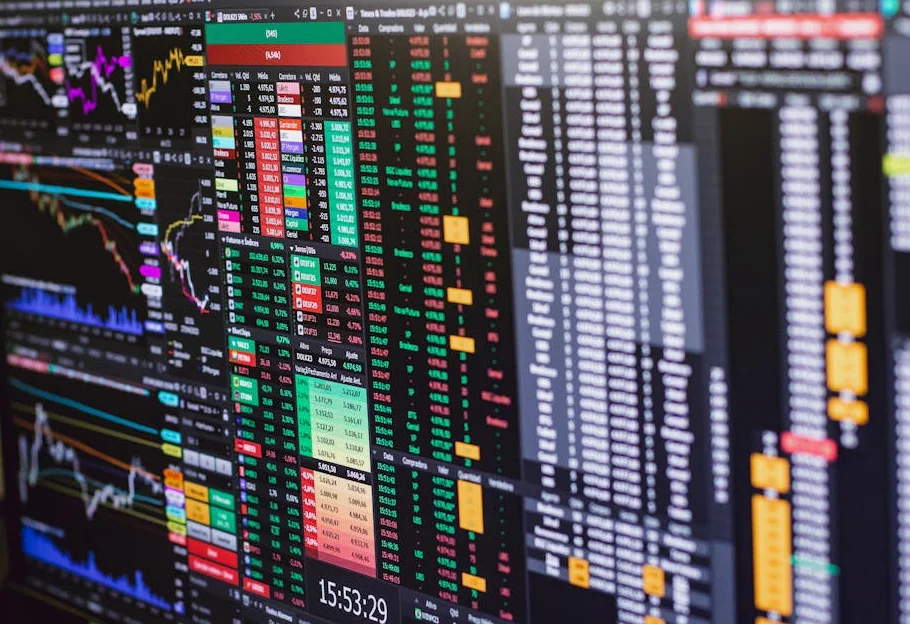
President Donald Trump has postponed planned military strikes against Iran, citing ‘very good’ talks, as stock market futures surged on Monday, according to Yahoo Finance. The decision, announced late Sunday, came as the Dow Jones Industrial Average, S&P 500, and Nasdaq futures all climbed sharply in early trading, signaling investor relief over the potential de-escalation of tensions in the Middle East.
Strategic Delay in Military Action
Mona Yacoubian, director of the Center for Strategic and International Studies (CSIS) and senior adviser of the Middle East program, explained on the Market Domination show that Trump’s move reflects a strategic pause to allow for further diplomatic engagement. ‘The administration is likely trying to assess the effectiveness of the ongoing negotiations,’ Yacoubian said. ‘This delay could buy time for more strong talks with regional allies and Iran itself.’
According to Yacoubian, the decision aligns with a broader pattern of measured responses from the Trump administration in recent years. In 2018, the U.S. withdrew from the Iran nuclear deal and imposed sanctions, but also avoided large-scale military action despite heightened rhetoric. This current delay may indicate a similar approach, balancing deterrence with dialogue.
The White House did not provide a detailed timeline for the postponed strikes, but officials said the move was not a permanent cancellation. ‘This is a tactical adjustment, not a complete withdrawal from the situation,’ a senior administration official told Reuters. ‘The U.S. remains committed to ensuring Iran does not develop nuclear capabilities.’
Market Reaction and Investor Sentiment
The stock market’s positive response to the news was immediate. By early Monday morning, the Dow Jones Industrial Average futures were up 350 points, or 1.4 percent, while the S&P 500 futures rose 2.5 percent, and Nasdaq futures climbed 3.2 percent. The surge came as investors welcomed the potential for reduced geopolitical risk, which has been a major concern for global markets.
Analysts pointed to the sharp increase in stock prices as a sign that investors are seeking safety in equities amid uncertainty. ‘The market is reacting to the news as a positive, even though the situation is still fluid,’ said David Jones, a senior market analyst at Goldman Sachs. ‘A delay in military action reduces the chance of a sharp downturn in global markets.’
According to a report from the International Monetary Fund (IMF), global markets had already seen a 12 percent decline in equity values since the start of the year due to concerns over rising tensions in the Middle East. The delay in strikes could ease those fears and potentially stabilize markets in the coming weeks.
The U.S. stock market has been volatile in recent months, with the Nasdaq hitting a record high of 14,400 in early 2024 before falling back due to concerns over inflation and interest rates. The current rally suggests a renewed confidence in the economic outlook, boosted by the news of de-escalation.
What Analysts Say About the Broader Implications
Experts say the decision to delay military action has broader implications for U.S. foreign policy and its relationship with Iran. ‘This is a signal that the administration is willing to take a measured approach to the situation,’ said Dr. Sarah Mitchell, a political scientist at the University of Texas. ‘It could set a precedent for more diplomatic engagement in the region.’
However, the delay also raises questions about the effectiveness of the administration’s strategy. ‘If the talks are not producing tangible results, the delay may be seen as a sign of weakness,’ said Yacoubian. ‘But it also gives the administration time to reassess its approach and potentially bring in more international partners.’
According to a recent survey by the Pew Research Center, 62 percent of Americans believe that the U.S. should focus more on diplomacy than military action when dealing with Iran. This public sentiment could influence the administration’s decisions moving forward, particularly if the talks do not yield immediate results.
The next major deadline for the administration is the upcoming meeting with Iranian officials in Vienna, scheduled for early next week. This meeting could determine whether the delay in strikes leads to a lasting resolution or further tension. ‘The outcome of that meeting will be critical in shaping the next phase of U.S. policy,’ said Jones.
For now, the market remains cautiously optimistic, with the Nasdaq and S&P 500 both showing strong gains. However, the situation remains fluid, and any further escalation could quickly reverse the current positive momentum. Investors are advised to remain vigilant as developments unfold in the coming days.






Comments
No comments yet
Be the first to share your thoughts