

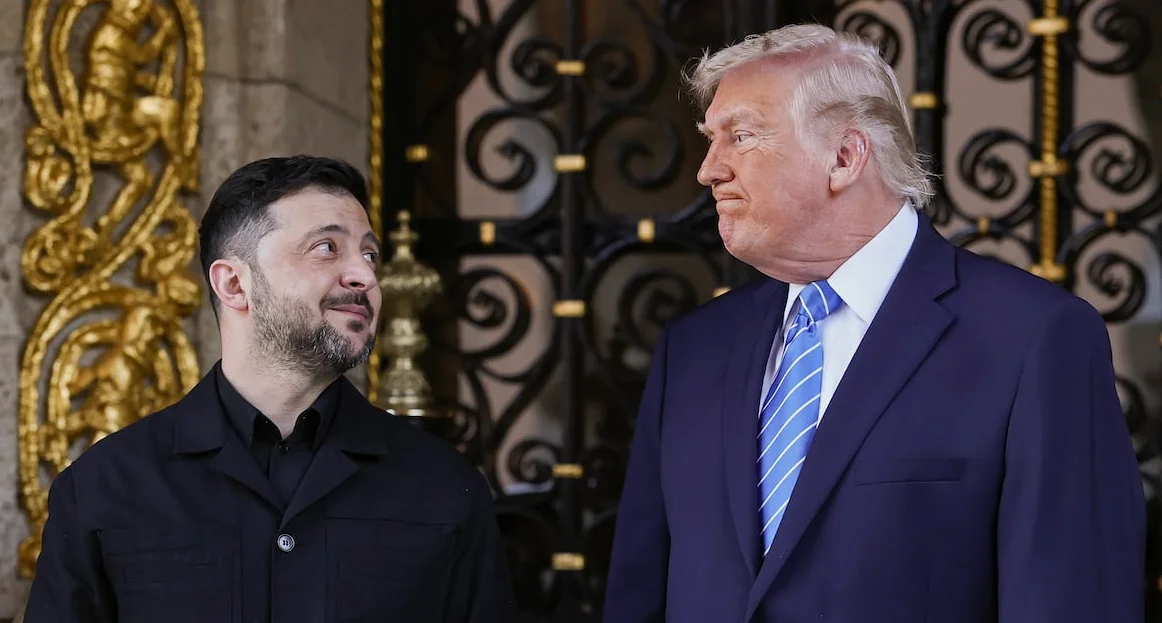
Donald Trump has been forced to seek assistance from Volodymyr Zelensky, the Ukrainian president he publicly humiliated months earlier, as Iran’s drone attacks on U.S. forces have exposed critical gaps in American defense strategy. The reversal comes after Trump and his vice president, JD Vance, dismissed Zelensky’s offer to help counter Iranian drones in a high-profile Oval Office meeting last February. Now, with seven U.S. service members killed and billions spent on countermeasures, Trump has returned to Zelensky with a plea for help.
From Dismissal to Desperation
Last August, Zelensky’s team presented a proposal to the Trump administration, detailing the threat posed by Iran’s improved Shahed drones and suggesting the creation of regional “drone combat hubs” to protect U.S. bases and allies. The proposal emphasized job creation, manufacturing opportunities, and shared production, framing it in terms that aligned with Trump’s economic priorities. However, the administration reportedly dismissed the idea, with one U.S. official later describing the pitch as “Zelensky being Zelensky.”
In February, during an Oval Office meeting, Trump and Vance publicly rebuffed Zelensky, reportedly criticizing his approach and the Ukrainian president’s leadership. The incident was widely seen as a diplomatic humiliation for Zelensky, who had been a key ally in the conflict with Russia. At the time, Trump’s administration maintained that the U.S. had its own counter-drone capabilities and did not need external assistance.
But the situation has changed dramatically. Last Thursday, the U.S. formally requested anti-drone support from Ukraine, and Zelensky confirmed that Ukrainian interceptor drones and specialists had been dispatched to protect U.S. bases in Jordan. The shift in strategy has been driven by the escalating threat from Iran, where Shahed drones have been linked to the deaths of seven U.S. service members in recent strikes.
The Cost of Dismissal
According to Axios, the decision to ignore Zelensky’s proposal has been labeled a “massive blunder” by U.S. officials. One anonymous U.S. official told the outlet that the administration’s initial reluctance to engage with Zelensky’s team on the drone threat may have left the U.S. unprepared for the scale of the Iranian attacks. The official added, “If there’s a tactical error or a mistake we made leading up to this [war in Iran], this was it.”
The Associated Press reported that U.S. defense officials have described the current anti-drone response as “disappointing,” despite the Pentagon’s recent deployment of the Merops system to the Middle East. The Merops system, developed by the U.S. military, is designed to intercept low-flying drones, but its effectiveness has yet to be fully tested against the Shahed drones.
Meanwhile, Zelensky’s team has been quick to highlight the irony of the situation. A Ukrainian official told Axios that Trump had asked his team to work on the anti-drone proposal but “they have done nothing.” The official added that the U.S. now appears to have realized the value of Ukraine’s expertise, which Zelensky’s administration had been offering for months.
Trump’s Awkward Comeback
Trump has since adopted a more conciliatory tone, acknowledging the need for international cooperation. When asked about Zelensky’s offer of help earlier this month, Trump said: “Certainly, I’ll take, you know, any assistance from any country.” His comments mark a stark contrast to his earlier dismissive attitude toward Zelensky and the Ukrainian president’s proposals.
White House spokesperson Anna Kelly attempted to downplay the administration’s earlier hesitation, stating that Defense Secretary Pete Hegseth and the military had planned for “all possible responses” from Tehran. She also emphasized that Operation Epic Fury, a recent U.S. military operation in the region, had been an “undisputed success.”
However, the shift in U.S. policy suggests that the administration is now recognizing the limitations of its own counter-drone capabilities. With Zelensky’s team providing real-world experience in intercepting drones, the U.S. is increasingly relying on Ukraine’s expertise to bolster its defenses. This marks a significant change in the relationship between the two countries, which had previously been strained by Trump’s public criticism of Zelensky.
The implications of this reversal extend beyond the immediate need for anti-drone technology. Analysts suggest that the U.S. may now be more willing to engage with Ukraine on a range of military and strategic issues, recognizing the value of Zelensky’s leadership and the country’s growing influence in global affairs.
With the situation in the Middle East evolving rapidly, the U.S. is likely to face more pressure to strengthen its partnerships with allies like Ukraine. The administration’s initial reluctance to engage with Zelensky on the drone issue has now been replaced by a more cooperative stance, as the realities of the Iranian threat become increasingly clear.
The episode highlights the risks of underestimating potential threats and the importance of maintaining strong international alliances. For ordinary Americans, the consequences of this shift may include increased military spending, higher defense budgets, and a greater reliance on foreign partnerships in times of crisis.






1 Comment