

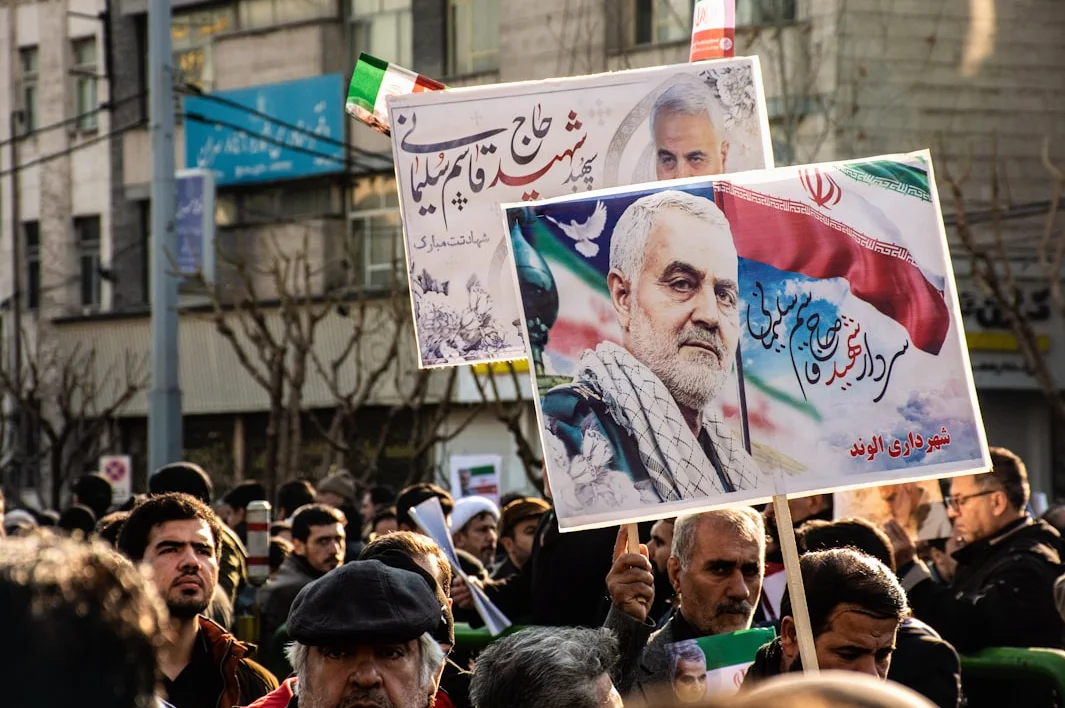
President Donald Trump provided contradictory messaging on the ongoing conflict with Iran, suggesting at times the war might be nearing an end and at others that it could continue indefinitely. The president announced at a press conference that the U.S. has begun striking Iran’s drone facilities and locations where Iranian missiles are made and delivered. This update came after the U.S. and Israel conducted attacks on Iran, marking the first time Trump has publicly addressed the situation since the escalation.
Impact on Regional Stability and Oil Prices
According to NPR’s Mara Liasson, Trump compared the situation in Iran to Venezuela, where the regime stays in place but the leader changes. However, Liasson noted that Iran is vastly different from Venezuela, which is a small, weak country in the U.S.’ backyard. She emphasized that the president did not clearly address whether not pushing for regime change meant he was betraying his promise to give Iranians their freedom.
Iran’s primary objective is currently survival, Liasson said. The country aims to make it uncomfortable for the U.S. and Israel to continue the war. This strategy includes keeping gas prices high, which could become increasingly problematic for Trump as U.S. oil prices approach $4 per gallon.
Iranian health officials report that the U.S. and Israeli campaign has killed 1,200 people, while Lebanese authorities count 500 deaths. In Lebanon, President Joseph Aoun is pushing for direct negotiations with Israel and an end to the bombings. Aoun seeks international support to equip the Lebanese Armed Forces in their efforts to disarm Hezbollah, the Iran-backed militant group that dragged Lebanon into the conflict after launching rockets into Israel.
Domestic Terrorist Threat and Federal Charges
Federal authorities have charged two Pennsylvania men, Emir Balat, 18, and Ibrahim Kayumi, 19, with terrorism-related crimes. The charges come after an attempted bomb attack during an anti-Muslim protest outside New York City Mayor Zohran Mamdani’s official residence. Balat and Kayumi allegedly targeted right-wing protesters with explosives, and federal investigators say the suspects were motivated by ISIS, a group that radicalizes young Muslim men globally.
According to court documents filed yesterday, Balat and Kayumi waived their Miranda rights after their arrest and allegedly told police they had watched ISIS material on their phones. Balat reportedly wrote that he had ‘pledged allegiance to the Islamic state’ and expressed a desire to execute an attack ‘bigger than the Boston Marathon bombing’ that killed three in 2013.
Police believe the men’s alleged actions are part of the Islamic State’s pattern of mobilizing young Muslim men using social media. The case highlights the ongoing threat posed by extremist groups in the U.S. and the challenges of countering radicalization through digital platforms.
Legal Challenge to Trump’s Visa Policies
A new lawsuit filed yesterday accuses the Trump administration of violating the First Amendment by threatening to deny visas or deport noncitizens who work on or research social media platforms, fact-checking, or other activities the government deems ‘censorship’ of American speech. The suit argues that these noncitizen academics and independent researchers are living in ‘pervasive fear’ of immigration enforcement, which has ‘chilling effects’ on their work.
The lawsuit claims the administration’s actions amount to unconstitutional viewpoint discrimination. The case is part of a broader debate over free speech, immigration policy, and the role of noncitizen researchers in the U.S. academic and technological sectors.
As with politics and the arts, the fallout from the Epstein files release has been dramatic in the science world. NPR interviewed scientists and reviewed Department of Justice documents on the late convicted sex offender Jeffrey Epstein to uncover how he established a network of prominent scientists. Epstein showed interest in theoretical physics, evolutionary biology, and computer science. He funded conferences, research programs, and individual researchers.
A 2006 conference for physicists in the U.S. Virgin Islands, which included a trip to Epstein’s private island, illustrates how he used philanthropy to build relationships with scientists and academic institutions. The conference, which was attended by notable figures in the scientific community, highlights the extent of Epstein’s influence and the ethical questions surrounding his funding of research.
A potential new front in the redistricting battle may focus on who is counted for state legislative districts. For decades, mapmakers have based district boundaries on each area’s total population. Some Republican officials are now advocating for counting only ‘eligible voters,’ which some advocates interpret to mean excluding non-U.S. citizens and children. This change would likely shift political influence from younger, more diverse urban areas to older, whiter rural areas.
The Census Bureau would need to add a question about U.S. citizenship and/or immigration status to the forms or resurrect a citizenship data project from the first Trump administration to produce this narrower population count. Trump’s first administration attempted to add a citizenship question to the 2020 census and failed. The effort led to the release of a 2015 report by a Republican redistricting strategist, which stated that redrawing state legislative districts based on adult citizens ‘would be advantageous to Republicans and Non-Hispanic Whites.’
A 2021 study showed that adult citizen-based redistricting would reduce the number of legislative districts where Black or Latino voters can elect their preferred candidate in racially polarized areas. The most notable drops would likely be in Arizona, Florida, New York, and Texas.






Comments
No comments yet
Be the first to share your thoughts