

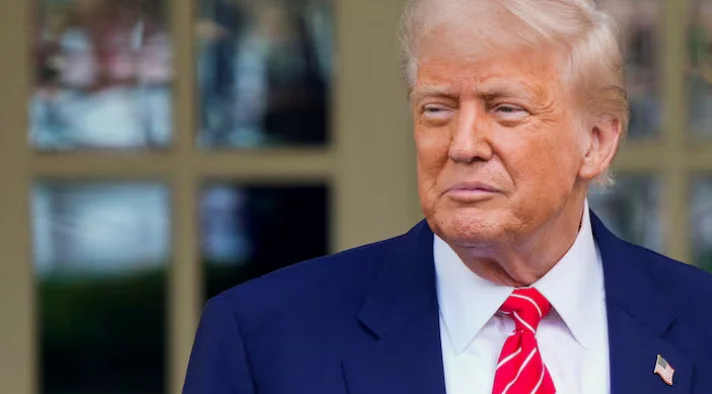
WASHINGTON — President Donald Trump bypassed a major Supreme Court setback by quickly enacting fresh tariffs on imports. The court struck down his prior use of emergency authority in a decision that Chief Justice John Roberts said violated Congress’s constitutional power over taxes and duties.
The 6-3 ruling came down Wednesday morning. It invalidated tariffs Trump had imposed under the International Emergency Economic Powers Act, or IEEPA. Those measures, in place for over a year, generated an estimated $175 billion from U.S. importers. Roberts, writing for the majority, cited the Constitution’s clause granting Congress sole authority to ‘lay and collect Taxes, Duties, Imposts and Excises.’
Trump repealed the rejected tariffs by afternoon. He then issued a proclamation under Section 122 of the Trade Act of 1974. That law lets presidents slap up to 15% duties for 150 days maximum to fix ‘fundamental international payments problems.’ Trump’s order hits most imports at 10% for the full period. Exemptions cover critical minerals, metals and energy products.
No prior president has tapped Section 122 this way, trade experts noted. The provision demands congressional approval for any extension past 150 days. That sets up potential clashes on Capitol Hill.
Trump lashed out at the court from the White House. ‘I’m ashamed of certain members of the court, absolutely ashamed, for not having the courage to do what’s right for our country,’ he said. He accused the majority, without evidence, of falling under foreign influence.
The decision disrupts Trump’s trade push since he returned to office 13 months ago. He had leaned on IEEPA to declare emergencies and levy tariffs of unlimited scope. The court called that reading of the law too broad.
Questions now swirl around $175 billion already collected. Importers may seek refunds through lawsuits. Trading partners that cut deals under tariff threats could revisit those pacts. Recent agreements, won as concessions to avoid duties, rest on the now-shaky legal ground.
Legal challenges loom over the new tariffs too. Critics will probe whether Trump can prove the ‘fundamental international payments problems’ the statute requires. Further suits could reach the Supreme Court again.
At stake lies the balance of power in trade. Congress has handed presidents tools for tariffs over decades. Wednesday’s ruling draws a line at core taxing authority. Yet the vast U.S. trade law toolbox leaves Trump room to maneuver.
Business groups decried the volatility. The U.S. Chamber of Commerce warned of higher costs for consumers and supply chain chaos. Foreign leaders stayed mum publicly but signaled readiness to negotiate.
Trump framed the shift as smooth. ‘We’re protecting American workers,’ he told reporters. His team eyes the 150-day clock as use for talks with China, Europe and others.
The ruling stands as one of the biggest judicial brakes on executive trade moves in years. It echoes past checks, like the 2020 high court limits on Trump’s border wall funding. Still, Trump’s pivot shows trade fights endure.
Analysts predict Congress may step in with new laws. Bipartisan bills to curb tariff powers have circulated before. Lawmakers return from recess soon, teeing up debates.
For importers, uncertainty reigns. Customs officials must adjust quickly to the new 10% rate. Ports from Los Angeles to New York brace for paperwork surges and payment hikes.
Trump’s strategy tests statutory edges. Success could embolden future presidents. Failure might force reliance on Congress — a body long reluctant on trade votes.




Comments
No comments yet
Be the first to share your thoughts