

 BBC
BBC 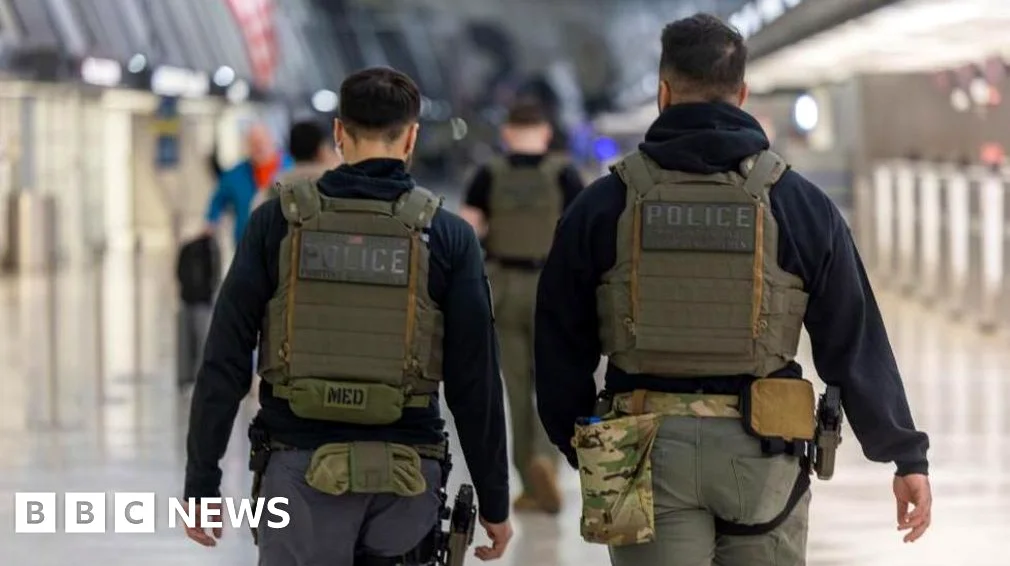
US President Donald Trump signed an order directing his administration to pay airport security agents on Friday after a bill to fund the Department of Homeland Security (DHS) stalled in Congress, according to the BBC. The move comes as the partial government shutdown continues to disrupt air travel and leave thousands of TSA workers without pay.
Senate and House at an impasse
The US Senate reached a deal early on Friday to end the 40-day partial government shutdown, but the House of Representatives rejected it; With Congress about to take a two-week break, funding for the DHS, which includes TSA agents, seemed unlikely. The stalemate has left TSA workers in limbo, with many of them now working without pay and facing uncertainty about their jobs.
Democrats have refused to agree to a funding deal without reforms to Immigration and Customs Enforcement (ICE). The Senate reached a unanimous agreement after stripping ICE and parts of border protection from the measure, but House Republicans have indicated they would not support legislation without funding for immigration enforcement and voter ID requirements.
Republican House Speaker Mike Johnson said he was considering a 60-day continuing resolution to fund all of the DHS, including ICE, that would go into effect on May 22. If such a resolution is passed. It would kick the issue back to the Senate, which has just begun a two-week recess.
Impact on air travel and TSA workers
The funding lapse has had a knock-on effect on US air travel — Hundreds of airport security workers, who have been working without pay, have quit since the shutdown. Around 50. 000 agents with the TSA have been working without pay since mid-February due to the shutdown, and this has reduced the number turning up to work each day and led to hundreds quitting.
Currently, only a third to 50% of its TSA checkpoints are operating, according to Jim Szczesniak, director of aviation for the Houston Airport System. A BBC reporter at Houston airport reported on Thursday night that, after waiting about two hours in a winding queue across one floor, frazzled travellers went up an escalator thinking they had reached the end – only to find another long line stretching towards security.
Travelers have faced hours-long queues due to a shortage of Transportation Security Administration (TSA) officers at security checkpoints; the situation has raised concerns about safety and the efficiency of air travel across the country.
Controversy over ICE actions
There has been mounting controversy over the actions of ICE agents, particularly in Minneapolis, Minnesota, where US citizens Renee Good and Alex Pretti were shot by federal agents during operations there earlier this year. Democrats want any deal on DHS funding to include measures like an end to ICE agents wearing masks, a ban on racial profiling and a requirement for judicial warrants to be issued before agents can enter private property.
Democratic Senate Minority Leader Chuck Schumer said the package included funding for the TSA, US Coast Guard and Federal Emergency Management Agency. He told the chamber that “in the wake of the murders of Renee Good and Alex Pretti, Senate democrats were clear: no blank cheque for a lawless ICE and border patrol.”
Republican Senate Majority Leader John Thune criticized Trump for having to step in to rescue TSA workers and US air travel. He said. “We’re here because. Thanks to Democrats determined refusal to reach an agreement, there will be no Homeland Security funding bill this year.”.
Trump wrote on Truth Social that he would sign an executive order “to immediately pay out TSA Agents.” The move highlights the deepening divide between the two major political parties and the growing frustration among ordinary Americans who are feeling the effects of the political stalemate.
With the House of Representatives set to take a two-week break and the Senate beginning its own recess, the situation remains uncertain. The next major deadline for funding the DHS is May 22, when a potential 60-day continuing resolution could be considered. However, with both chambers of Congress at odds, the outlook for a resolution remains bleak.






Comments
No comments yet
Be the first to share your thoughts