

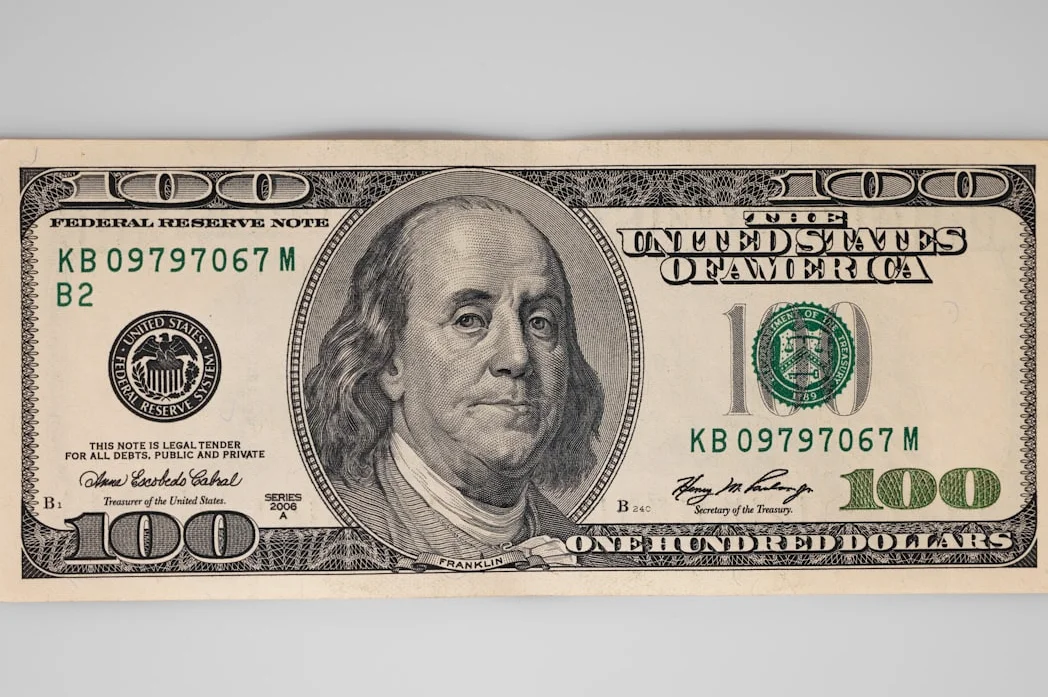
Treasury Secretary Scott Bessent on Friday showed off the new U.S. currency featuring President Trump’s signature, which is set to enter circulation soon in honor of the nation’s 250th birthday.
Trump’s Signature on $100 Bill
Bessent reposted an image shared on Trump’s Truth Social account of the $100 bill, which bears both of their signatures, writing that it was “only appropriate” that the currency is issued on the anniversary of American independence.
“Under President Trump’s leadership, we are on a path toward first-ever economic growth, lasting dollar dominance, and fiscal strength and stability,” the secretary wrote on the social platform X.
Legal Justification for Trump’s Image
It was the same message Bessent offered when he announced in late March that Trump’s name would appear on newly minted U.S. paper currency, a first for a sitting president.
Federal law bars living people from being depicted on U.S. currency, but the Treasury has argued that the Circulating Collectible Coin Redesign Act of 2020, signed during Trump’s first term — allows the administration to circumvent the restriction on an occasion such as the semiquincentennial.
That reasoning was also used to justify the rollout of a commemorative $1 gold coin featuring Trump’s image, despite pushback from Democrats.
“It is deeply unclear how. If at all, the Administration believes that emblazoning U.S. currency with President Trump’s signature will address any of the serious problems facing the American public,” Sens. Elizabeth Warren (D-Mass.) and Jeff Merkley (D-Ore.) wrote in an April letter to Bessent.
Public Opinion Divided
The Trump administration has pushed to incorporate the president’s name, image and likeness into varying aspects of the federal government, including adding his portrait to limited-edition U.S. passports and annual National Park passes.
But recent polling shows that Americans are split about whether adding his name to currency is appropriate.
An Economist/YouGov poll conducted in April found that 59 percent of “somewhat disapprove” or “strongly disapprove” of the idea, compared to 24 percent who “somewhat” or “strongly” approved. Another 18 percent were undecided.
The proposal expectedly had more support among Republicans, with only about 20 percent saying they were against his signature being added. Nine in 10 Democrats disapproved, along with 65 percent of independents.
It is not clear exactly when the $100 bills are expected to enter circulation, but it typically takes a few weeks between when notes are printed by the Bureau of Engraving and Printing and the Federal Reserve ships them out for public distribution.






Comments
No comments yet
Be the first to share your thoughts