

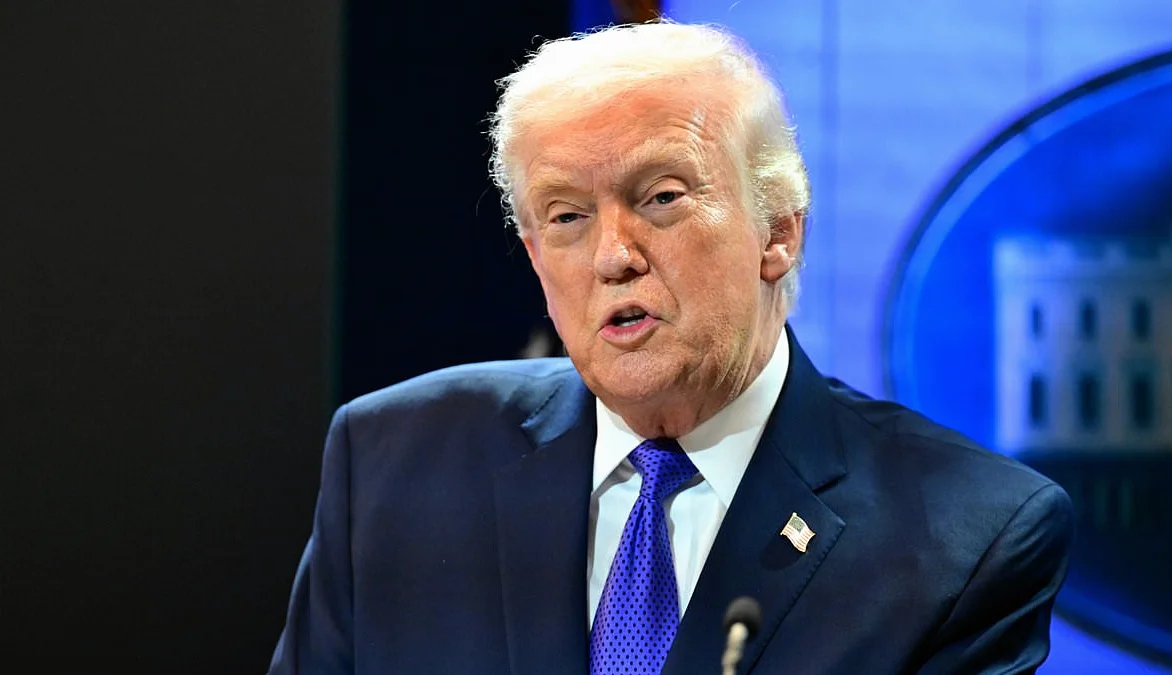
Former President Donald Trump has warned that the Supreme Court’s rejection of his proposed tariff plan could indirectly benefit China, as he faces a potential legal setback in his controversial birthright citizenship case. The Supreme Court’s 6-3 decision to strike down most of Trump’s extensive tariff regime on Friday has reignited tensions between the former president and the judiciary, as well as with international trade partners.
Supreme Court Rejects Tariff Strategy
The Supreme Court ruled on Friday that Trump’s use of an emergency act to impose tariffs on Chinese goods was unlawful. The decision, which came with a 6-3 vote, saw two of Trump’s appointed justices—Neil Gorsuch and Amy Coney Barrett—joining the majority in rejecting his plan, while Brett Kavanaugh dissented. The ruling effectively halts the administration’s ability to distribute ‘Trump checks’ to American citizens using the revenue from the tariffs.
Trump criticized the decision on Truth Social, calling the court ‘incompetent’ and accusing the justices of acting in a way that benefits ‘the wrong people.’ He warned that the court would soon rule in favor of China and other countries that profit from birthright citizenship, a policy he had sought to end through an executive order last year.
Birthright Citizenship Case on the Brink
Trump’s executive order to end birthright citizenship, which grants automatic U.S. citizenship to anyone born on U.S. soil, is currently under legal challenge. The Supreme Court is set to rule on its legality in the coming weeks, adding another layer of uncertainty to the former president’s legal battles.
In a series of posts on Monday, Trump warned U.S. trading partners, some justices, and Congress that they would face ‘much higher tariffs’ if they ‘play games’ with the ruling. He also claimed that the decision reaffirmed his authority to impose tariffs without congressional approval, stating he ‘does not have to go back to Congress’ to restart his tariff plan.
On Saturday, Trump announced a new global 15 percent tariff in response to the Supreme Court’s decision. The move comes as the administration seeks to ‘reconstruct’ its tariff strategy using alternative legal tools, such as Section 122 of the Trade Act of 1974. However, these tariffs will expire after 150 years without congressional approval, leaving the administration in a precarious position.
Democrats Push Back Against Tariff Policies
Senate Democrats have criticized Trump’s tariff policies, arguing that they have caused lasting damage to American families, small businesses, and manufacturers. Senator Ron Wyden, the top Democrat on the Senate Finance Committee, stated that the administration’s ‘illegal tax scheme’ has hurt the economy and that the party will continue to fight against Trump’s ‘price-hiking trade and economic policies.’
Wyden emphasized the need to ‘put money back in the pockets of small businesses and manufacturers’ as a crucial first step in countering the effects of Trump’s policies. The administration, however, remains committed to its tariff strategy, with U.S. Trade Representative Jameison Greer stating that the policy remains unchanged despite the legal challenges.
Trump’s legal and political maneuvering continues to cast a shadow over the Supreme Court, which faces growing scrutiny as it handles its role in shaping U.S. trade and immigration policy. With the birthright citizenship case looming, the court’s next decision could have far-reaching implications for both domestic and international relations.



Comments
No comments yet
Be the first to share your thoughts