

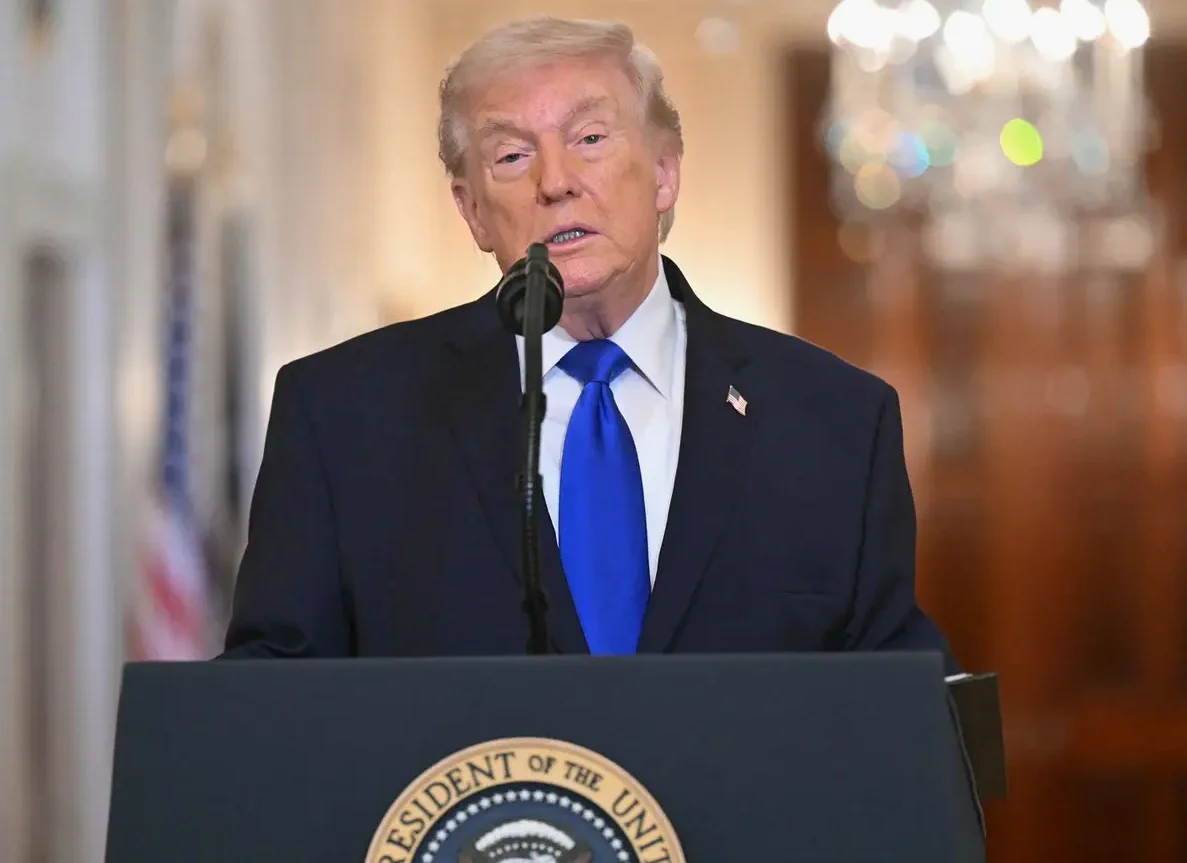
President Donald Trump has issued a stern warning to nations that have signed trade agreements with the United States, cautioning that any attempt to renegotiate or back out of those deals could trigger steep new tariffs. In a post on his social media platform Truth Social, Trump said, ‘Any Country that wants to ‘play games’ with the ridiculous Supreme Court decision, especially those that have ‘Ripped Off’ the U.S.A. for years, and even decades, will be met with a much higher Tariff, and worse, than that which they just recently agreed to. Buyer Beware.’
India Postpones Trade Talks Amid Legal Uncertainty
In response to the U.S. Supreme Court’s decision to strike down Trump’s global tariffs, India has postponed its high-level trade delegation’s visit to Washington, originally scheduled to begin on February 23. The delay comes after the court ruled that Trump’s tariffs under the International Emergency Economic Powers Act (IEEPA) were not authorized by law.
India’s decision to reschedule the visit was made on Sunday, following Friday’s ruling, which has left New Delhi seeking legal clarity on the new 15% global surcharge. The delay raises concerns about the future of the March interim trade deal, as officials in both countries recalibrate their negotiating positions under the new U.S. legal landscape.
Trump Vows ‘Terrible Things’ for Countries That Challenge Him
Trump has doubled down on his criticism of the U.S. Supreme Court, accusing it of granting him ‘far more powers and strength than I had prior to their ridiculous, dumb, and very internationally divisive ruling.’ In a recent address, he threatened to ‘do absolutely ‘terrible things’ to foreign countries’ if they challenge his policies.
The president also accused the court of favoring China, stating, ‘The next thing you know, they will rule in favour of China.’ He claimed that the court would find a way to reach conclusions that would make China and other nations ‘happy and rich.’
Global Tariff Hike Sparks Concern Among Trade Partners
Just two days before the Supreme Court’s ruling, Trump announced a 15% global tariff increase on countries worldwide. This followed an earlier announcement of a 10% global tariff hike after the court struck down the tariffs he had imposed under the IEEPA.
The ruling has created uncertainty in international trade relations, with several nations now evaluating their commitments to U.S. trade agreements. According to trade analysts, the potential for higher tariffs could disrupt supply chains and increase costs for consumers and businesses alike.
‘The current situation is a high-stakes game of brinkmanship,’ said one trade analyst. ‘If Trump follows through on his threats, it could lead to a wave of retaliatory measures from trade partners, which would have a ripple effect across the global economy.’
Legal and Economic Implications of the Supreme Court Ruling
The Supreme Court’s decision to strike down Trump’s tariffs has raised questions about the legal basis for future trade policies. The ruling has also forced the administration to reconsider its approach to imposing tariffs under the IEEPA.
According to legal experts, the court’s decision may limit the president’s ability to impose tariffs without explicit congressional approval. This could lead to a more constrained approach to trade policy in the coming months, as the administration seeks to balance economic interests with legal constraints.
What’s Next for U.S. Trade Policy
As the administration handles the new legal landscape, it remains unclear how Trump will proceed with his trade agenda. With the March interim deal now in jeopardy, both the U.S. and its trade partners are likely to reassess their positions in the coming weeks.
Analysts suggest that the outcome of ongoing negotiations could influence the direction of U.S. trade policy in the near future. With the mid-term elections approaching, the administration may seek to solidify trade agreements to bolster its political standing.
‘The next few weeks will be critical in determining the trajectory of U.S. trade policy,’ said one economist. ‘The decisions made now could have long-term implications for global trade relations and the U.S. economy.’



Comments
No comments yet
Be the first to share your thoughts