

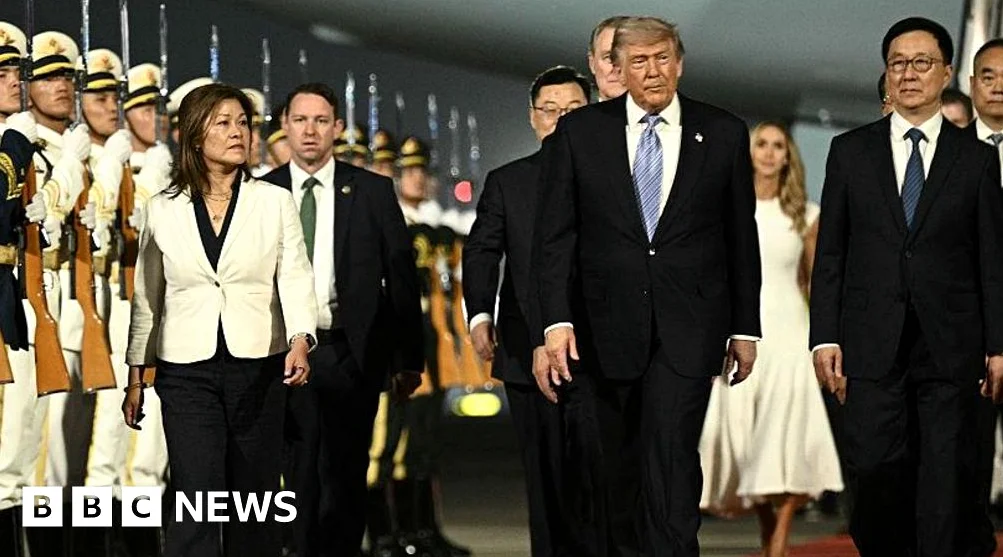
President Donald Trump arrived in Beijing on Wednesday for a summit with Chinese President Xi Jinping, marking a key meeting as trade tensions, the Iran war, and U.S. arms sales to Taiwan take center stage. Trump, who described the two nations as ‘the two superpowers,’ is seeking to negotiate trade agreements that could ease tensions from the previous year’s tariff wars. The meeting is also being closely watched by regional allies, especially Taiwan, for any indication of U.S. support.
Trade Agreements and Economic Stakes
The Trump administration hopes to begin establishing a Board of Trade with China to address economic differences between the two countries. The previous year’s trade conflict. Sparked by U.S. tariff hikes and China’s retaliatory control over rare earth minerals, had led to a one-year truce in October. Trump has emphasized trade as the top priority, aiming to secure deals for U.S. soybeans, beef, and aircraft; However, China’s economy is struggling with sluggish domestic spending and a property sector debt crisis, according to reports.
Iran Crisis and Strait of Hormuz
The summit also comes amid a critical moment in the Iran crisis, where a blockade of the Strait of Hormuz has pushed Brent crude to $107 a barrel. This has locked up Chinese tankers and disrupted vital oil imports; the situation has increased the urgency for diplomatic de-escalation, particularly as the U.S. and Israel’s war with Iran strains global markets. Gold prices. Which had briefly surged due to geopolitical fears, dipped to $4,695.80, reflecting market uncertainty and the potential for a diplomatic resolution.
Taiwan and Regional Security Concerns
Trump’s visit is being closely scrutinized by Taiwan and its Asian allies for any sign of a shift in U.S. support; the U.S. president has repeatedly emphasized a ‘very good relationship’ with Xi but has faced criticism for his administration’s handling of regional security. The summit includes a high-powered U.S. business delegation, including tech leaders like Tim Cook and Elon Musk, signaling the economic importance of the talks. Meanwhile, the U.S. inflation rate rose to 3.8% in April, complicating efforts to secure favorable trade terms and adding pressure on the Federal Reserve to reconsider rate cuts.





Comments
No comments yet
Be the first to share your thoughts