

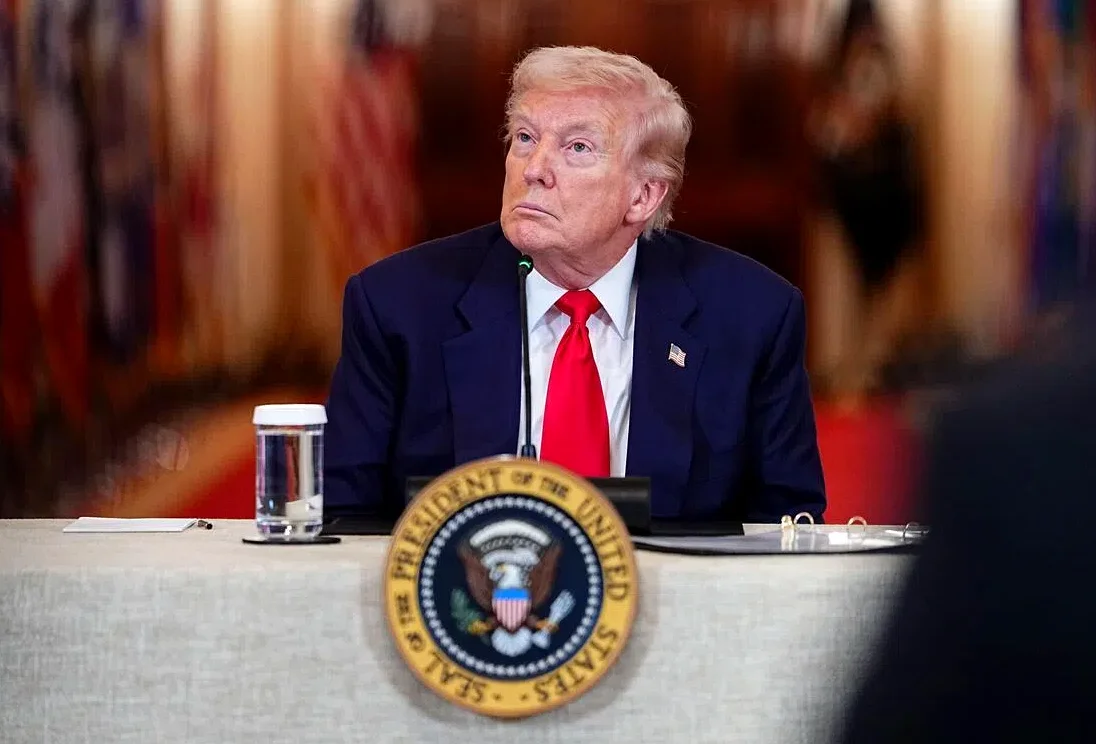
WASHINGTON — US President Donald Trump has ignited one of the most significant conflicts in decades with Iran, based not on concrete evidence but on what he described as a ‘feeling’. This approach has drawn sharp criticism from experts and raised concerns about the justification for the military action.
White House Justifies War on ‘Good Feeling’
On March 5, Trump, who previously hosted a reality TV show, told an ABC News reporter, ‘I hope you’re impressed. How do you like the performance?’ His administration has emphasized emotion over explanation, with government accounts on social media portraying the military operation in a manner akin to a video game, often with captions that resemble blockbuster war films.
White House press secretary Karoline Leavitt told reporters on March 4 that the president acted based on ‘a good feeling that the Iranian regime was going to strike United States assets and our personnel in the region.’ This justification, however, has been met with skepticism from analysts and journalists alike.
Experts Criticize Trump’s Wartime Messaging
Professor Sean Aday, a public relations expert at George Washington University, described the administration’s messaging as ‘incoherent, immoral, arrogant, amateurish, and at times trafficked in outright fabrication.’ He contrasted this with the efforts of former President George W. Bush, whose administration spent nearly 18 months trying to justify the 2003 invasion of Iraq.
Former US diplomat Richard Haass noted that Trump has largely ignored formal national security processes, ‘having spent the better part of the last year hollowing out the national security apparatus.’ The National Security Council, a key advisory body, has been significantly downsized since Trump returned to power in January 2025.
Conflicting Narratives and Vagueness
Trump has been vague about both the reasons for entering the war and the objectives being pursued. Instead of holding press conferences, he has given short phone interviews, leading to a mosaic of contradictory statements.
While his Cabinet members have stated that Washington is not seeking regime change, Trump has insisted that he should be involved in choosing Iran’s next supreme leader after the killing of Ayatollah Ali Khamenei. This stance has further complicated the narrative surrounding the conflict.
The rising price of petrol, driven by the conflict, has become a potential vulnerability for Trump’s Republican Party ahead of the 2026 midterm elections. A poll released on March 4 by NBC showed that 52 per cent of US voters oppose the military action in Iran, a stark contrast to the initial public support seen for the 2001 invasion of Afghanistan and the 2003 offensive in Iraq.
While public support for those conflicts initially grew, negative opinions eventually increased as the wars dragged on. Analysts warn that the same pattern could emerge with the current conflict, potentially affecting Trump’s political standing.
As the situation unfolds, the administration faces increasing pressure to clarify its objectives and provide a more coherent explanation for its actions. With the midterm elections approaching, the economic and political ramifications of the conflict could become even more pronounced.


Comments
No comments yet
Be the first to share your thoughts