

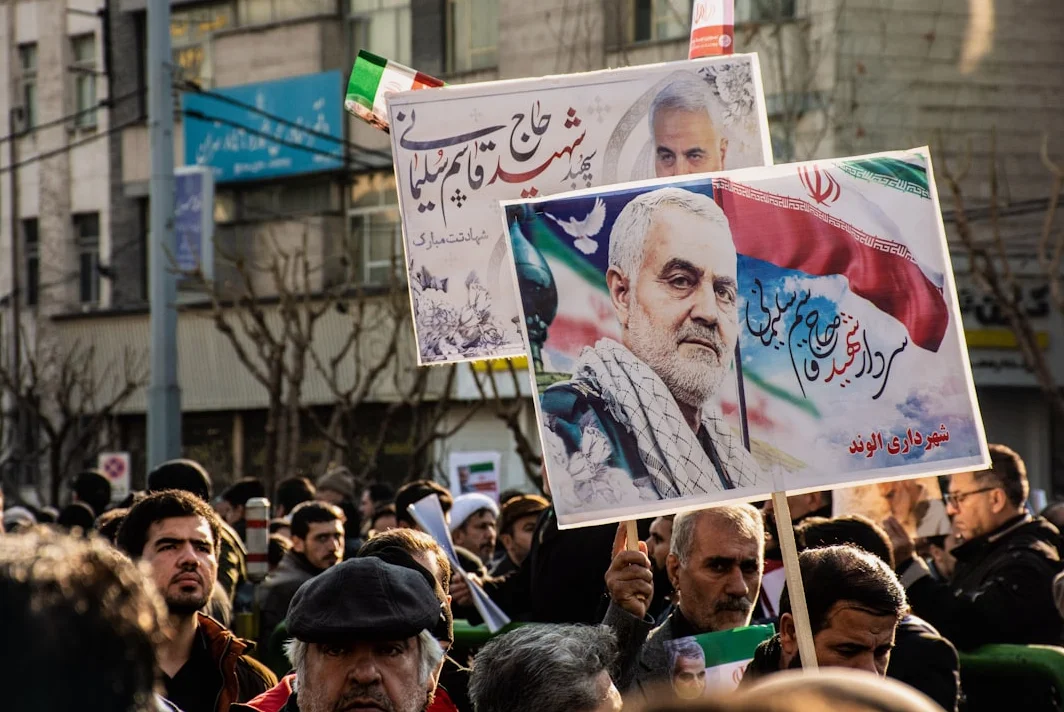
U.S. President Donald Trump’s recent military buildup against Iran has drawn little public or political pushback, a marked contrast to the international debate that preceded the 2003 Iraq War under George W. Bush. While Bush faced vocal opposition from allies and the United Nations, Trump’s threats have met with a near-silence from European leaders and even some U.S. lawmakers.
European Silence and Strategic Caution
European officials have urged diplomacy and restraint but have not openly condemned the possibility of a U.S. attack on Iran. According to Charles Kupchan, a Georgetown University expert on transatlantic relations, European leaders are wary of another confrontation with Washington, especially after Trump’s contentious remarks on Greenland and Ukraine.
“The Europeans are gun-shy. They don’t want to get into yet another fistfight with Washington,” Kupchan said. “I think part of it is that nobody is bothering to call them, so the Europeans have no idea what Trump is up to. In 2003, there was an enormous amount of diplomatic engagement.”
The U.N. as a ‘Leprosy Colony’
The United Nations, once a forum for international dialogue, is now viewed by the Trump administration as largely irrelevant. Trump has repeatedly dismissed the U.N. as “all but useless” and has established a new “Board of Peace” with himself as lifetime chairman. His ex-national security advisor, Mike Waltz, now serving as U.N. ambassador, delivers statements with little public attention.
“I don’t need international law,” Trump said in January, echoing a broader sentiment that has eroded the role of multilateral institutions in U.S. foreign policy. This stance contrasts sharply with Bush’s efforts to secure U.N. support for the Iraq War, which passed with a 15-0 vote in 2002.
Domestic Resistance Remains Weak
Democrats have largely refrained from challenging Trump’s Iran strategy, despite the lack of clear justification for military action. While some lawmakers, including Sen. Jack Reed and Sen. Tim Kaine, have called for more transparency, the overall response has been muted.
“We’ve had no real briefing, information or anything else. So it’s hard to justify something without rationale,” Reed said. A proposed congressional measure to require Trump to seek approval for military action has limited prospects, according to analysts.
Historical Contrast and Eroding Norms
Contrasting with the Bush era, the political climate today shows a significant shift in how military action is justified. In 2002, the Iraq War resolution passed with bipartisan support in Congress, receiving 296-133 votes in the House and 77-23 in the Senate.
William Wohlforth, an international relations expert at Dartmouth College, noted that while the Bush administration was also unilateralist, it operated within a framework of constitutional and international norms that have since faded. “The contrast between what Bush did in 2003 and what Trump is doing now highlights just how much norms have changed,” Kupchan said.
Forever War and the Erosion of Accountability
The trend of unilateral military action has accelerated under Trump, who has authorized strikes against Iran and Venezuela with minimal international or congressional scrutiny. This reflects a broader shift in U.S. foreign policy, where the executive branch increasingly operates without checks from Congress or allies.
“More than ever, the United States seems to view itself as ‘judge, jury and executioner all rolled into one,'” former State Department counselor Rosa Brooks wrote in her 2016 book. This sentiment has been amplified under Trump, who has embraced a more aggressive and unilaterally driven approach to foreign policy.
What’s Next: A New Normal?
With no clear signs of international or domestic resistance, Trump’s Iran strategy may continue to unfold with minimal oversight. Analysts warn that this approach could further erode multilateral norms and set a precedent for future military actions.
“Until Trump, there was at least acknowledgment that the system was eroding,” Kupchan said. “There was regret about the many uses of force under the name of counterterrorism. But Trump revels in turning his back on norms.”



Comments
No comments yet
Be the first to share your thoughts