

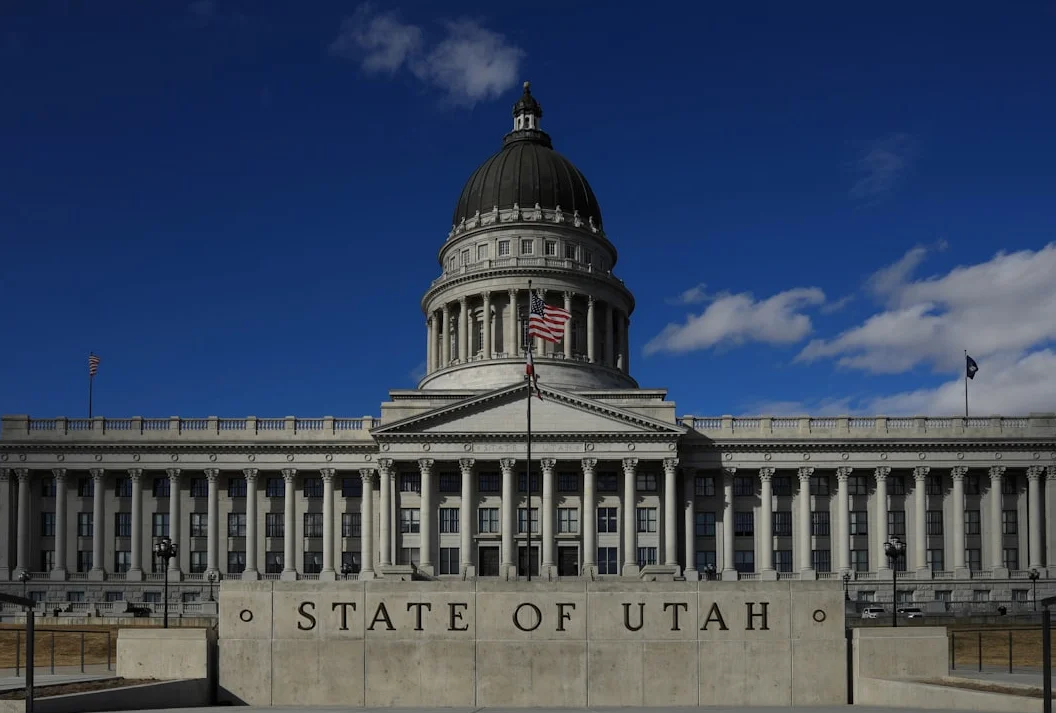
The State of the Union address on Tuesday was more than a routine update on national policy; it was a calculated declaration of power, a reaffirmation of Trump’s vision for America’s economic and foreign policy. From defending his tariff policies to redefining Venezuela as a ‘new friend and partner,’ the speech underscored a strategic shift that has profound implications for both domestic and international dynamics.
The Tariff Gambit and Economic Uncertainty
At the heart of the speech was Trump’s unrelenting defense of his trade policies, particularly his controversial tariffs. Despite a Supreme Court ruling striking down a key component of his tariff regime, Trump claimed that these measures had been a major driver of U.S. economic strength in the past year. He vowed to proceed without Congressional backing, suggesting that the legal framework would be restructured to maintain the tariffs. This stance, however, raises concerns about potential inflationary pressures and fiscal deficits, especially as the U.S. grapples with the economic implications of AI.
According to financial analysts, the uncertainty surrounding AI’s impact on economic sectors has been a dominant factor in recent market sentiment. The Nasdaq saw a modest increase, but the broader economic picture remains murky. Federal Reserve Governor Lisa Cook has emphasized that it may take considerable time for policymakers to fully understand the implications of AI on the economy and monetary policy. For now, most Fed members are holding firm, insisting that more evidence of goods disinflation is needed before any rate cuts can be considered.
Border Security and the Funding Standoff
Trump also used the speech to press Democrats for an end to the funding impasse affecting the Department of Homeland Security. He accused Democrats of withholding funds for border security and internal security, a claim that has been a recurring theme in his political rhetoric. Homeland Security has been without fresh funding for 11 days, a situation that has led to the suspension of immigration enforcement activities through the Immigration and Customs Enforcement (ICE) agency.
The lack of funding has not only raised concerns about national security but has also sparked significant public unrest, particularly in cities like Minneapolis, where protests against ICE raids have turned violent. The funding impasse echoes previous government shutdowns during Trump’s second term, highlighting the deepening divide between the executive and legislative branches.
NATO and the 5% Defence Spending Push
In a move that has drawn both praise and criticism, Trump claimed credit for pushing NATO allies to agree on a 5% GDP defence spending target. He stated that this was a direct result of his ‘strong request’ during a NATO summit last June. The previous benchmark had been 2% of GDP, and the new target is expected to be reached by 2035. The increase is partly a response to Russia’s war in Ukraine and the growing need for collective security.
However, the push for higher defence spending has been met with mixed reactions. Some allies have expressed concerns about the financial burden, while others see it as a necessary step in maintaining strategic balance. Trump’s emphasis on this issue highlights his belief in a strong military presence as a cornerstone of U.S. foreign policy.
Venezuela: A New Ally in the Oil Era
Perhaps the most surprising part of the speech was Trump’s declaration of Venezuela as a ‘new friend and partner.’ This marked a dramatic shift in U.S. foreign policy, as relations with the South American nation had been tense for years. Trump described the capture of former President Nicolás Maduro as a ‘colossal victory’ for U.S. security and a ‘bright new beginning’ for the people of Venezuela.
The president announced that Venezuela has already sent over 80 million barrels of oil to the U.S., a move that could have significant implications for global oil markets. Trump is working closely with Venezuela’s acting president, Delcy Rodríguez, to use the country’s vast oil reserves for the benefit of the U.S. This alliance, however, has raised eyebrows among international observers, given the complex geopolitical landscape and the potential for economic manipulation.
Economic and Geopolitical Implications
The implications of Trump’s State of the Union address are far-reaching. Domestically, his stance on tariffs and border security is likely to deepen the divide between the executive and legislative branches, potentially leading to more government shutdowns or policy gridlock. Internationally, the shift in U.S. foreign policy, particularly the reclassification of Venezuela and the push for higher NATO defence spending, could reshape global alliances and economic dynamics.
Gold markets have also been closely watching these developments. Analysts note that the current geopolitical climate could influence the price of gold, with uncertainty and potential military actions affecting investor sentiment. If the U.S. chooses a diplomatic approach over a military strike in the Iran nuclear issue, it could lead to a more stable but economically complex environment.
As the dust settles on this high-profile speech, one thing is clear: Trump’s vision for America is not only ambitious but also deeply polarizing. Whether it will lead to a more secure and prosperous nation or further deepen existing divisions remains to be seen.




Comments
No comments yet
Be the first to share your thoughts