

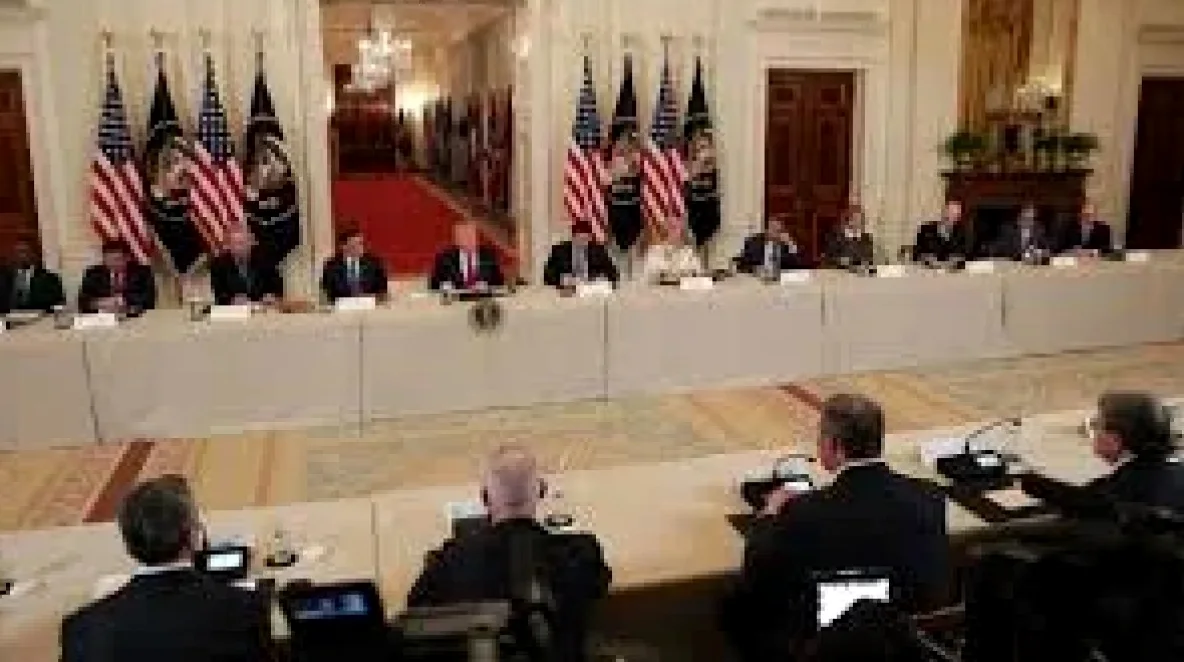
President Donald Trump has vowed to release a new, more thorough executive order on college sports within one week of Friday’s “Saving College Sports” roundtable, but the move is expected to face legal challenges and lacks direct input from current athletes. Trump suggested the order may be contested in court, with its fate potentially hinging on the judge assigned to the case.
Trump’s Stated Goals and Legal Predictions
During the Friday roundtable, Trump described the current state of college athletics as a “disaster” for colleges, players, and families. He said the new executive order would be “much more thorough” than his July 2023 directive, which he characterized as a “test” or “feeler.” Trump emphasized that the upcoming document would be based on “many of the statements” he has heard over the past year and the input of the roundtable participants.
He also raised the prospect of litigation, suggesting that the outcome of the executive order could depend on the judge assigned to the case. Trump expressed a preference for a judge who is “realistic, reasonable, and guided by common sense.”
Who Was at the Table and Who Was Missing
The roundtable brought together a mix of political and sports industry figures, including NCAA president Charlie Baker, all four Power Conference commissioners, former Alabama coach Nick Saban, and Texas Tech booster Cody Campbell. Political figures present included Speaker of the House Mike Johnson, Secretary of State Marco Rubio, White House Chief of Staff Susie Wiles, Florida Gov. Ron DeSantis, Senator Ted Cruz, and New York Yankees president Randy Levine. NBA commissioner Adam Silver attended, and Representative Lori Trahan of Massachusetts was the only elected Democrat present.
Current college athletes were notably absent from the discussion. Organizers acknowledged the gap, with Randy Levine stating that the group planned to ensure athletes’ voices would be heard in the future. Multiple speakers emphasized that athletes would be consulted going forward.
The Role of the SCORE Act and Legislative Hurdles
Participants discussed reviving the SCORE Act (Student Compensation and Opportunity through Rights and Endorsements), a bipartisan bill stalled in the U.S. House of Representatives. The measure aims to replace a patchwork of state name, image, and likeness (NIL) laws with a national framework and would grant the NCAA limited antitrust protection.
While the SCORE Act was presented as a possible starting point for federal legislation, its path remains uncertain. Senator Ted Cruz noted that the bill lacks Democratic support in the Senate, which is why Trump emphasized an executive order even as the group discussed legislative options.
Challenges in the NIL Era and Unresolved Tradeoffs
Trump and others at the roundtable focused on the destabilizing pressures of the NIL era and the broader financial and legal environment surrounding college sports. Trump suggested that college sports should return to a model centered on scholarships rather than the current system, which he said has led to a “disaster” for athletes and institutions.
His July executive order called for protecting non-revenue sports and banning pay-for-play related to NIL. Discussions at the roundtable highlighted financial strains tied to the House v. NCAA settlement and the potential for direct revenue sharing with athletes. Participants noted threats to Olympic and non-revenue sports and heightened economic stress for athletic departments.
What Is Known and What Remains Unanswered
Verified facts from the event include Trump’s announcement of the new executive order within one week of the roundtable, his claim that it will be more thorough than the July order, and his expectation of legal challenges. The meeting included senior political figures and top sports administrators, but no current athletes were present, although attendees said athletes would be consulted later.
The SCORE Act was discussed as a legislative pathway, but its progress remains stalled and contested, with concerns raised about Senate support. The roundtable exposed a contradiction in the governing strategy being signaled: the stated goal is durable, nationwide reform, yet the primary near-term instrument described is an executive order that Trump himself expects to be challenged in court.
The absence of current athletes, coupled with promises of later consultation, suggests a process that is still forming its legitimacy around the people most directly affected. Charlie Ward, a former NFL player and advocate for college athletes, was not described as a speaker or participant at the event, highlighting the gap between the individuals shaping the conversation and those most directly impacted by the changes.
As Trump’s promised executive order moves forward, the next week will test whether the promised action clarifies the future of college sports or simply accelerates it into another courtroom fight.


Comments
No comments yet
Be the first to share your thoughts