

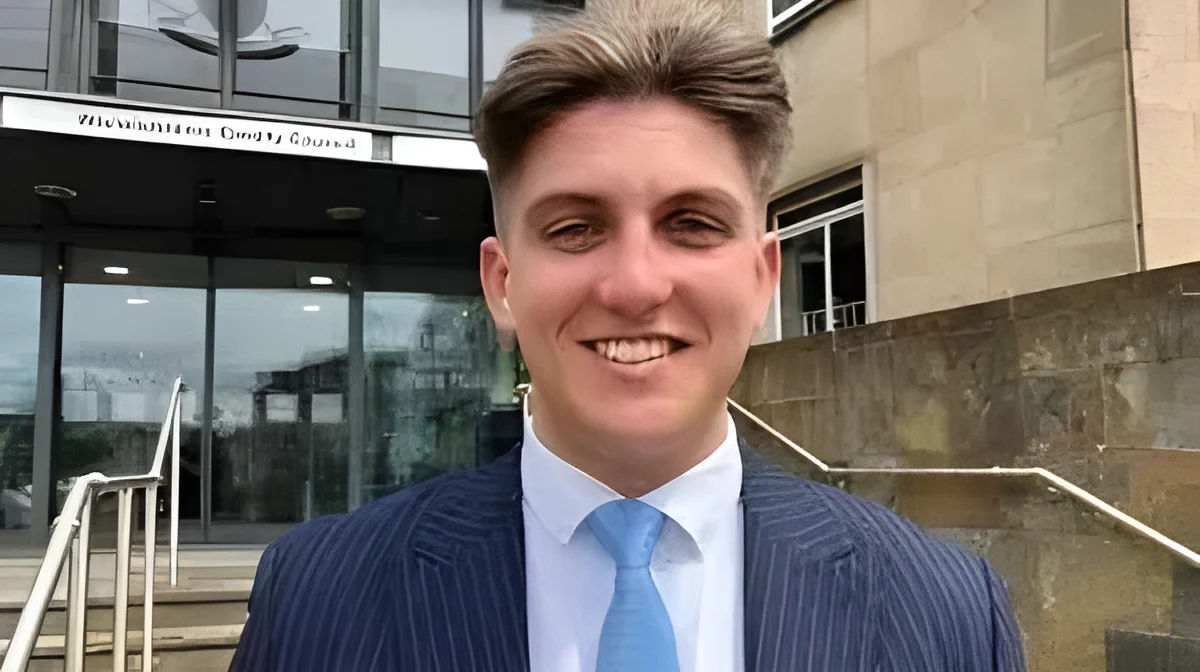
Two local council leaders in England are set to face no confidence votes in the coming week, as political tensions rise in Warwickshire and Trafford. In Warwickshire, the Green Party has launched a motion against 19-year-old council leader George Finch, who leads a minority administration. Meanwhile, in Trafford, the Conservative Party is seeking to remove Labour leader Tom Ross, citing concerns over the council’s financial strategy.
Warwickshire: Leadership Under Scrutiny
In Warwickshire, Cllr George Finch, a Reform UK member, has become the target of a no confidence motion initiated by the Green Party. The Greens, which hold seven seats on the council, allege that Finch has ‘abused the office of leader’ and brought the council into disrepute. Jonathan Chilvers, the Green Party’s council leader, accused Finch of ‘cheap and nasty political points scoring’ and said such behavior is ‘completely unacceptable.’
The Greens are not the only opposition force in the council. The Liberal Democrats, with 14 members, are the main opposition party, while Labour holds three seats. Cllr Chilvers emphasized that Finch had ‘ignored the expressed will of elected council on more than one occasion’ and breached ‘British values that we all hold dear, including fair play, the rule of law, and basic decency.’
Cllr Finch, however, has defended his leadership, telling the BBC that those seeking to remove him have ‘offered no alternative council plan’ and ‘no credible answer to what replaces the work already under way.’ Finch leads a minority administration with only 23 Reform UK councillors, making him reliant on cross-party support to pass policies.
Trafford: Financial Strategy Under Fire
In Trafford, the focus of the no confidence vote is on Labour leader Tom Ross, who heads a majority administration. The Conservatives, with eight seats, are challenging Ross’s leadership, arguing that the council’s financial strategy is unsustainable. Trafford has recently raised council tax by 7.49%, exceeding the 4.99% limit allowed under normal circumstances. The increase was approved after the council was granted the authority to raise bills above the standard limit, along with six other authorities.
Additionally, Trafford received exceptional financial support after submitting its second consecutive application for such aid. The Conservative-led motion argues that ‘continued borrowing for revenue expenditure is not a sustainable long-term strategy’ and that ‘reliance on uncertain external funding settlements does not constitute a credible recovery plan within the council’s control.’
The motion calls on Cllr Ross to resign, stating that council members have a fiduciary duty to residents and that confidence in the administration’s financial leadership has been undermined by an ‘absence of a clear structural reform programme.’
Why These Votes Matter for Local Governance
The no confidence votes in both Warwickshire and Trafford highlight broader issues in local governance, particularly around leadership accountability and financial transparency. For residents, the outcome of these votes could determine the direction of key policies, from housing and infrastructure to public services and taxation.
In Warwickshire, the challenge to Cllr Finch reflects concerns about youth leadership and whether a young, inexperienced council leader can effectively manage a minority administration. The Greens’ motion also raises questions about the role of opposition parties in holding leaders accountable, especially in councils where no single party holds a majority.
In Trafford, the financial strategy under scrutiny is a pressing concern for residents who have already seen council tax increases. The Conservatives argue that the council is relying too heavily on external funding, which could leave the authority vulnerable to future budget cuts or policy shifts. The motion also calls into question whether the current Labour administration has a viable long-term plan for financial stability.
Context and Precedents
No confidence votes are not uncommon in local governance, particularly in councils where no single party holds a majority. However, the timing and nature of these votes in Warwickshire and Trafford are notable. In Warwickshire, the challenge to a young leader by the Green Party marks a departure from traditional patterns of opposition, where parties often target leaders from the ruling party.
In Trafford, the financial concerns raised by the Conservatives are reminiscent of previous disputes over council spending and borrowing. Similar motions have been proposed in other areas where councils have faced budget shortfalls and have relied on external financial support. The issue of council tax increases has also been a recurring topic in local politics, with residents often expressing dissatisfaction over rising costs.
These votes also come at a time of heightened political polarization, with local councils increasingly becoming battlegrounds for national political issues. The outcome of these no confidence votes could have broader implications for how local leaders are held accountable and the extent to which financial decisions are subject to scrutiny.
What’s Next for Both Councils
The no confidence votes in Warwickshire and Trafford are expected to be debated in the coming weeks. In Warwickshire, the council will need to determine whether the motion meets the required threshold for a vote. If it does, a formal vote will be scheduled, with the outcome potentially leading to a leadership change or a reshuffling of the council’s administration.
In Trafford, the motion against Cllr Ross will also be subject to debate. If the motion is passed, it could force a vote of no confidence, which would require the support of a majority of council members. If successful, it could lead to Ross’s resignation or the formation of a new administration. However, given that Labour holds a majority, the motion may not succeed unless there is significant cross-party support.
Both councils are also expected to continue their respective financial strategies, with Warwickshire focusing on its minority administration’s ability to implement policies and Trafford looking to sustain its current financial framework. The outcomes of these votes could set important precedents for how local leaders are held accountable and how financial decisions are managed in the future.






Comments
No comments yet
Be the first to share your thoughts